The adapter stack to attach the spectrum analyzer to the Ham It Up noise source turned out to be:
- N male to BNC female
- BNC double-male gender bender
- BNC female to UHF male
- UHF female to SMA male cable
Which puts a serious lever arm on the spectrum analyzer end of the chain:
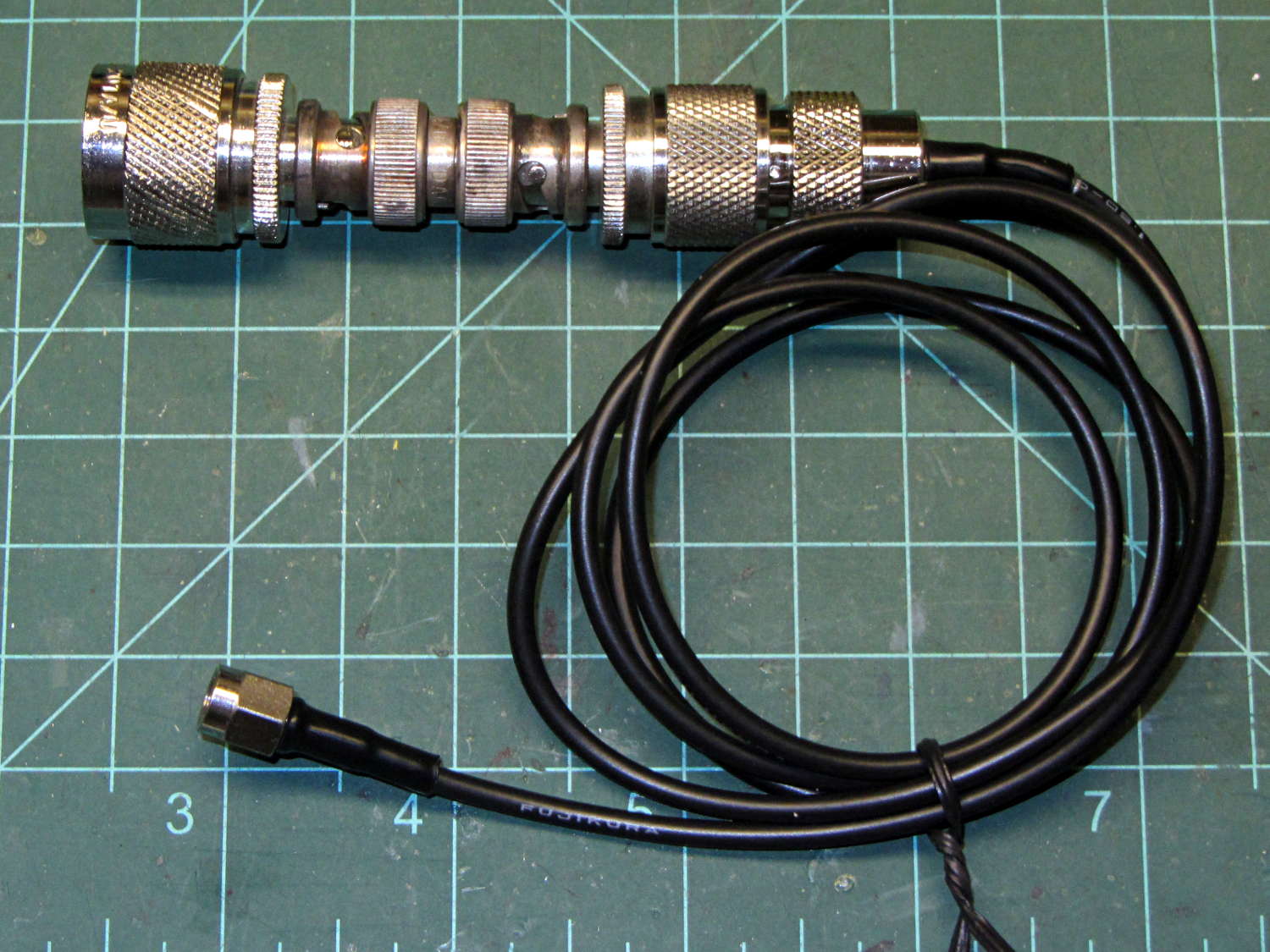
Ya gotta have stuff, but a pair of cables going directly from the Ham It Up’s SMA female to the analyzer’s N female are on their way around the curve of the planet even as I type.
That peak at 300 MHz is about +10 dBm, but averaging 25 peak values at each frequency trims off 5 dB and makes it easier to see:

The reference level at the top of the graticule is +30 dBm, not the usual +10 dBm, so the left end of the trace doesn’t obliterate the marker readout.
So the noise seems good for VHF to UHF projects, which seems reasonable. The noise at the low end falls dramatically with narrower bandwidths, as you’d expect; it’s reasonably flat around -30 dBm below 100 MHz.
You’d want a bandpass filter in front of whatever you were doing, so as to keep that 300 MHz hash out of everything else.
 The Smell of Molten Projects in the Morning
Comments
3 responses to “Ham It Up v1.3 Noise Source Spectrum”
As the dot-bomb era was closing, I helped with an RF tester calibration system rated to 6GHz. Amazing what adapters can do to the various S parameters… (Our client was financially overextended, the RF system was, er, suboptimal, and they went toes up, taking the consultancy with it. Oh well, it paid well for 9 months.)
The cable part of that mess adapted the antenna jack atop a Kenwood TH-F6 to a mobile radio antenna, back before HTs began sprouting reverse-polarity SMA connectors. Using those old-school “UHF” adapters in today’s UHF band always amuses me, but it really doesn’t make much difference; what’s a little impedance bump among friends?
[…] « Ham It Up v1.3 Noise Source Spectrum […]