The Smell of Molten Projects in the Morning

Ed Nisley's Blog: Shop notes, electronics, firmware, machinery, 3D printing, laser cuttery, and curiosities. Contents: 100% human thinking, 0% AI slop.

Tag: Android

Fiddling with phones

  • Kindle Fire Power Button: Some Things Don’t Last

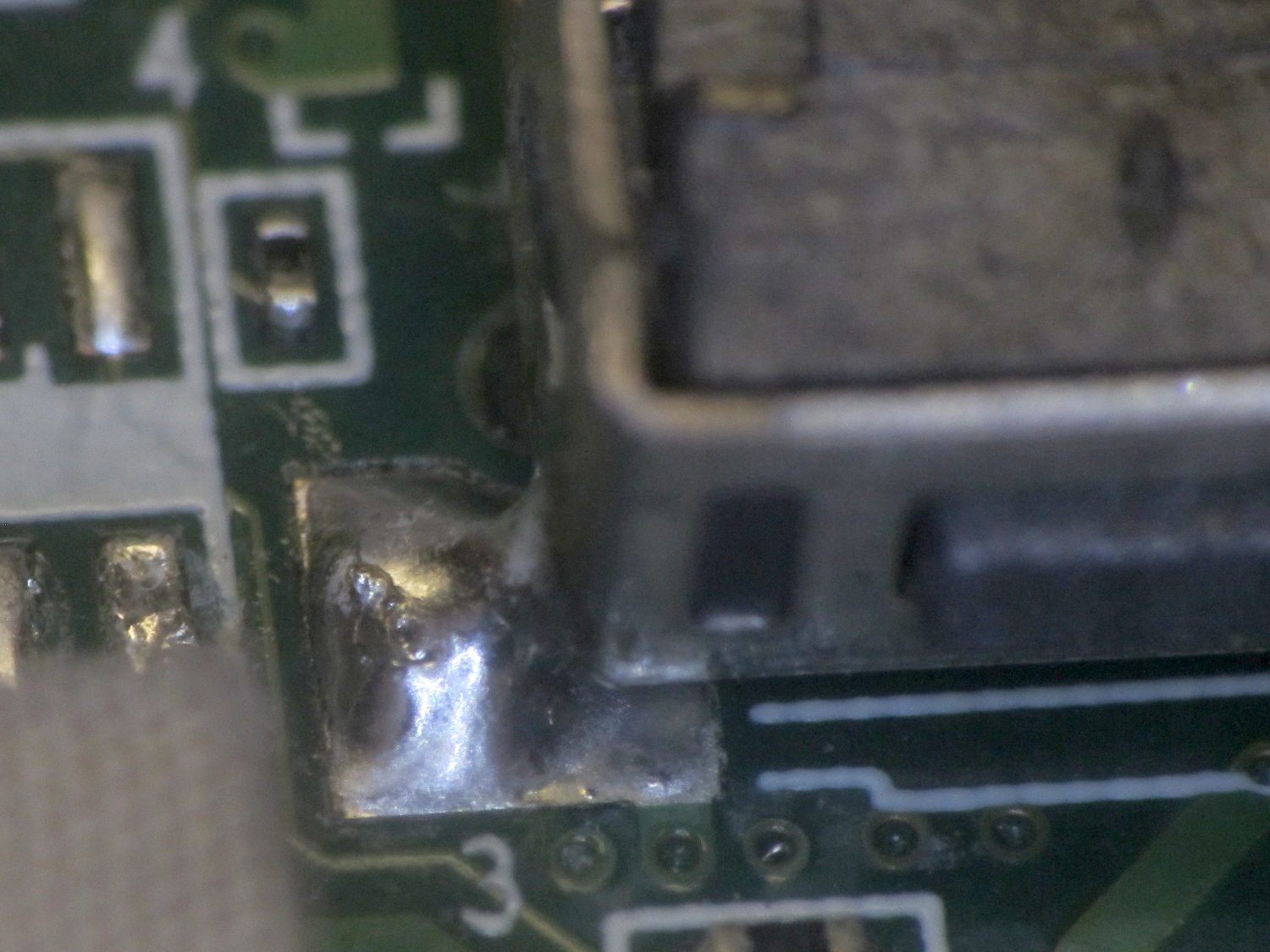
    Once again, the single moving part on my first-generation Kindle Fire stopped working. As before, the switch contacts accumulated enough fuzz & contamination to prevent any current flow, but this time the (soft) solder joints attaching the switch body to the PCB failed:
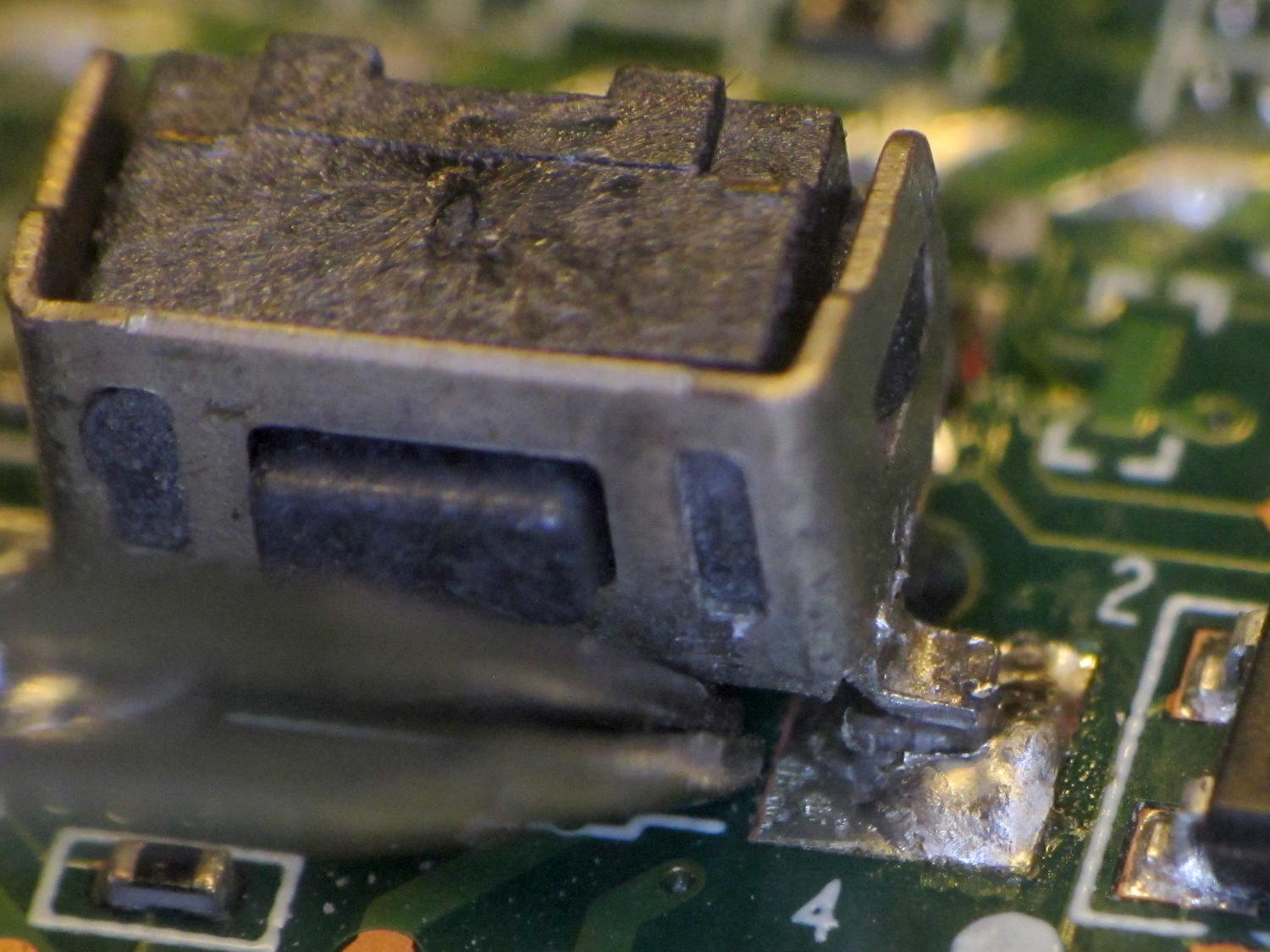
    Kindle Fire power switch - failed anchor
    Kindle Fire power switch – failed anchor

    My joint cleaning & fluxing wasn’t up to contemporary standards, as shown by the obviously un-fused footprints left in the upper pads:

    Kindle Fire power switch - failed anchor joints
    Kindle Fire power switch – failed anchor joints

    The switch frame seems to be unplated steel, which shouldn’t be an excuse.

    So I dismantled the switch, cleaned the contacts and tactile bump plate, put it all back together, and did a much better job of surface preparation:

    Kindle Fire power switch - rebuilt - right anchor
    Kindle Fire power switch – rebuilt – right anchor

    The other joint:

    Kindle Fire power switch - rebuilt - left anchor
    Kindle Fire power switch – rebuilt – left anchor

    And, for completeness, the switch leads:
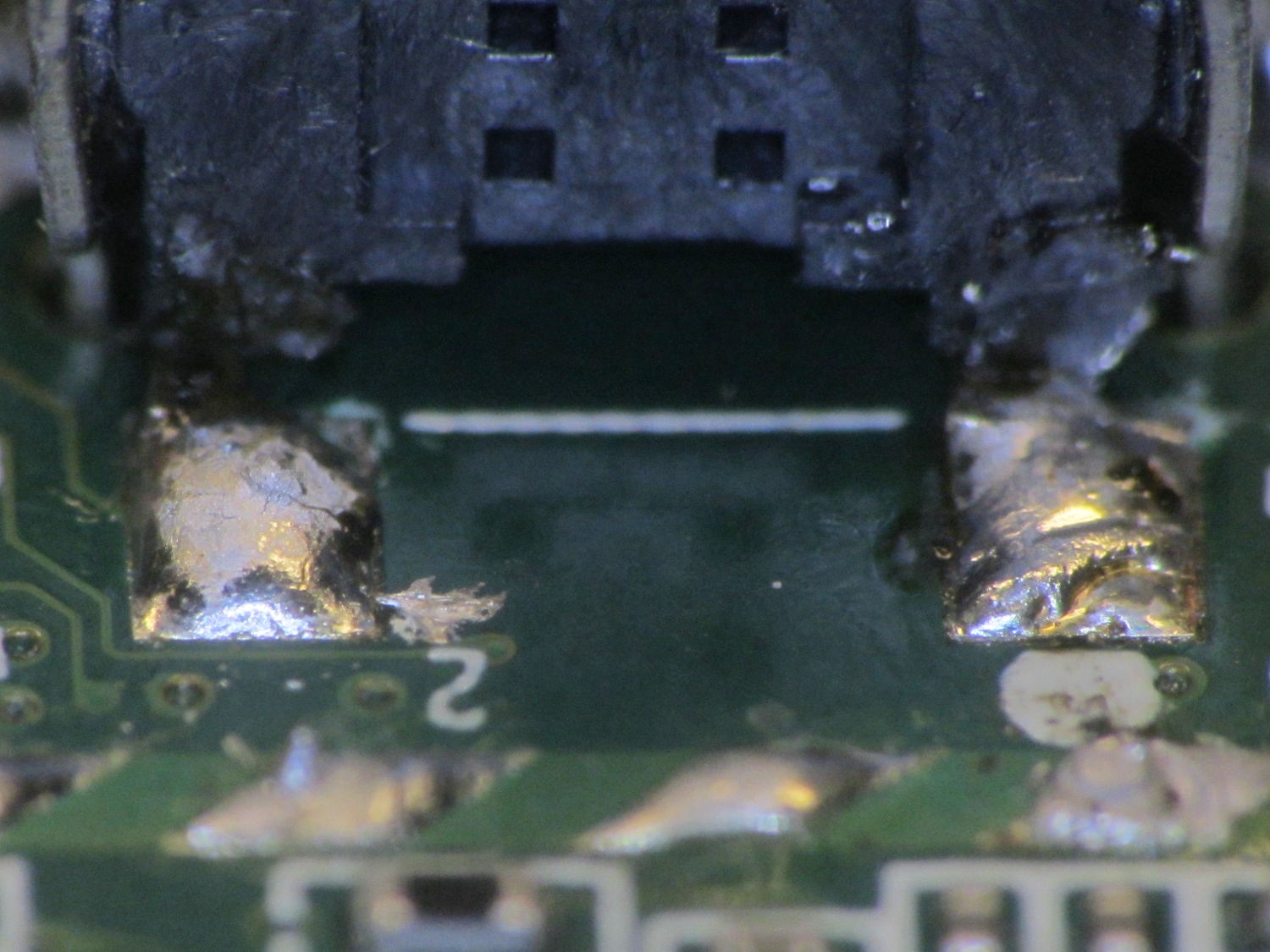
    Kindle Fire power switch - rebuilt - switch pads
    Kindle Fire power switch – rebuilt – switch pads

    I don’t like the way the joint on the right looks, either, but we’ll see how long the whole affair holds together.

    This may be the last time I can repair the Kindle, as a bypass cap came loose while I was working on the PCB, the screen has been accumulating dust at an increasing pace, and several latches securing the back of the case have cracked.

    Methinks it’s getting on time for a new pocketable memory device; if only Pixel XL phablets had a bigger screen and didn’t cost night onto a kilobuck.


  • Bose QC20 Noise-cancelling Headphone Signals

    Bose QuietComfort QC20 Noise Canceling headphones (they’re actually earbuds) come in Apple and Android versions that (probably) differ only in the connector pinout. Given that the connector has four conductors, I was surprised to find only half a dozen different possibilities, with only two for purely audio connectors.

    These QC20 earbuds came in the Android flavor, also known as the CTIA/AHJ “standard”:

    Bose QC20 Earphones
    Bose QC20 Earphones

    The 3.5 mm plug connections:

    • Tip = left audio
    • Ring 1 = right audio
    • Ring 2 = ground
    • Sleeve = microphone and button signals

    The blue Mode button on the side of the splitter box switches the noise cancelling between “some” and “silent”. The latter works surprisingly well; it can knock our vacuum cleaner down to a bearable level.

    The three black buttons place resistive loads on the otherwise open-circuit microphone connection:

    1. Volume + = 220 Ω
    2. Answer/End = 56 Ω
    3. Volume – = 520 Ω

    Now, if only I had a device that would do something with those signals …