-
Car vs. Mailbox
Things remained rather quiet at the end of the driveway for a few months, then this happened just before breakfast:

Mailbox killer – driveway view Rt 376 had accumulated some sleet overnight and freezing rain was still falling. The driver apparently lost control around the curve, missed the fire hydrant behind me, and went up the embankment sideways at a pretty good clip.
As far as I can make out, the left front door took out the mailbox post, which was the stump of a utility pole installed long before we bought the property:

Mailbox killer – snapped post Admittedly, the post was rotten around its base, but remained a substantial chunk of wood. The black plastic curl is the air deflector formerly sealing the front of the car’s undercarriage.
Seen from the far end of the debris field, the car smashed dead center into the mighty honeysuckle bush, shed a variety of small parts, recoiled backwards, and tagged the tree as it rolled down the embankment:
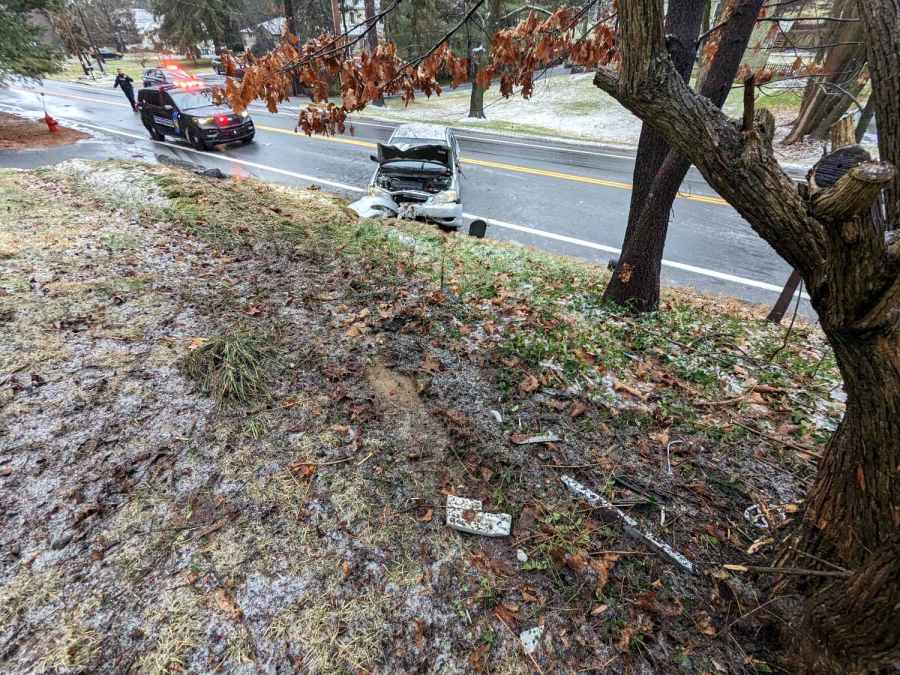
Mailbox killer – yard view The mailboxes sit on the shoulder to the right of the car.
No serious injuries to the driver or passengers, although they got an ambulance ride to the ER to make sure.
Those dents just ain’t gonna buff out:

Mailbox killer – flatbed I did get three years out of the repaired mailbox hinges and perhaps I should preemptively transfer the hardware to the new mailbox.
There’s never a dull moment around here.
-
Subscribe
Subscribed
Already have a WordPress.com account? Log in now.
 The Smell of Molten Projects in the Morning