-
Emergency Spoke Repair: FiberFix FTW!
The rear wheel of my bike popped a spoke while I was riding along a section of unimproved trail trail. Actually, it’d be more accurate to say “as-abandoned” railway line; they ripped out the ties and graded the baby-head ballast more-or-less level. It wasn’t really suitable for a long-wheelbase recumbent bike, but I really hate white-water rafting, which was the other choice.
Anyhow.
Of course, the broken spoke was on the sprocket side of the rear wheel. I discovered this when we were out of the most rugged section, so I have no idea how long I’d actually been abusing the wheel.
I released the rear brake, gingerly rode to the campsite, then installed the FiberFix emergency spoke I’ve been carrying around for a few years. After snugging the cord and tightening the nipple, I added a turn to each of the two adjacent spokes, making the wheel true enough to continue the mission.

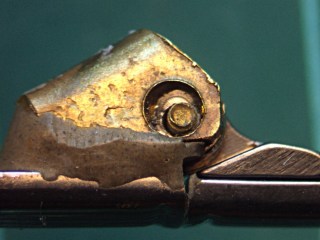
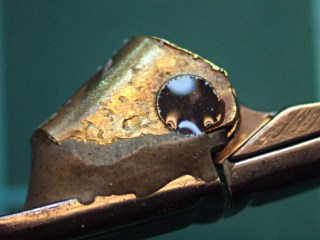
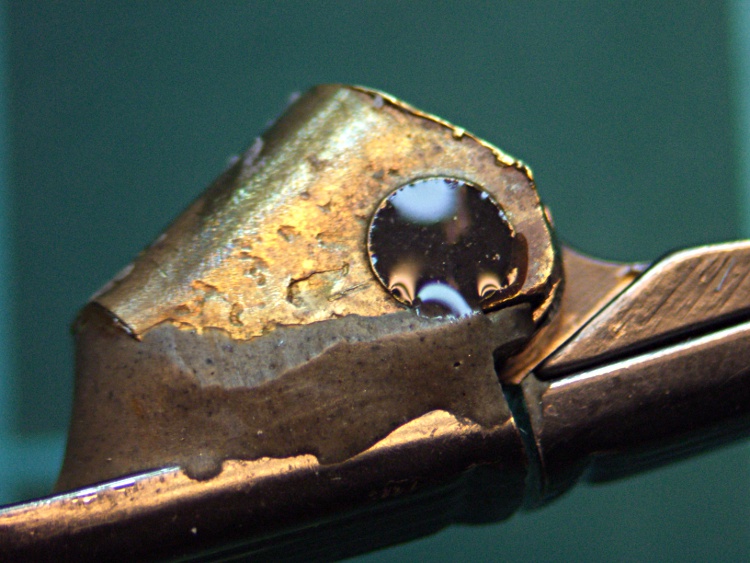
FiberFix spoke in action The other end simply passes through the spoke hole in the hub. It doesn’t mind the deformation pressed into the hub.

Hub end of FIberFix spoke Much easier than removing the sprocket cassette under field conditions, that’s for sure!
Back home in the shop, I installed a new spoke, tightened it up to match the others, backed out the extra turn in the adjacent spokes, and the wheel trued right up.
I originally built the wheel using a Park Spoke Tension Meter, which is a wonderful tool. If you build wheels, even occasionally, you really, really need one. Lace ’em up, tighten uniformly, then tweak just a little bit for a perfectly true wheel.
And, yeah, Phil hubs on all three bikes. I hate adjusting bearings. The man is gone; may his legacy live forever.
Memo to Self: Tension = 23±1 on the drive side.