-
GPS+Voice Interface for Wouxun KG-UV3D: PCB in a Box!
It always feels good when the parts fit together, even if they don’t actually do anything yet…
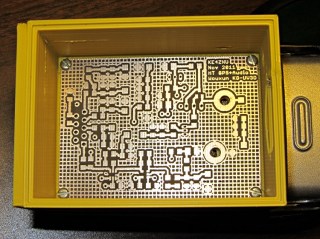
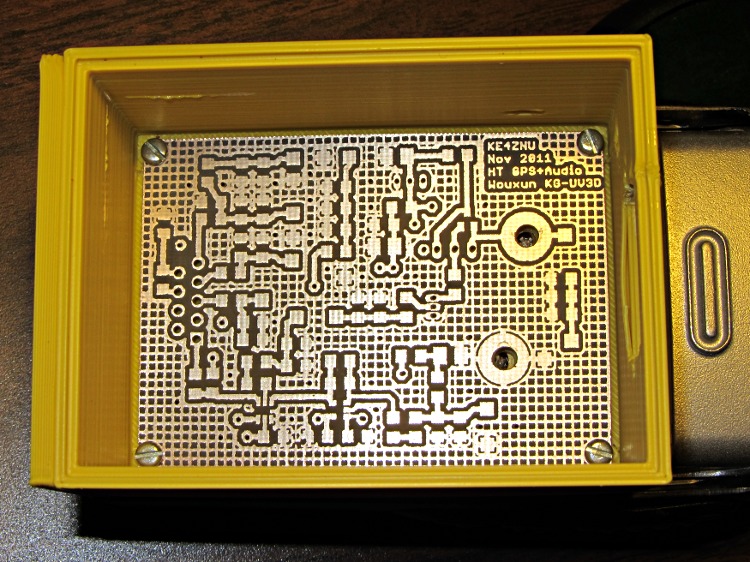
Bare PCB in Wouxun HT battery case That’s the bare PCB in the first-pass 3D-printed battery case adapter, both of which need quite a bit more work. In particular, the case desperately needs some sort of latch to hold the yet-to-be-built contacts against the HT’s battery terminals.
Amazingly, all the holes lined up spot on, although I think the lower battery contact could move half a millimeter closer to the base of the radio. The battery case contacts are large enough to work as-is and, for what it’s worth, the Wouxun battery cases seem to differ slightly among themselves, too.
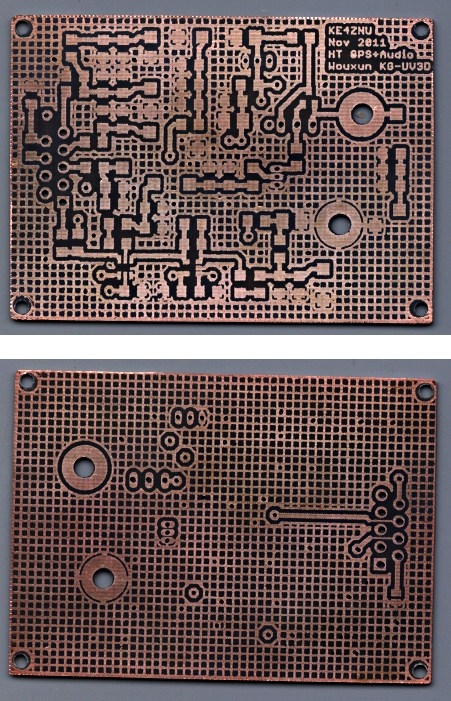
The PCB itself came out about as well as any homebrew PCB I’ve ever made, after getting the Logitech Joggy Thing working again to line the Sherline up for hole drilling:
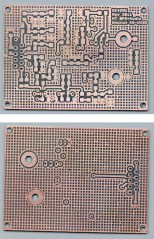
Wouxun HT GPS-Audio PCB – copper The circuit has provision for pairs of SMD caps on all the inputs, with which I hope to squash RFI from both the VHF and UHF amateur bands by choosing their self-resonant frequencies appropriately.
-
Subscribe
Subscribed
Already have a WordPress.com account? Log in now.
 The Smell of Molten Projects in the Morning