-
Poughkeepsie to Rochester Road Trip: The Movie
With the Sony HDR-AS30V camera Gorilla Taped to the Sienna’s dashboard, we drove it to Rochester with a bank shot off Saratoga:
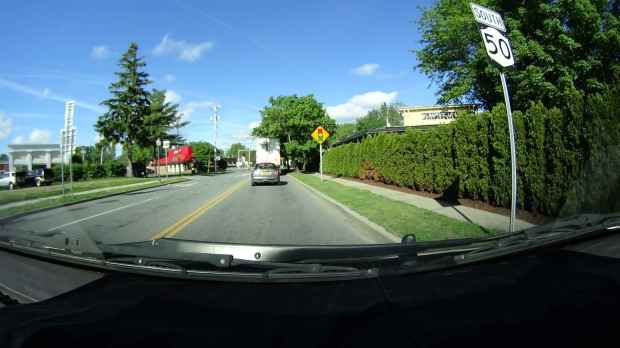
Saratoga Rt 50 I then converted nearly 5000 images into Yet Another Crappy Youtube Movie that is, mercifully, only 00:02:43 long.
The key steps:
mkdir /tmp/Video
cd /tmp/Video
sn=1 ; for f in /mnt/backup/Video/2014-05-29/* ; do printf -v dn 'dsc%05d.jpg' "$(( sn++ ))" ; cp -a $f $dn ; done
avconv -r 30 -i dsc%05d.jpg -q 5 Pok-Saratoga-Rochester.mp4
I tossed out a few images you didn’t need to see, then renumbered the remainder:
sn=1 ; for f in * ; do printf -v dn 'dsc%05d.jpg' "$(( sn++ ))" ; mv $f $dn ; done
The point of this exercise was to find out how Youtube treats “HD” movies. The original 1920×1080 MP4 file weighed in at nearly 500 MB with very good quality (due to the
-q 5), but the Youtube “HD” result exhibits terrible compression artifacts; the black cloth crawls with huge checkerboard squares. Because the relatively slow-moving sequences at traffic signals and rest stops have excellent quality, I’d say Youtube’s video bit rate just doesn’t support images that change completely from frame to frame. Makes sense; nobody could watch such a thing, so why allocate that many bits?Now I have another Youtube movie-making data point …
-
Subscribe
Subscribed
Have a WordPress.com account? Log in now.

