-
PolyDryer Humidity: Alumina vs. Black PETG
An adjacent pair of PolyDryer boxes have black and orange PETG filament:
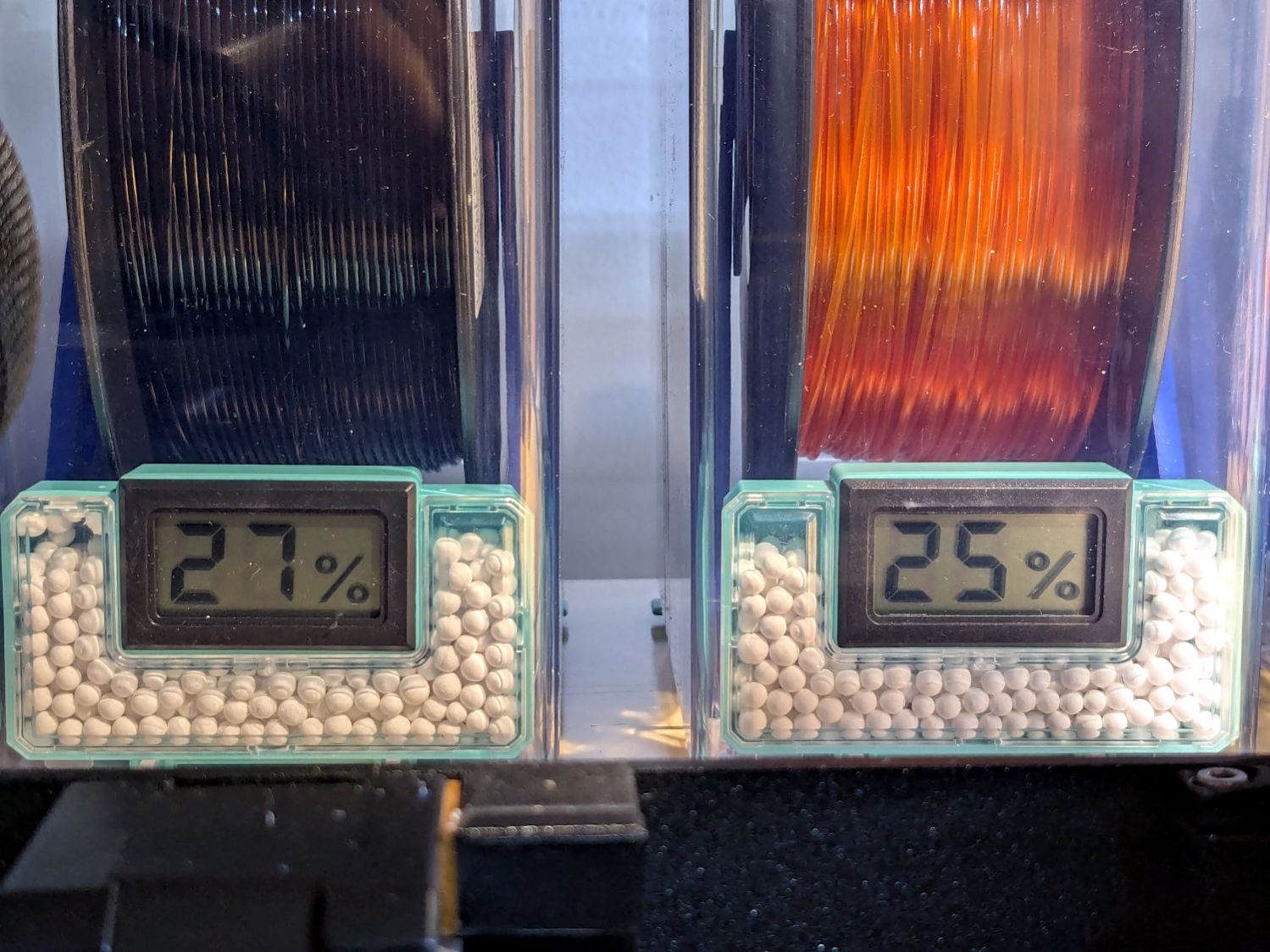
PolyDryer – PETG – 27 pctRH Black 25 pctRH Orange They’ve been sitting closed up for a week or so, with only 25 g of activated alumina in the desiccant holder (no tea bags with additional desiccant) pulling moisture out of their air and, presumably, filament.
The desiccant from the black filament weighed 29.0 g, showing it pulled 4.0 g of water out of the air, 16% of its original weight.
Consulting an old chart of desiccant water adsorption vs. humidity:
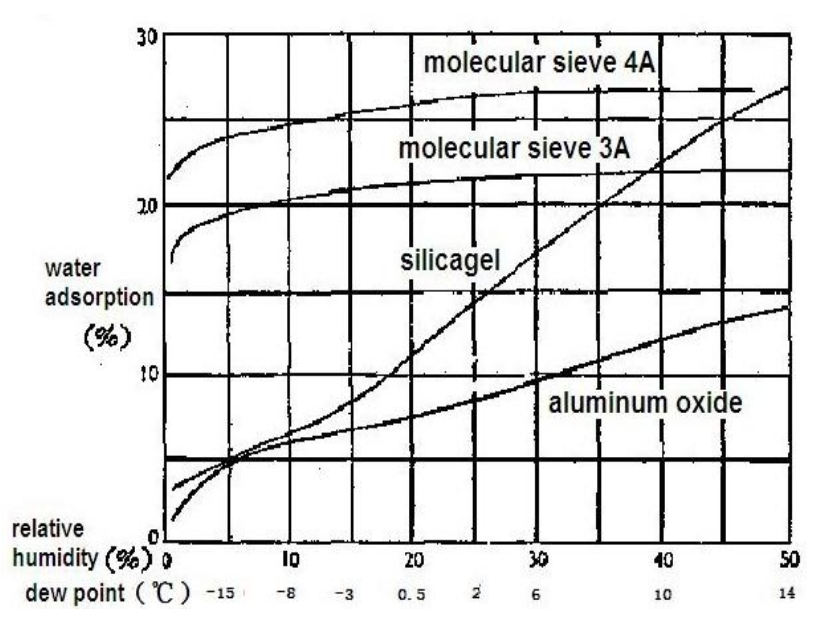
Desiccant absorption vs humidity The “aluminum oxide” curve shows 16% adsorption should correspond to more than 50% RH, so the numbers don’t quite match up. On the other paw, I don’t know how much I can trust the meter accuracy.
I replaced the desiccant with 25 g of silica gel, tucked a humidity indicating card into the box, and snapped it closed again. The orange PETG box also got an indicating card so I can compare results.
-
Subscribe
Subscribed
Have a WordPress.com account? Log in now.

