-
Road Conditions: Grand Avenue at Westbound Arterial
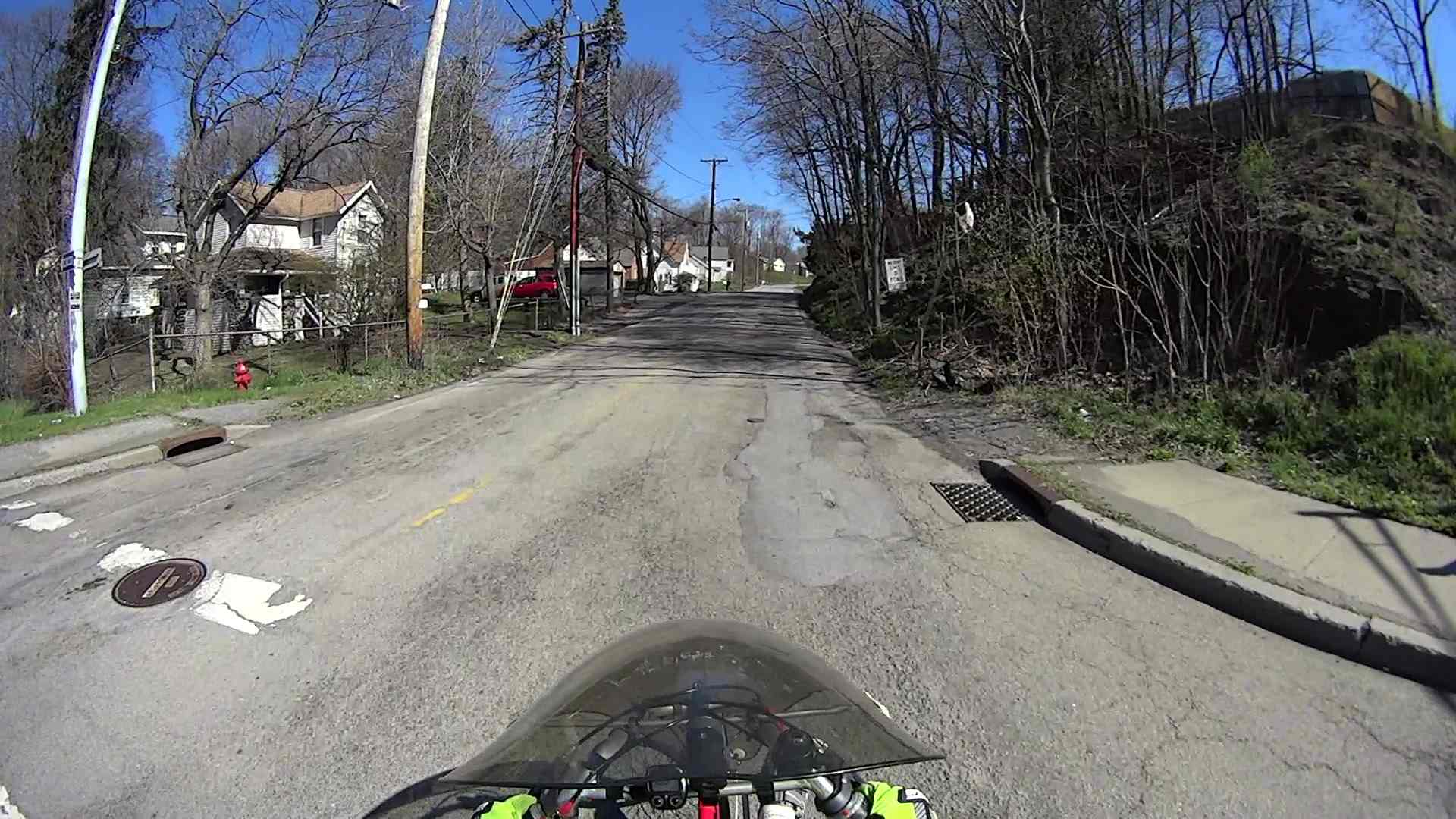
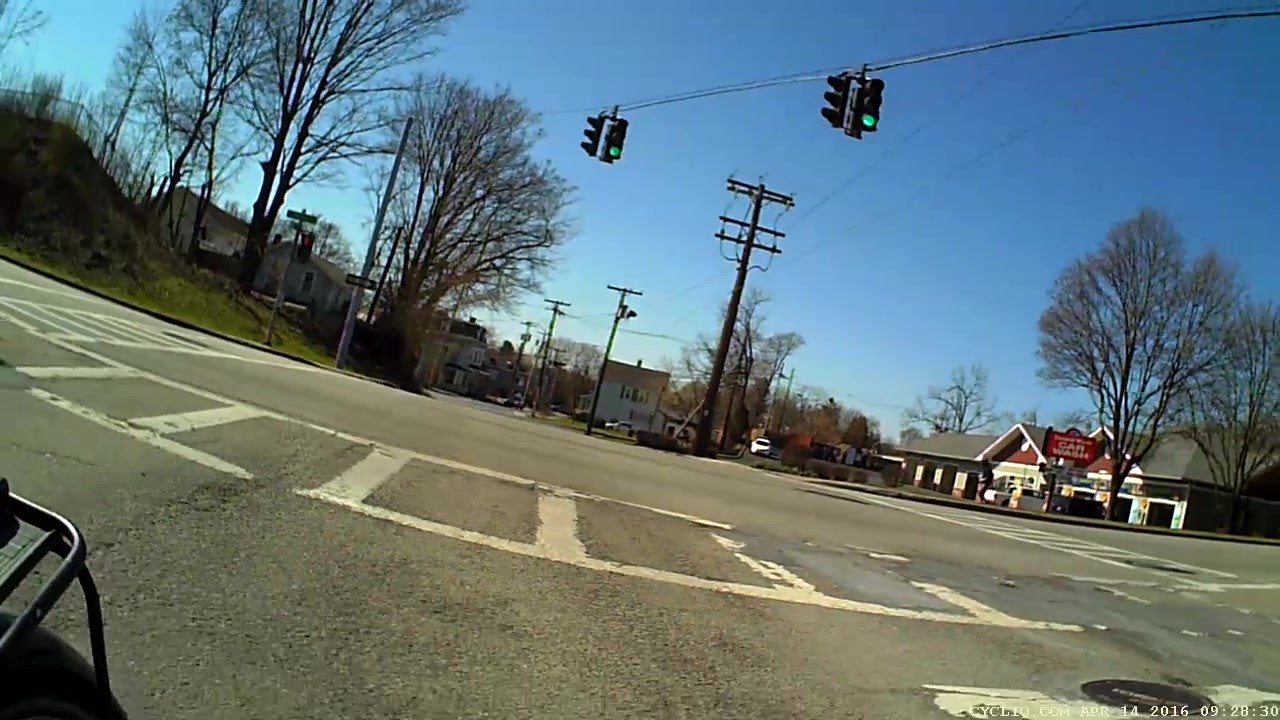
Just because I hadn’t done so for quite a while, I rode Grand Avenue from Beechwood north to the rail trail. The rotted asphalt at the Westbound Arterial (a.k.a. Maple St, at that point) intersection makes it easy to spot the quadrupole sensor loop:
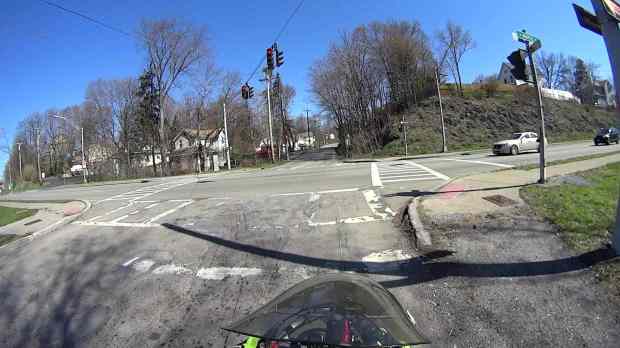
Grand at Arterial WB – front camera – 0193 After half a minute, with no traffic pulling up behind me, I eased the bike over the central wire:
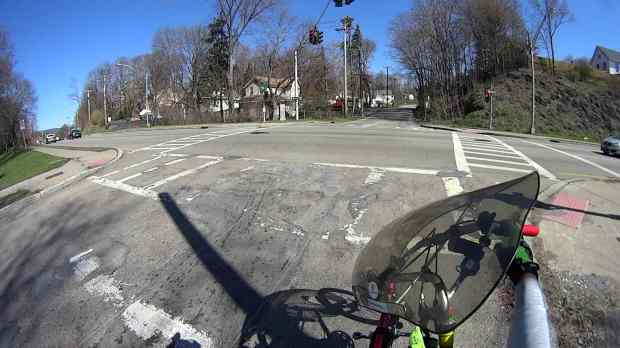
Grand at Arterial WB – front camera – 1693 Which is exactly as awkward as it seems:
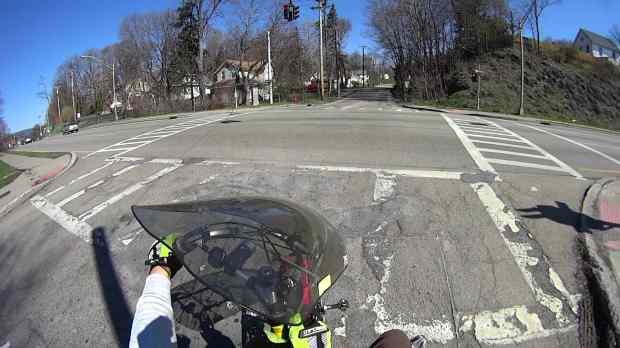
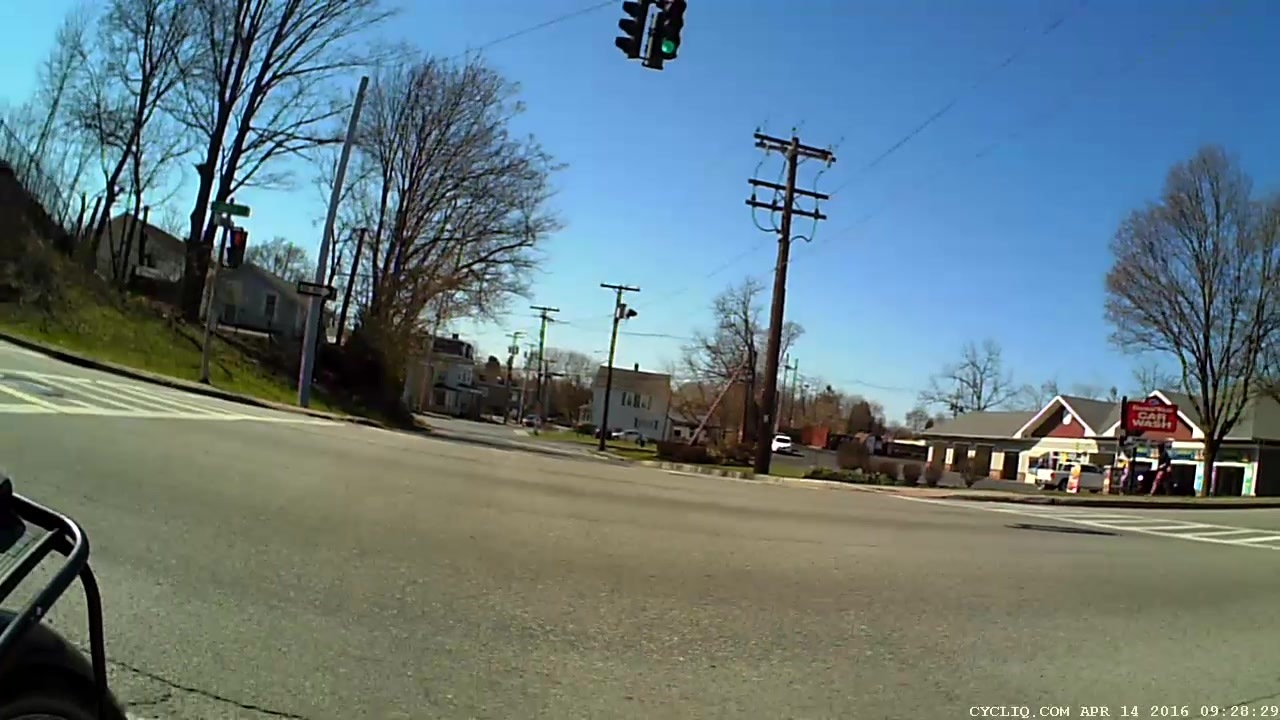
Grand at Arterial WB – front camera – 1945 Much to my surprise, the sensor tripped:
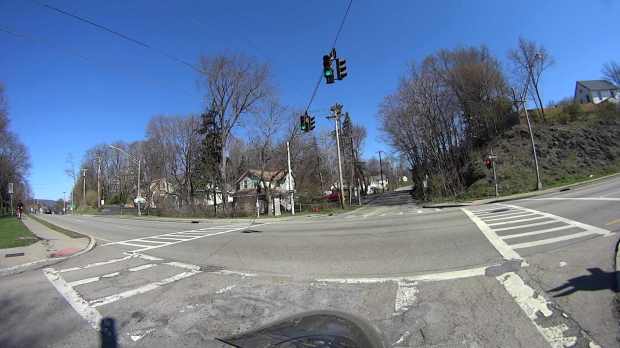
Grand at Arterial WB – front camera – 3044 That’s about 50 s from the time I rolled over the first of the two sensor loops, which is fast enough for me. It’s unusual to find a sensor loop that detects a bike, though.
A bit over 6 s seconds later, I’ve cleared the intersection:
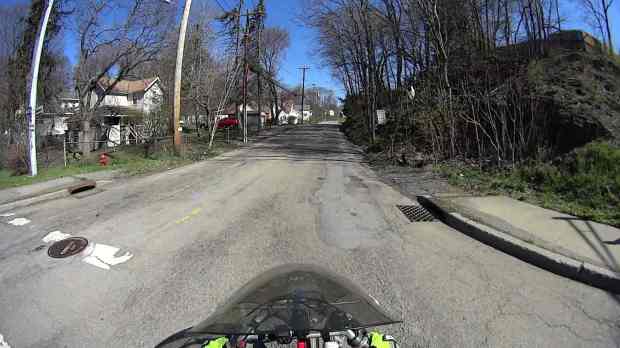
Grand at Arterial WB – front camera – 3445 The rear camera shows that the light remains green:
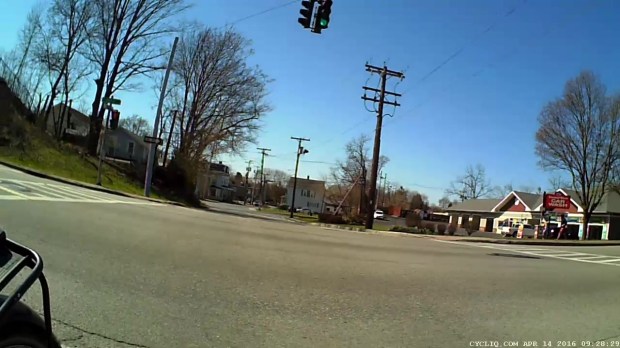
Grand at Arterial WB – rear camera – 1085 And it stays green:
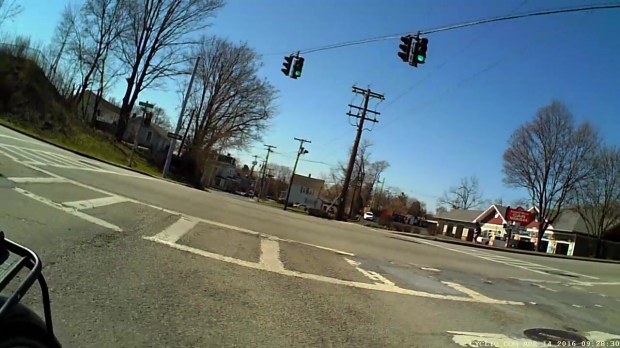
Grand at Arterial WB – rear camera – 1121 About 11 s after turning green, a car approaches the sensor loop:
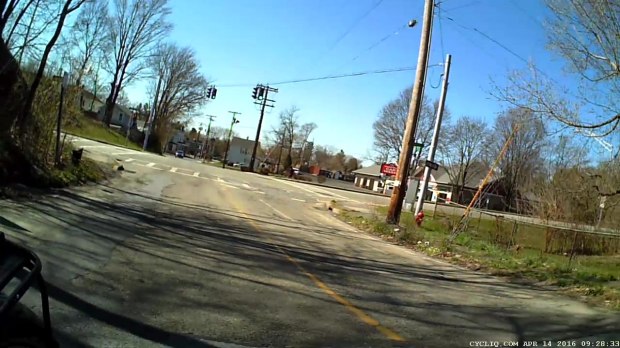
Grand at Arterial WB – rear camera – 1228 I think that reset the signal timing, so that light remained green for nearly 23 s:
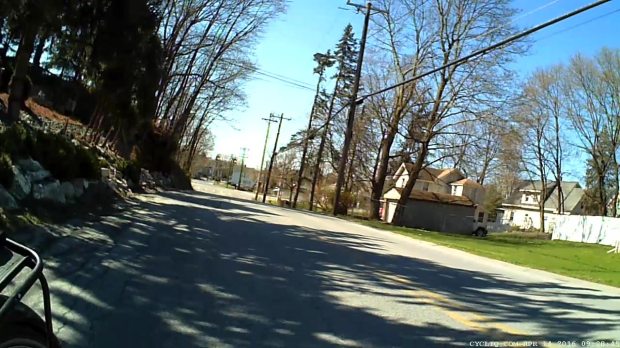
Grand at Arterial WB – rear camera – 1581 It turned red after 26 s:
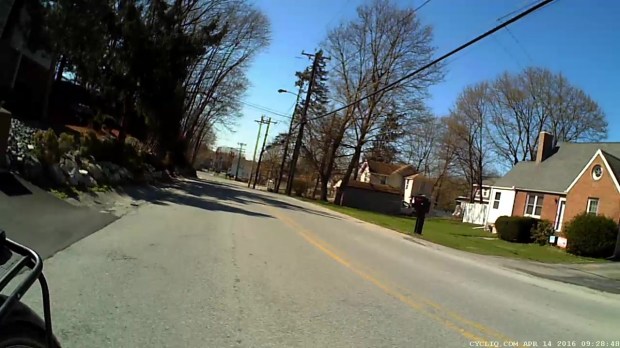
Grand at Arterial WB – rear camera – 1671 As nearly as I can tell, the minimum green time for this intersection is 12 s.
So life is good: the sensor loop detects a bicycle and the signal remains green for long enough to a bike to clear the intersection. If only all intersections worked that way!
Compare that with the minimum 7 s for the Burnett Blvd intersection and you (well, I) wonder why crossing six lanes requires 5 s less than crossing three lanes. Perhaps different standards apply to this single-direction cross-traffic flow that make it much more difficult than Burnett’s bidirectional cross traffic?




-
Subscribe
Subscribed
Have a WordPress.com account? Log in now.

