-
Ortur YRC-1: Adding a Home Switch
Stipulated: A chuck rotary doesn’t need a home switch.
With that in mind, a home switch seemed like it might come in handy and this is the simplest workable design:
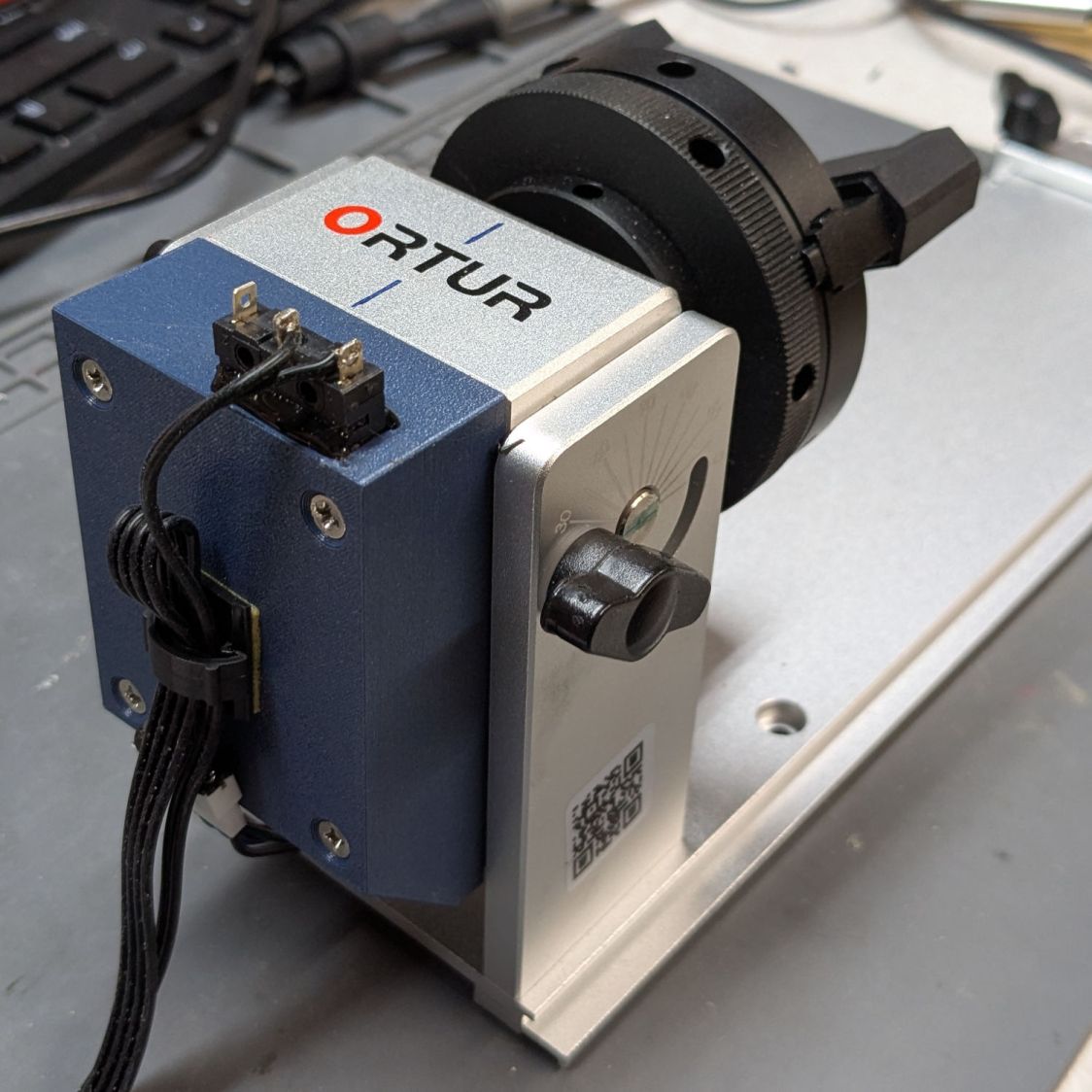
Ortur Chuck Rotary home switch – installed The cover mimics the size & shape of the Ortur cover, minus the stylin’ rounding & chamfering along the edges:
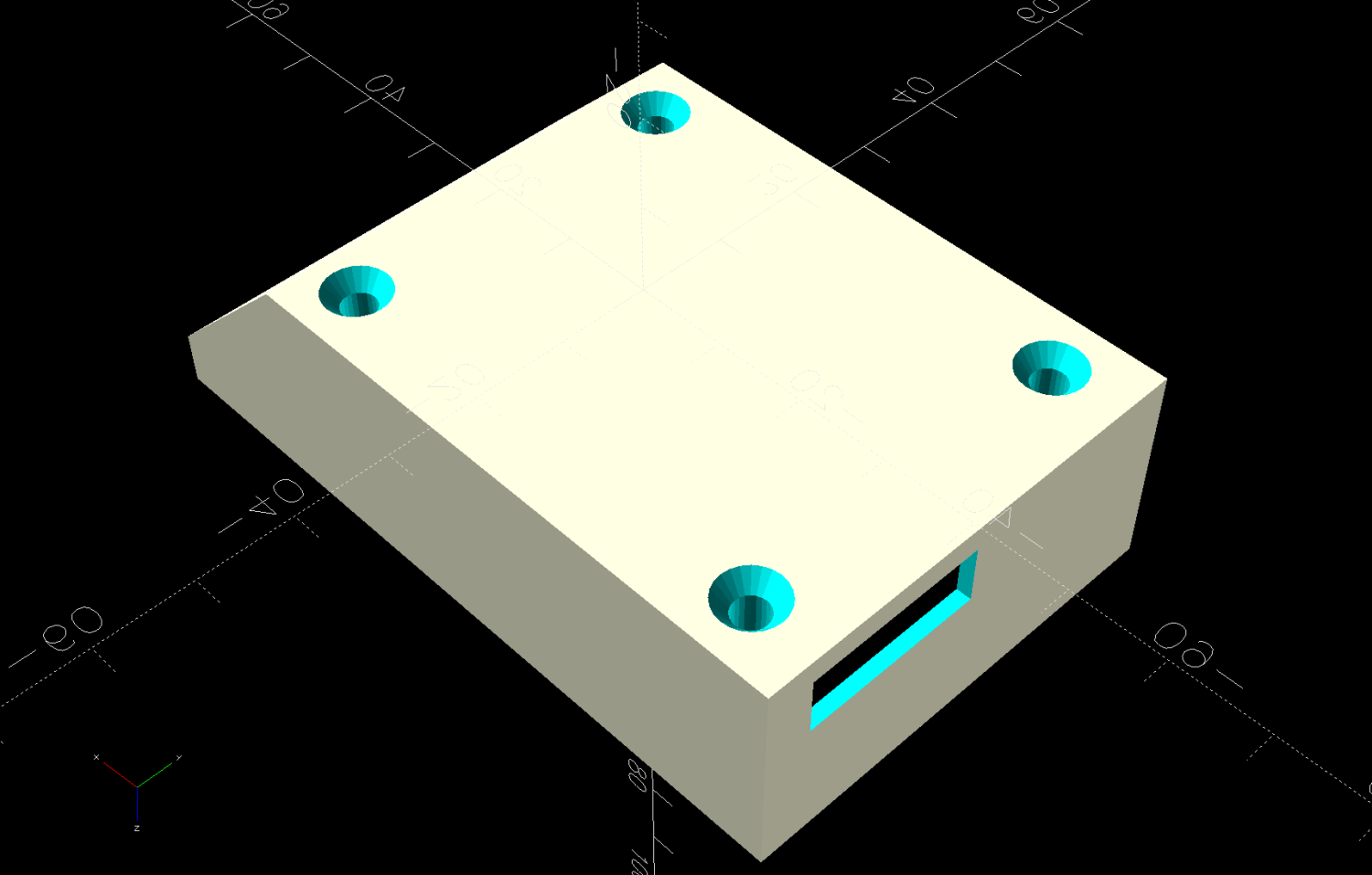
Ortur Rotary Belt Cover – exterior – solid model It has a certain Cybertruck aspect, doesn’t it?
Two beads of hot melt glue hold the switch flush along the cover’s inside surface:
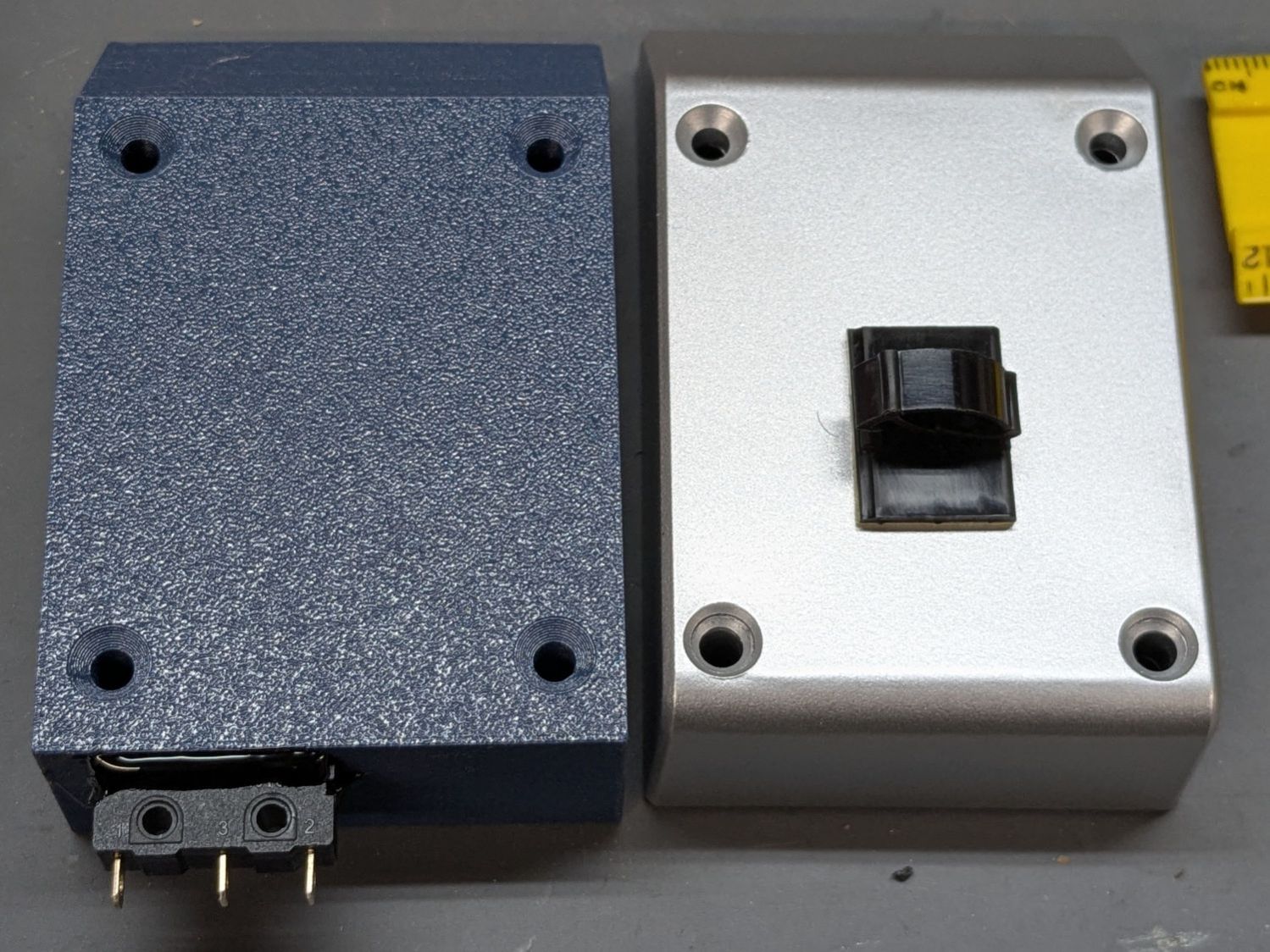
Ortur Chuck Rotary home switch – case exterior One might argue for a tidy cover over those terminals.
While contemplating the layout by holding the switch here & there, seeing the switch roller neatly centered on the pulley hub told me the Lords of Cosmic Jest favored this plan:
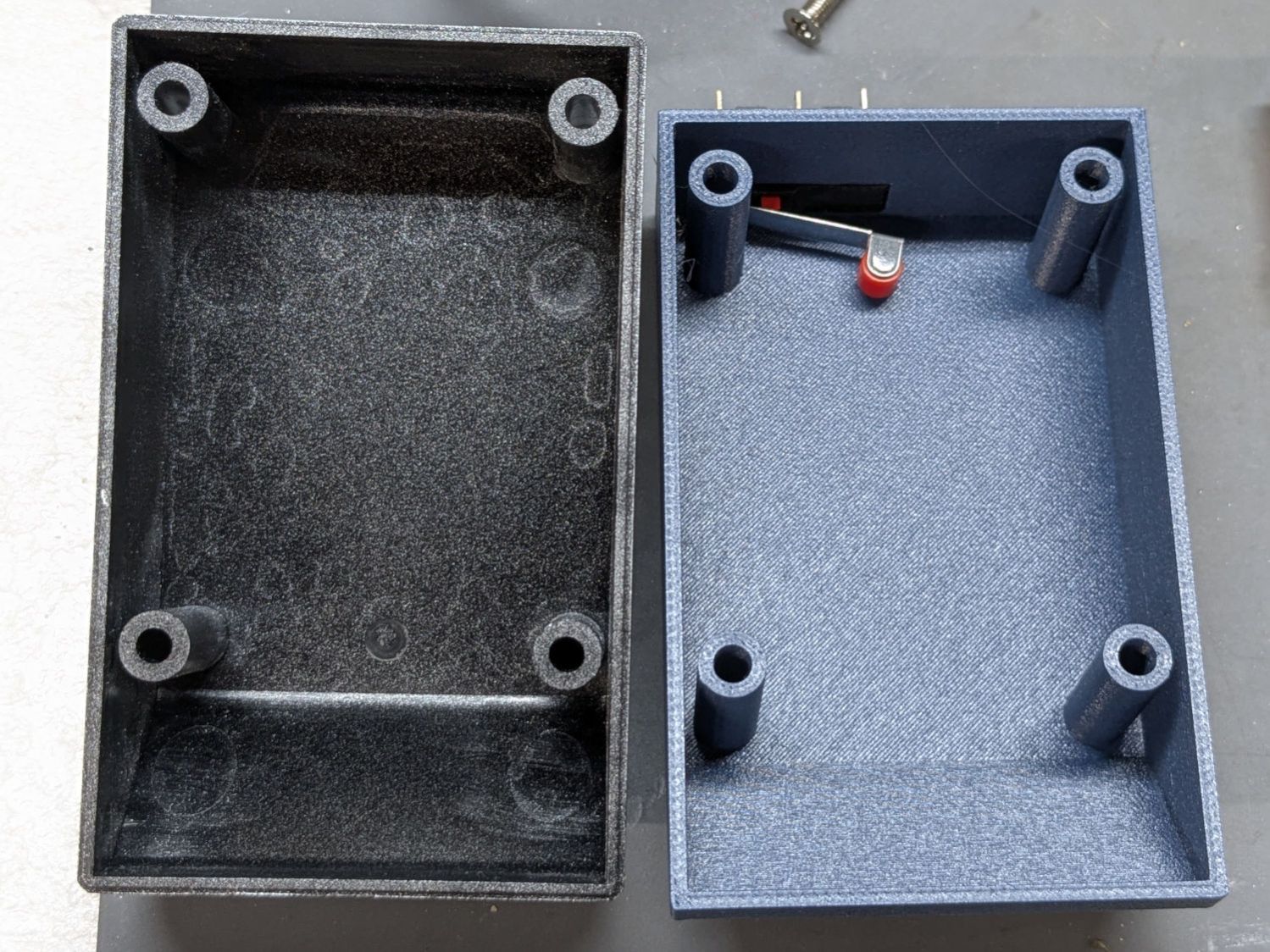
Ortur Chuck Rotary home switch – case interior A simple cam lifts the roller:
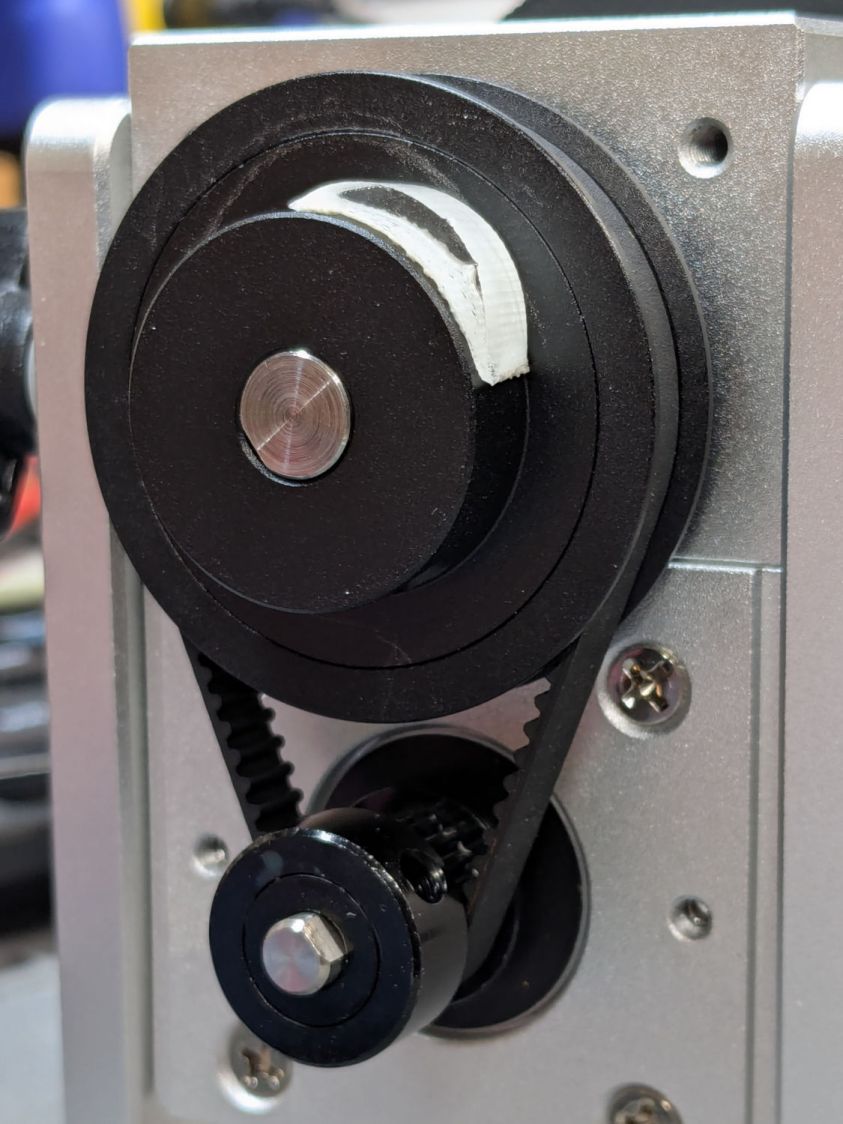
Ortur Chuck Rotary home switch – pulley cam That’s obviously laser-cut acrylic sitting on double-sided tape.
Edit: The pulley ratio is 1:3, so the step/rev value is three times the DIP switch setting on the stepper driver.
Some finicky repositioning put the #1 chuck jaw on top after homing:
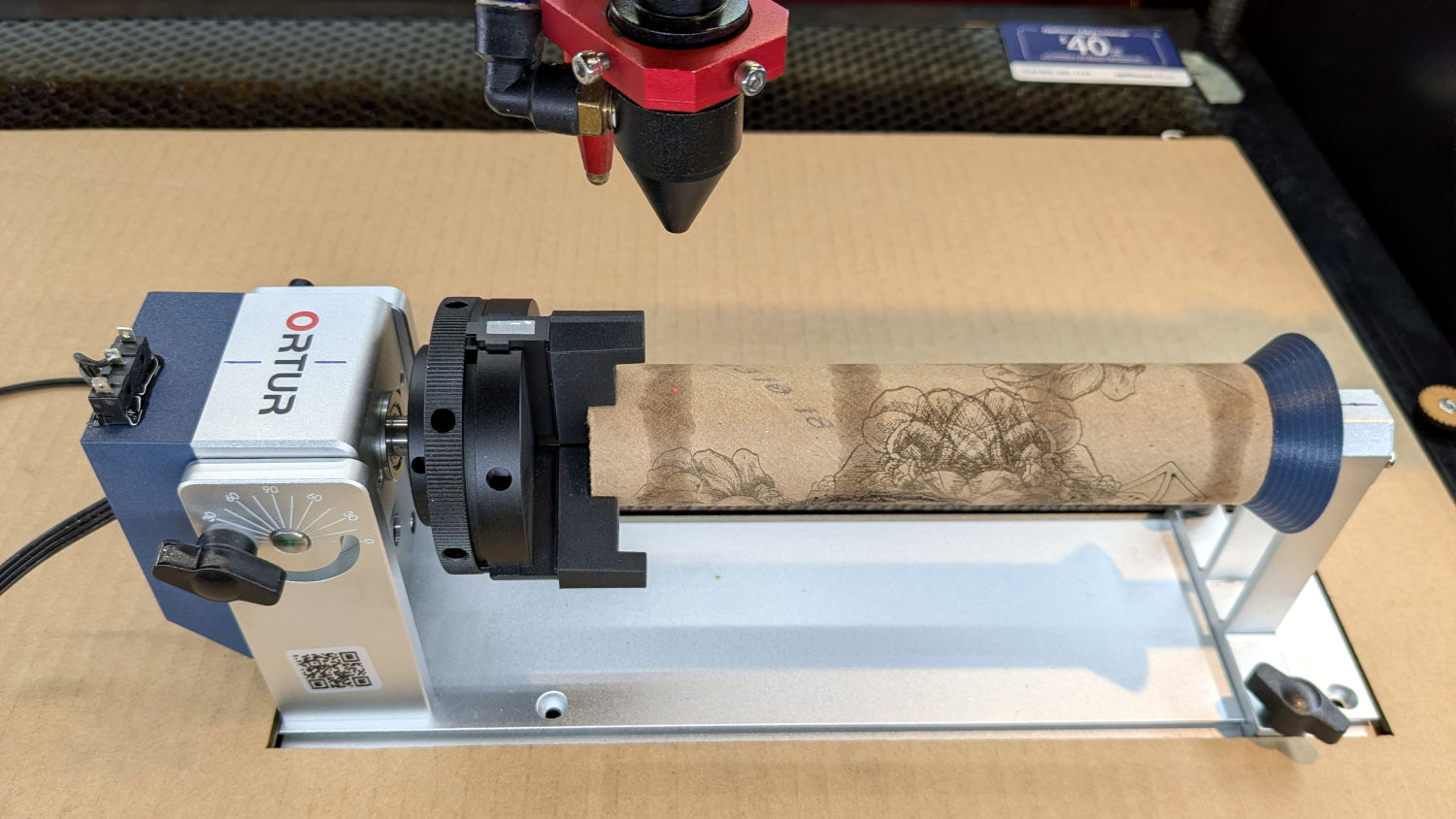
Ortur Chuck Rotary home switch – jaw position A more permanent adhesive under the cam may be in order.
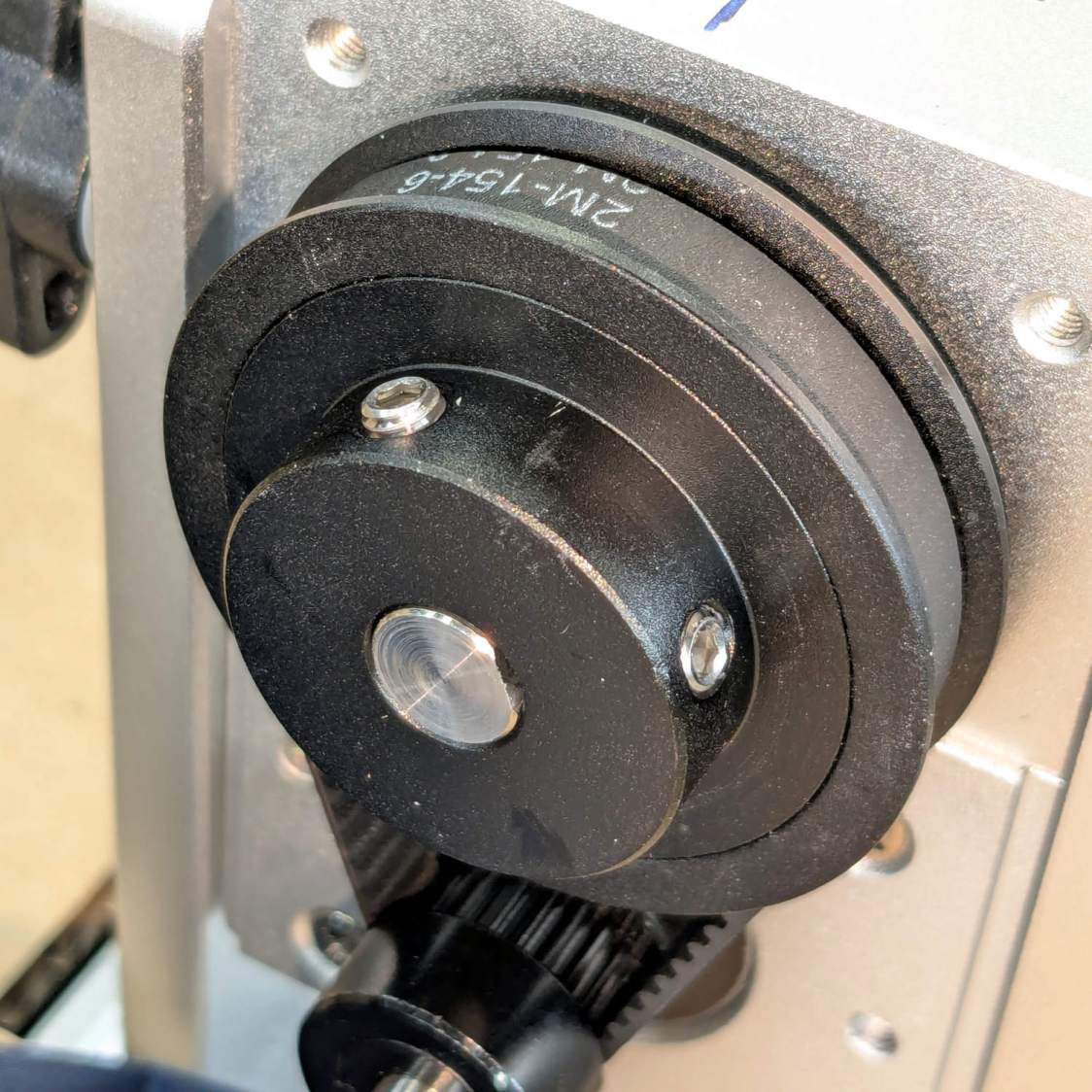
Update: The switch triggers more reliably with a simple setscrew standing proud of the pulley hub:
Ortur Rotary Focus Pad – home trip setscrew Wiring the normally open switch contacts in parallel with the existing Y axis home switch lets both the gantry and the rotary trigger the controller. The front-panel switch ensures only one of those two can move:
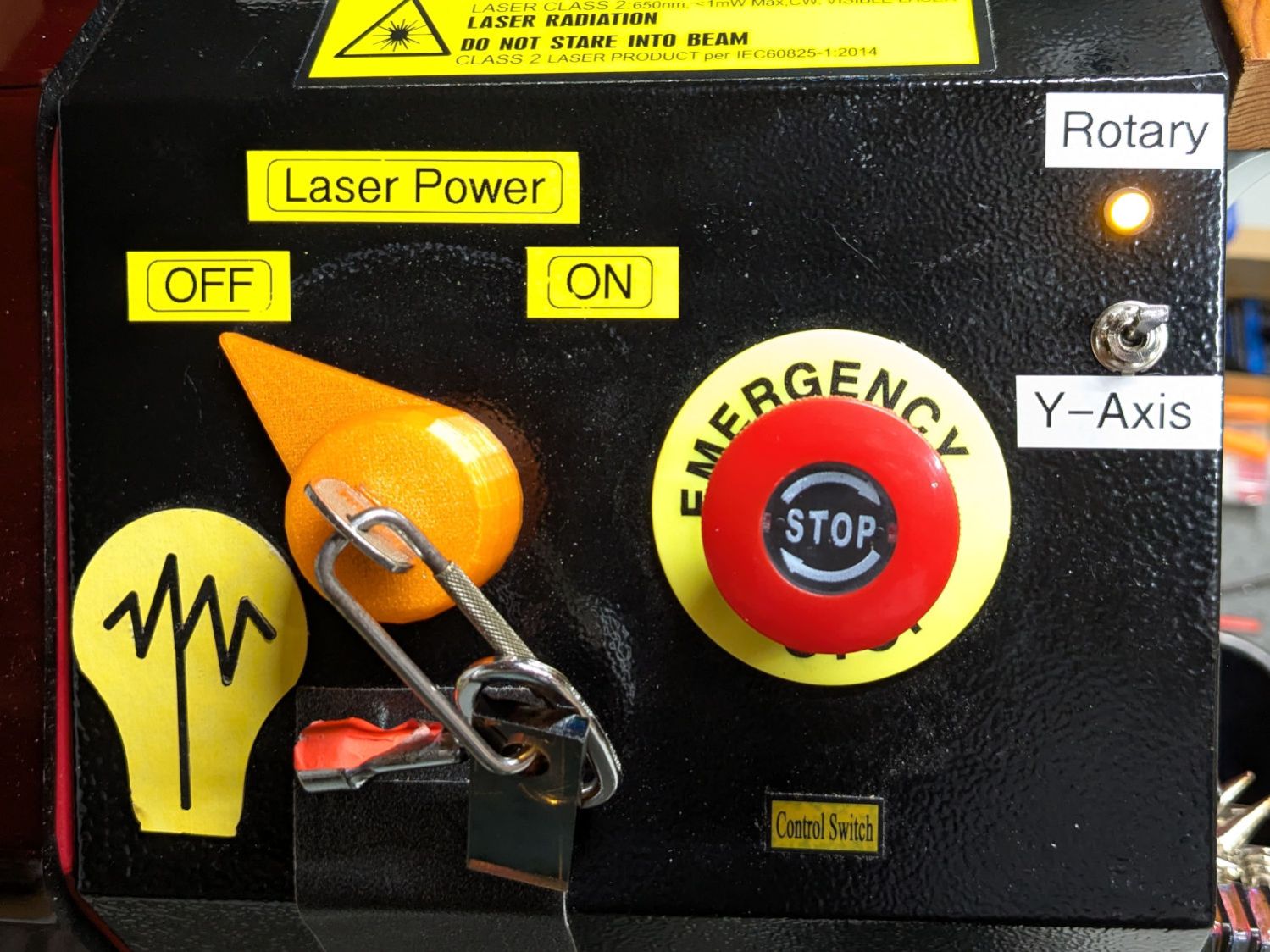
Laser Rotary – control switch With all that in place and the switch flipped, the chuck rotates happily and homes properly with the controller in normal linear mode.
Spoiler: A Ruida-ish KT332N controller ignores the Y-axis
Homeenable setting withRotarymode enabled, because everybody knows a rotary has no need for a home switch.The OpenSCAD code as a GitHub Gist:
This file contains hidden or bidirectional Unicode text that may be interpreted or compiled differently than what appears below. To review, open the file in an editor that reveals hidden Unicode characters. Learn more about bidirectional Unicode characters// Ortur Rotary belt cover // Ed Nisley – KE4ZNU // 2025-12-23 include <BOSL2/std.scad> Layout = "Show"; // [Show,Build,Block,Shell] /* [Hidden] */ ID = 0; OD = 1; LENGTH = 2; HoleWindage = 0.2; Protrusion = 0.1; NumSides = 2*3*4; $fn=NumSides; Gap = 5.0; WallThick = 1.6; // OEM wall CoverOA = [81.5,50.5,23.0]; // open side down CoverRadius = 4.0; CoverTrimZ = 6.0; CoverTrimAngle = 45; BreakX = (CoverOA.z – CoverTrimZ)/tan(CoverTrimAngle); ScrewOC = [51.0,38.0]; ScrewHoleID = 3.5; ScrewHeadRecess = [ScrewHoleID,7.0,1.8]; ScrewOffset = 8.0; // cover edge to hole centerline SwitchOA = [21.0,20.0,6.5]; // X = body + roller, excludes terminals SwitchOffset = [0,0,17.0]; // nominal end = roller at centerline //—– // Overall cover shape module CoverBlock() { cuboid([CoverOA.x,CoverOA.y,CoverTrimZ],anchor=BOTTOM) position(TOP+LEFT) prismoid(size1=[CoverOA.x,CoverOA.y],size2=[CoverOA.x – BreakX,CoverOA.y], height=CoverOA.z – CoverTrimZ,shift=[-BreakX/2,0],anchor=BOTTOM+LEFT); } // Cover shell module CoverShell() { difference() { CoverBlock(); down(Protrusion) resize(CoverOA – [2*WallThick,2*WallThick,WallThick – Protrusion]) CoverBlock(); } } // The complete cover module Cover() { difference() { union() { CoverShell(); left((CoverOA.x – ScrewOC.x)/2 – ScrewOffset) for (i = [-1,1], j=[-1,1]) translate([i*ScrewOC.x/2,j*ScrewOC.y/2,0]) cyl(CoverOA.z,d=ScrewHoleID + 2*WallThick,anchor=BOTTOM); } left((CoverOA.x – ScrewOC.x)/2 – ScrewOffset) down(Protrusion) for (i = [-1,1], j=[-1,1]) translate([i*ScrewOC.x/2,j*ScrewOC.y/2,0]) { cyl(CoverOA.z + 2*Protrusion,d=ScrewHoleID + HoleWindage,anchor=BOTTOM); up(CoverOA.z – ScrewHeadRecess[LENGTH]) cyl(ScrewHeadRecess[LENGTH] + 2*Protrusion, d1=ScrewHeadRecess[ID] + HoleWindage,d2=ScrewHeadRecess[OD] + HoleWindage, anchor=BOTTOM); } translate(SwitchOffset) left(CoverOA.x/2 – WallThick – Protrusion) cuboid(SwitchOA,anchor=RIGHT+FWD); } } //—– // Build things if (Layout == "Block") { CoverBlock(); } if (Layout == "Shell") { CoverShell(); } if (Layout == "Show") { Cover(); } if (Layout == "Build") { up(CoverOA.z) xrot(180) Cover(); }
-
Subscribe
Subscribed
Have a WordPress.com account? Log in now.

