-
Squidwrench Electronics Workshop: Session 5 Whiteboards
Whiteboards from the SqWr Electronics Session 5, covering transistors as switches …
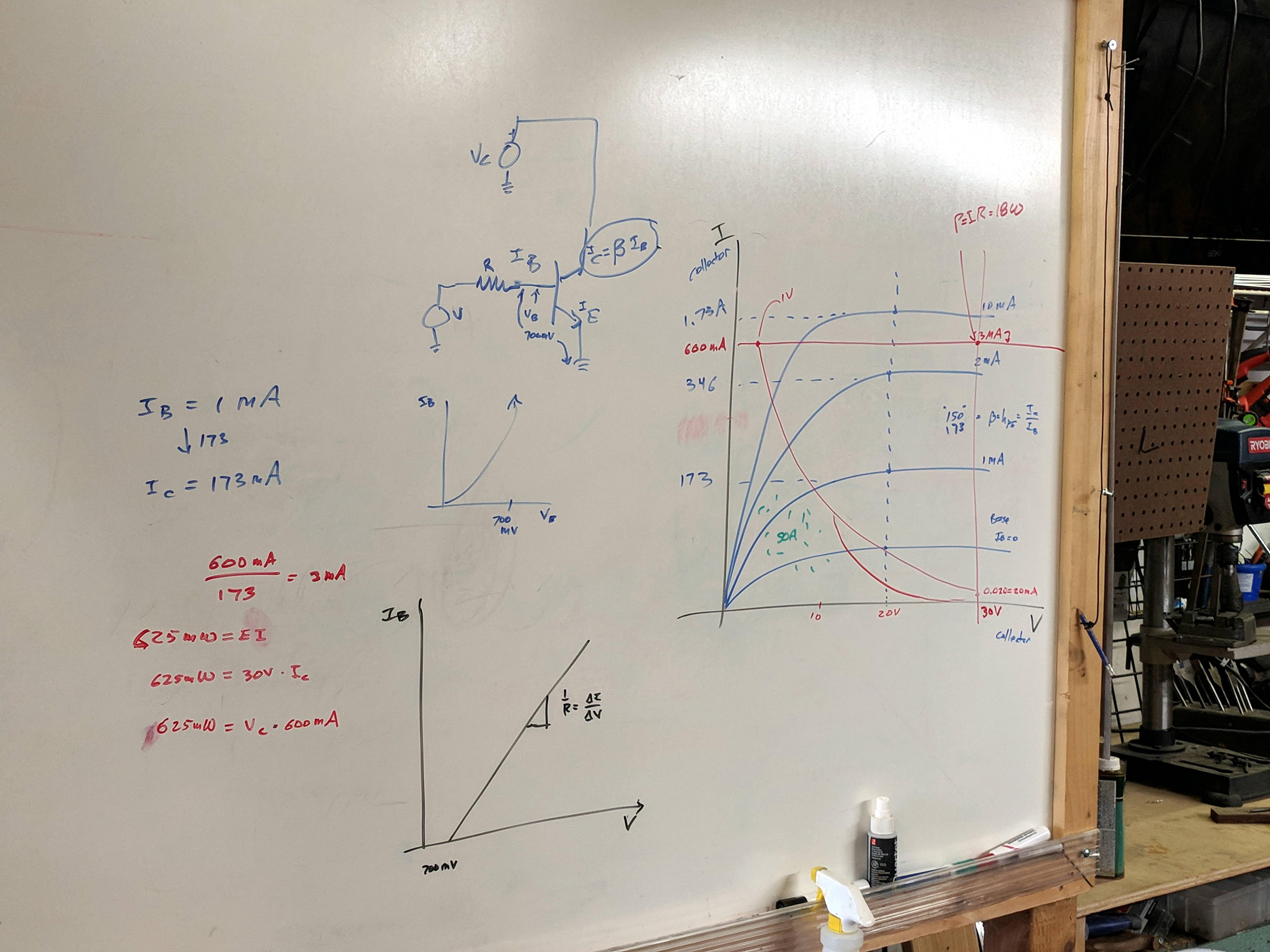
Reviewing I vs V plots, starting with a resistor and then a transistor as a current amplifier:
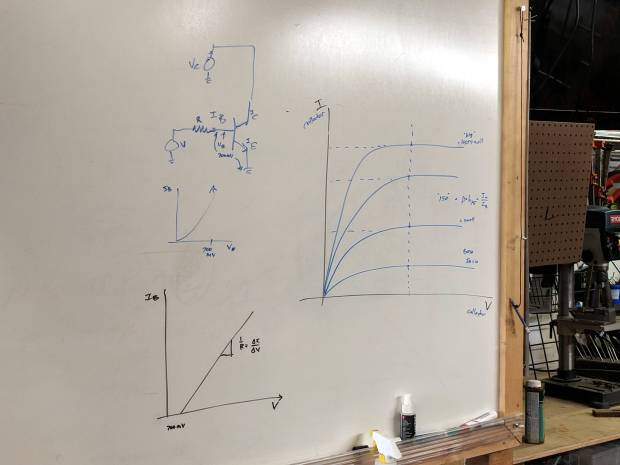
SqWr Electronics 5 – whiteboard 1 Reminder of why you can’t run a transistor at its maximum voltage and current at the same time:
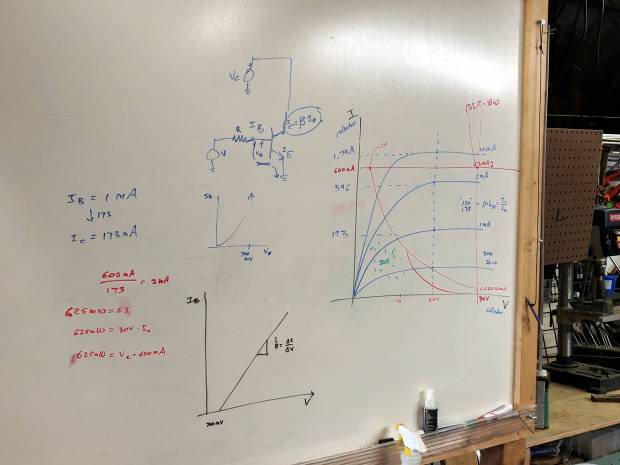
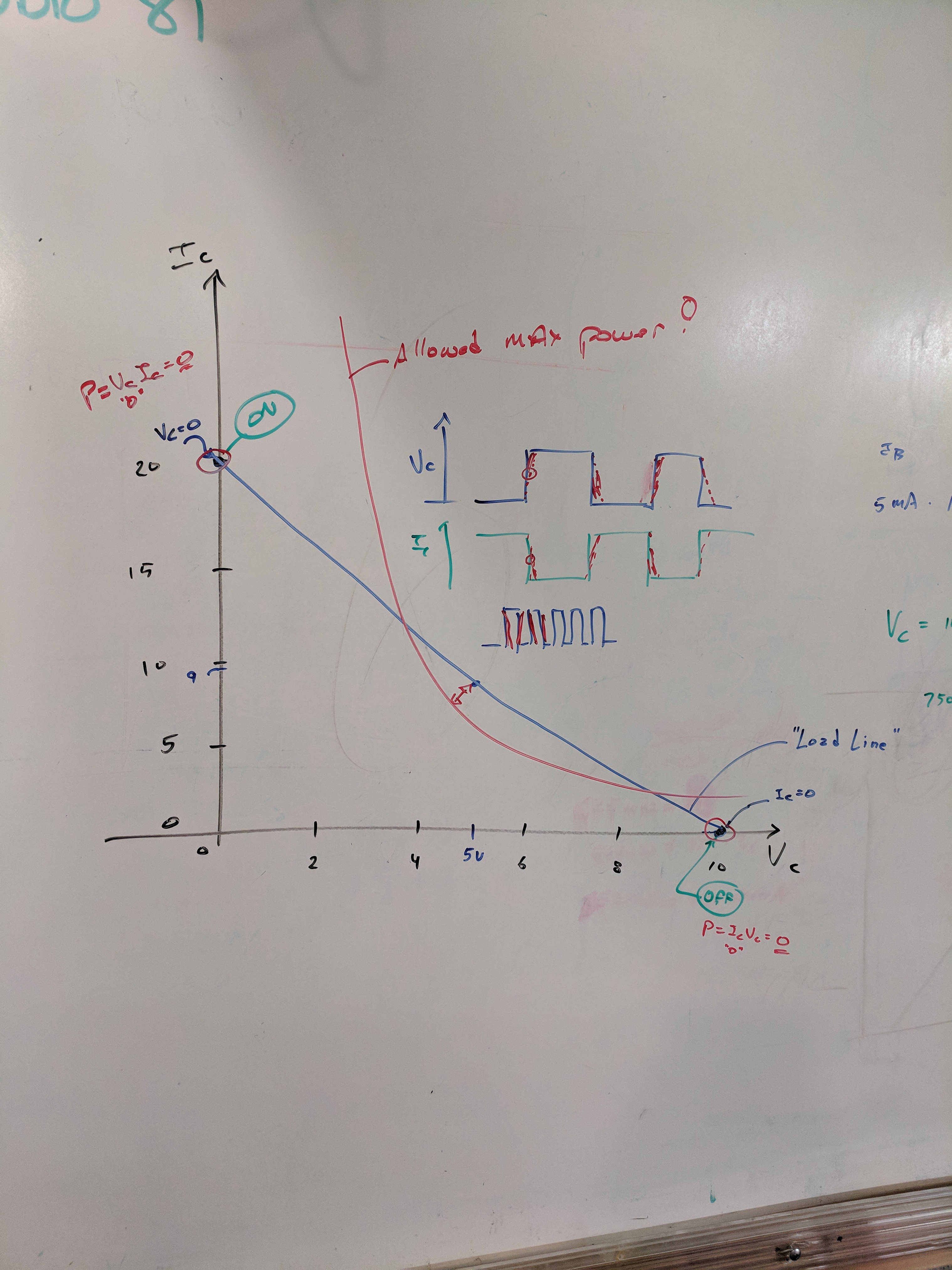
SqWr Electronics 5 – whiteboard 2 A resistor load line, with power calculation at the switch on and off coordinates:
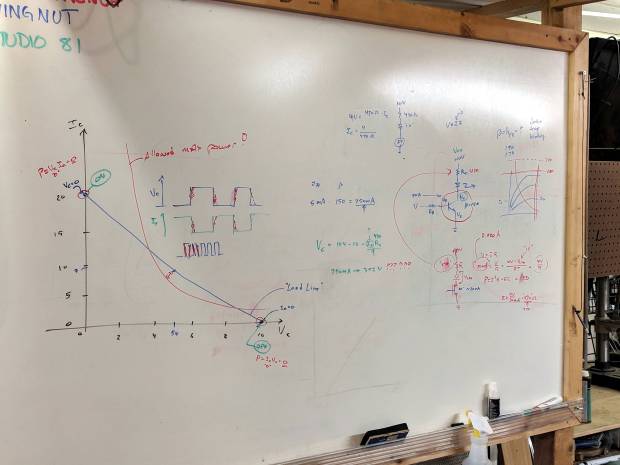
SqWr Electronics 5 – whiteboard 3 Detail of the power calculations, along with a diagram of the current and voltage when you actually switch the poor thing:
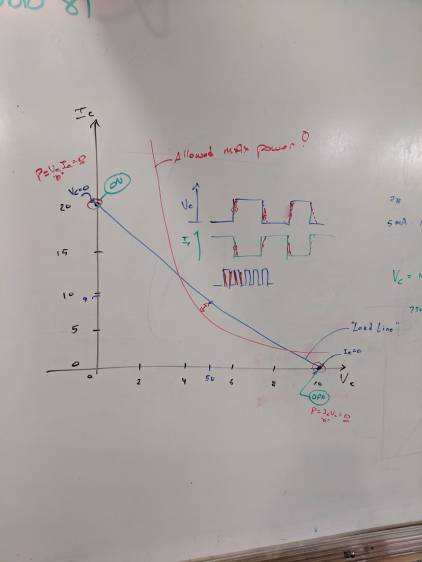
SqWr Electronics 5 – whiteboard 3 detail Oversimplification: most of the power happens in the middle, but as long as the switching frequency isn’t too high, it’s all good.
Schematic of the simplest possible switched LED circuit, along with a familiar mechanical switch equivalent:
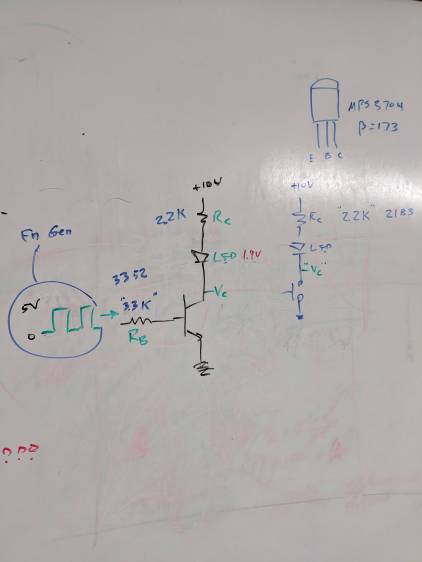
SqWr Electronics 5 – whiteboard 4 We started with the “mechanical switch” to verify the connections:
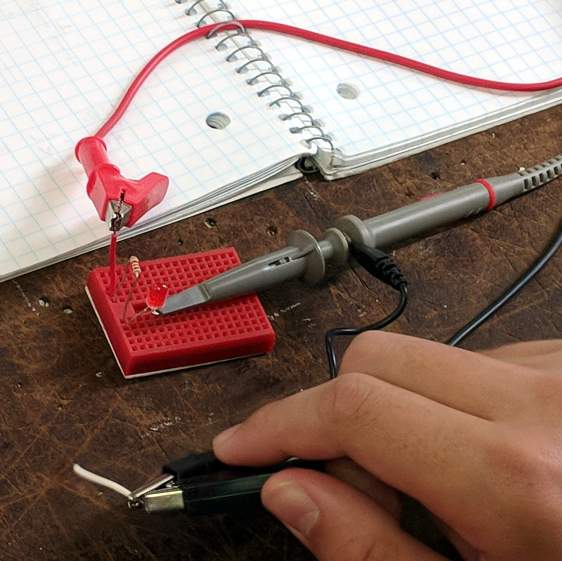
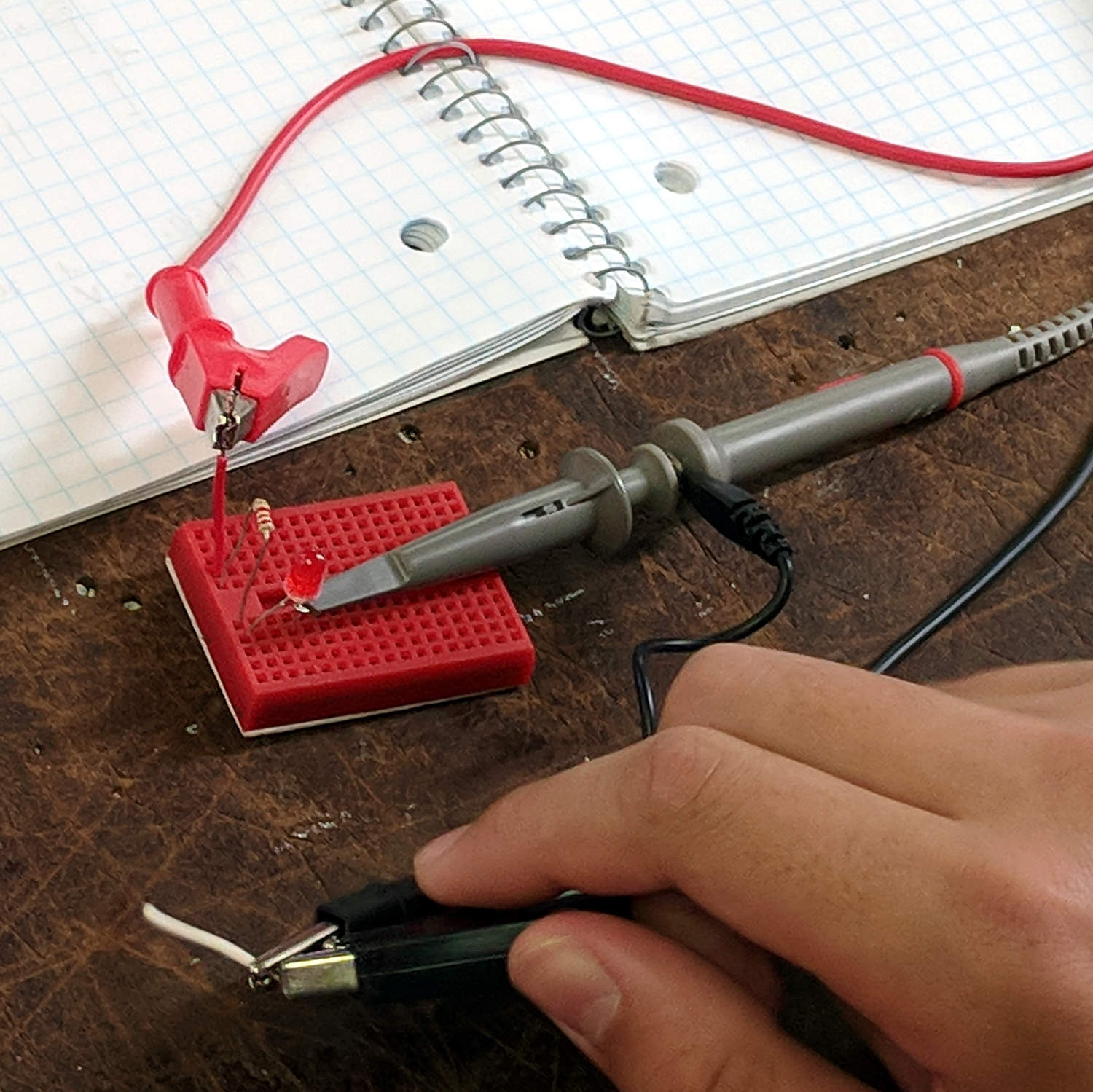
SqWr Session 5 – Switched LED breadboard Building the circuitry wasn’t too difficult, but covering the function generator and oscilloscope hookup took far more time than I expected.
My old analog Tek 2215 scope was a crowd-pleaser; there’s something visceral about watching a live CRT display you just don’t get from the annotated display on an LCD panel.
I’d planned to introduce capacitors, but just the cap show-n-tell went well into overtime. We’ll get into those in Session 6, plus exploring RC circuitry with function generators and oscilloscopes.



-
Subscribe
Subscribed
Have a WordPress.com account? Log in now.

