-
LED Nightlight Base Teardown & Simulation
I volunteered to take a look inside a small LED nightlight base to see how well it might work as a power supply for other circuitry:

Nightlight – overview Note: the AC plug is not polarized. Either blade can contact the hot side of the AC line.
The cadmium-selenide photocell in front turns the white LED on when it sees darkness and off when it sees lightness, with a more-or-less proportional response during dimness. The LED has an obvious 60 Hz flicker, particularly during its partially on phase, so I didn’t expect much inside.
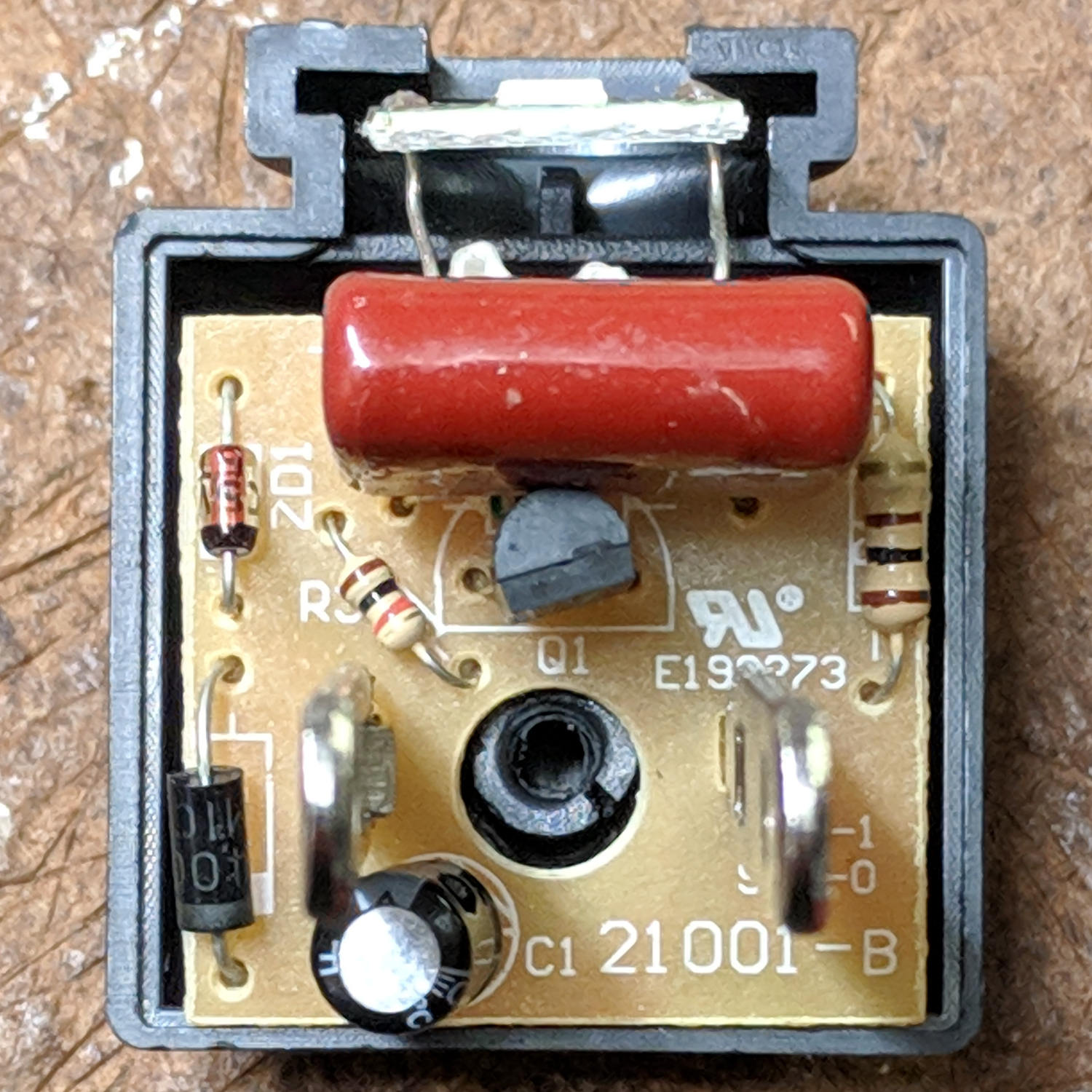
The component side of the PCB faces toward the blades, which you’re looking along the lengths of:

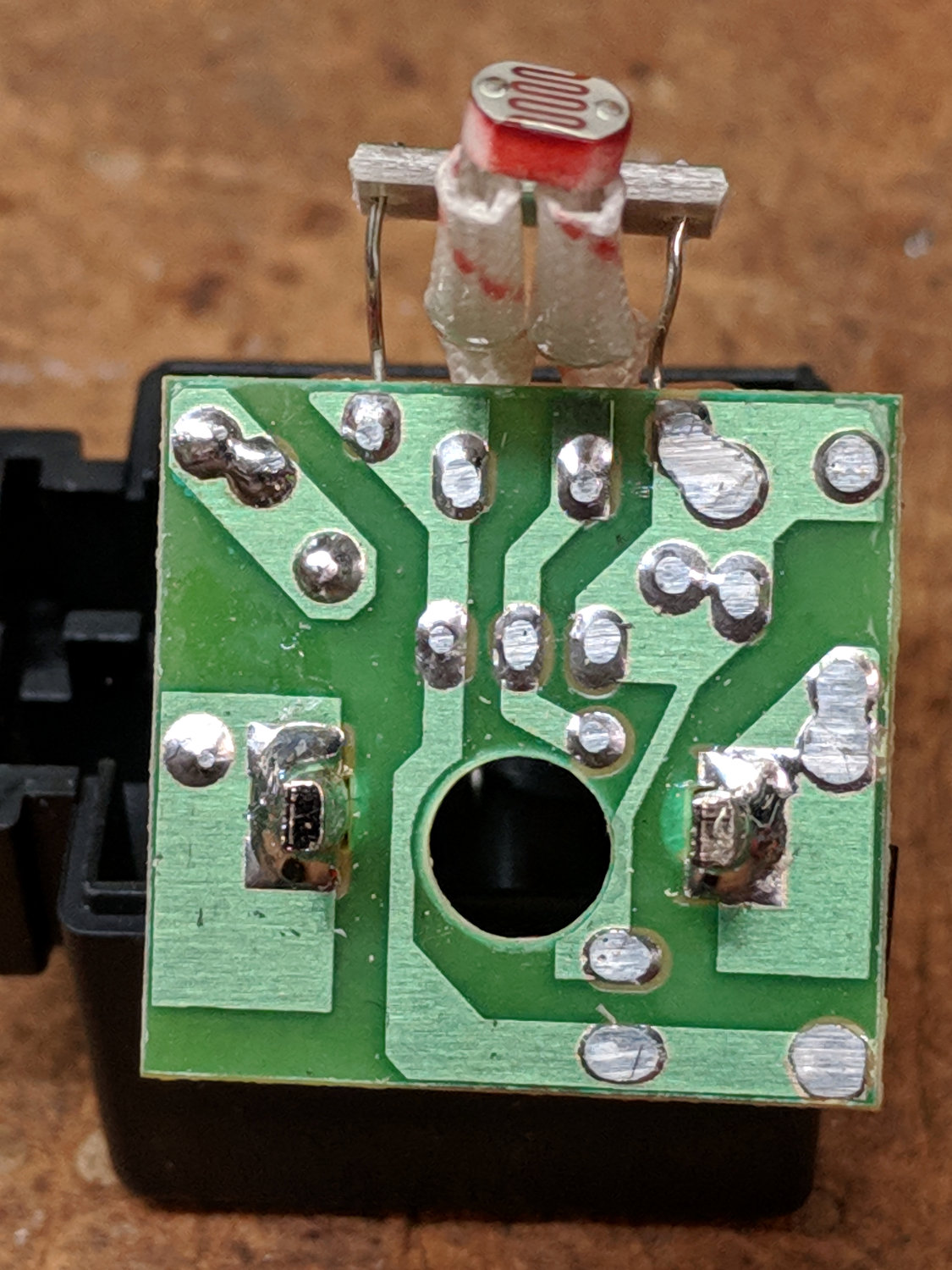
Nightlight – PCB component side The solder side faces away from the outlet:
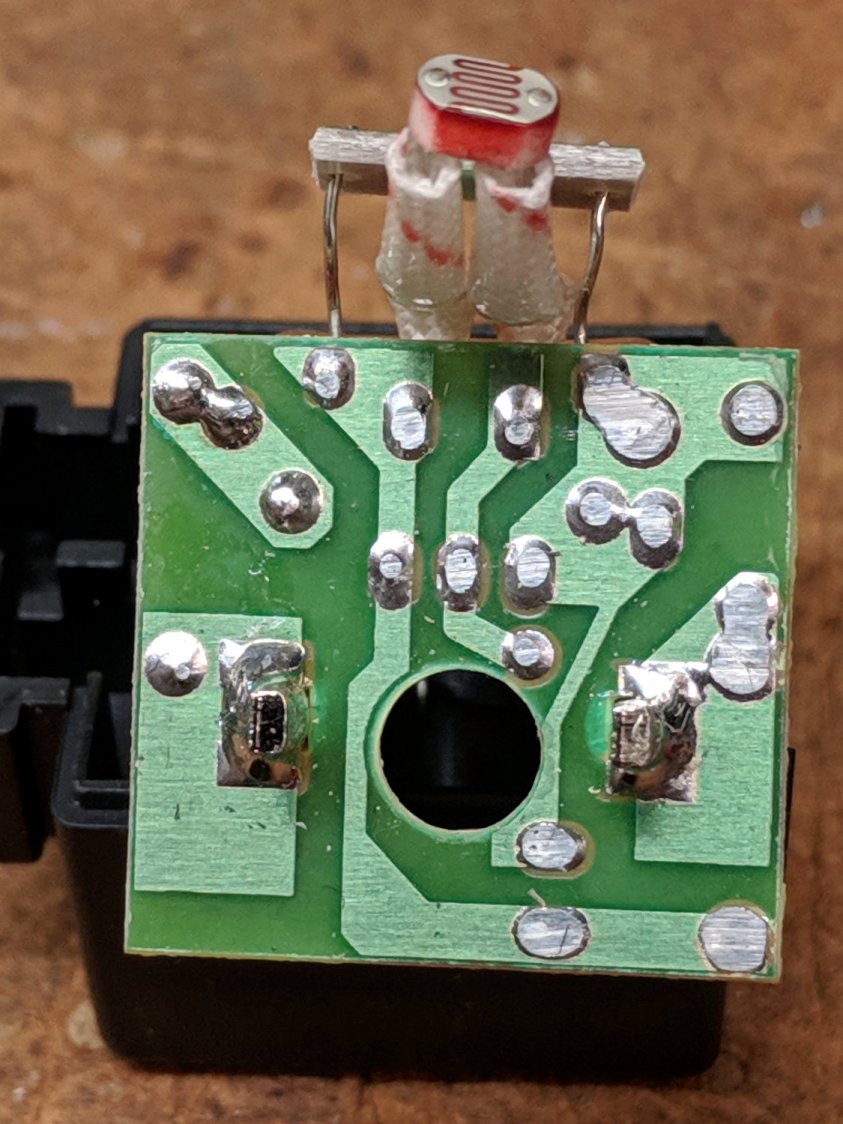
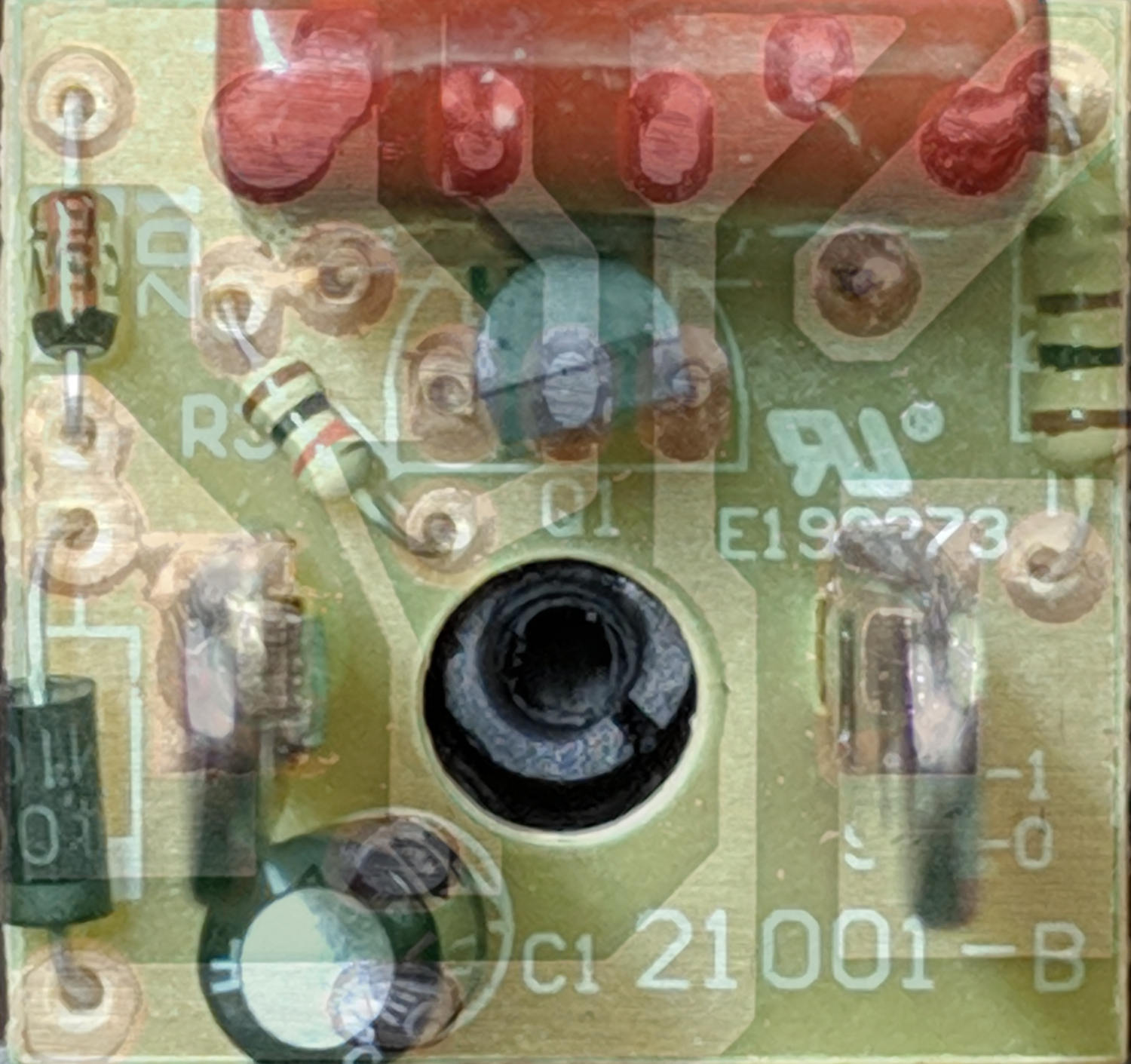
Nightlight – PCB solder side Flipping the solder side left-to-right and overlaying the two images produces an X-ray-ish view useful for tracing the circuitry:

Nightlight – PCB trace overlay Some doodling extracts an LTSpice schematic:

Nightlight schematic None of the component values seem particularly critical; the diodes and transistor are close approximations to what’s really inside. I think the 100 Ω resistor also serves as a fuse, should anything else go wrong.
Setting the CdS cell to 1 MΩ = “dark” turns the LED on:
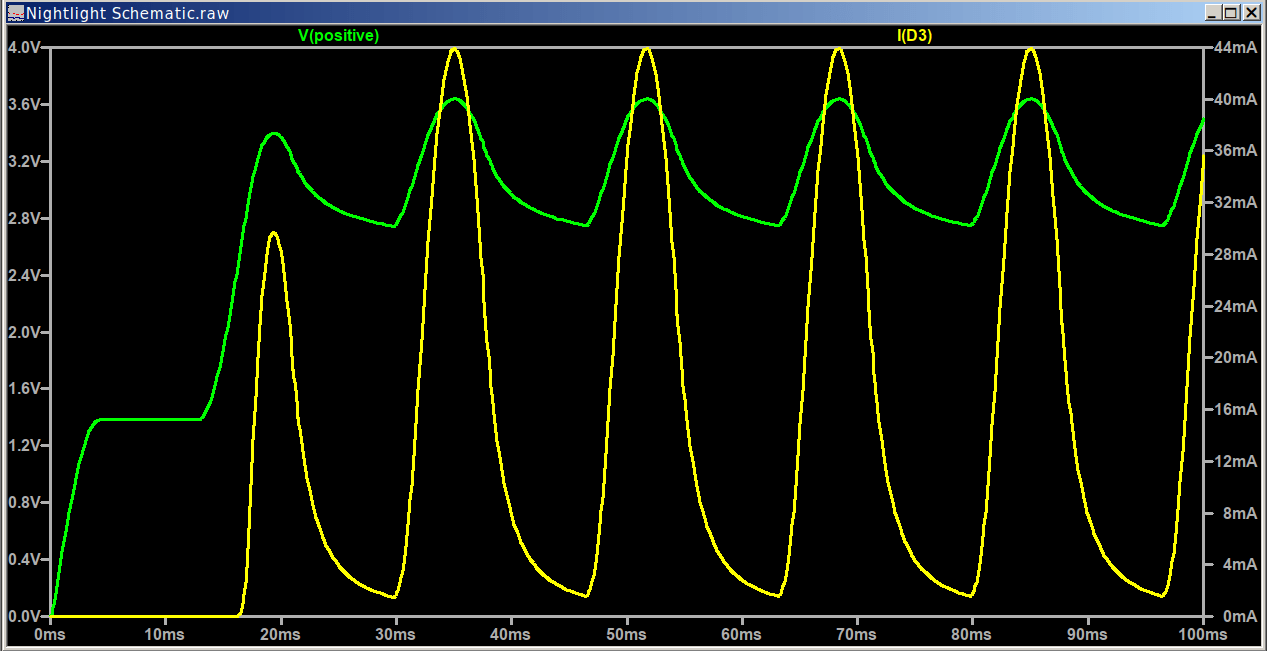
Nightlight – ON waveforms Although I don’t trust the numbers very far, the LED current waveform definitely suggests the flicker isn’t all in my head.
Setting the cell to 10 Ω = “light” turns the LED off, by the simple expedient of clamping the filter capacitor voltage well below the LED’s forward drop:
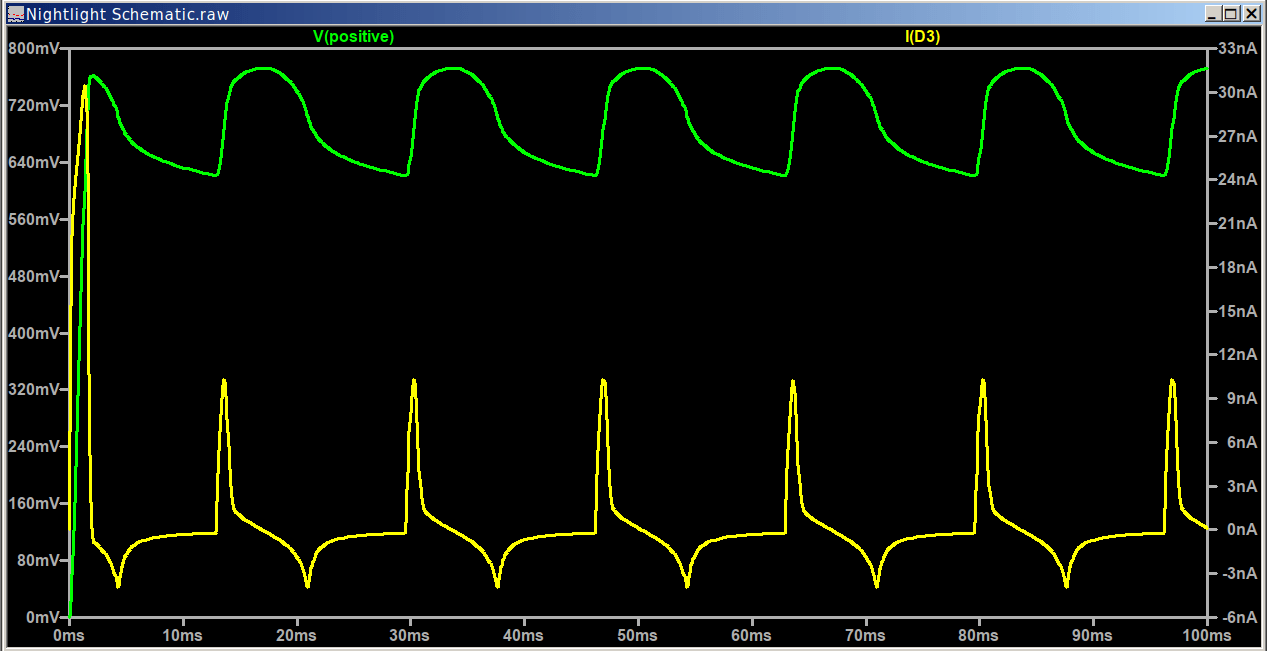
Nightlight – OFF waveforms When the LED is off, the transistor current is slightly higher than the LED’s on-state current, because saturation voltage:

Nightlight – OFF – transistor current The current runs right through the 820 nF capacitor, which serves as a more-or-less 3.2 kΩ ballast resistor:

Nightlight – OFF – 820 nF cap current It’s a nice film cap and should have a low ESR, but this seems a bit sketchy to me.
So, basically, the nightlight doesn’t really have a power supply in the usual meaning of the term and isn’t suited for driving anything other than the white LED inside the case. Relocating the LED outside the case is an Extremely Bad Idea™, because the anode is one diode away from what might well be the hot AC line; one little oopsie and you’ve got a lethal shock hazard.



-
Subscribe
Subscribed
Have a WordPress.com account? Log in now.

