-
Diamond-Drag Styrene Engraving: Scraped Enamel
For the first time in a loooong time, I applied Testors Gloss Enamel paint to styrene plastic:

Engraving Testpiece D – Testors Enamel – red Two coats of black paint produced the larger areas along the inner scales and completely filled those engraved lines:
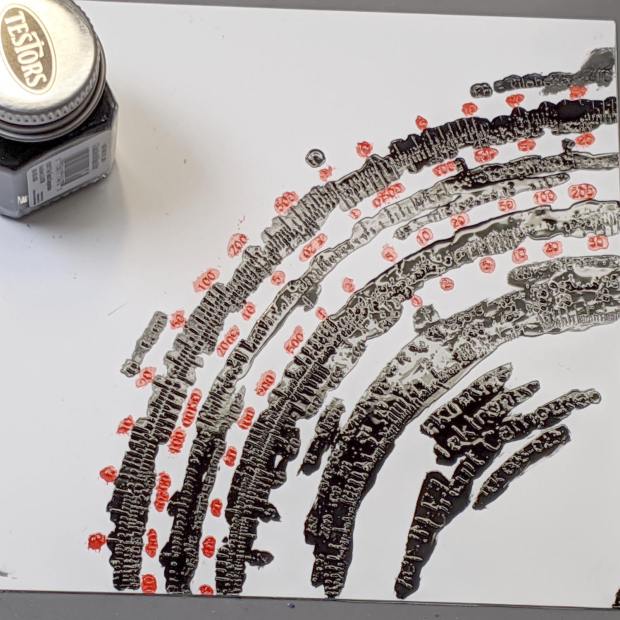
Engraving Testpiece D – Testors Enamel – red black applied With exactly the correct paint on exactly the correct material, it cured into a non-removable layer. Being enamel, however, the last coat requires two or three days for a full cure, so this isn’t a short-attention-span project.
It’s “non-removable” unless you’re willing to abrade the surface:
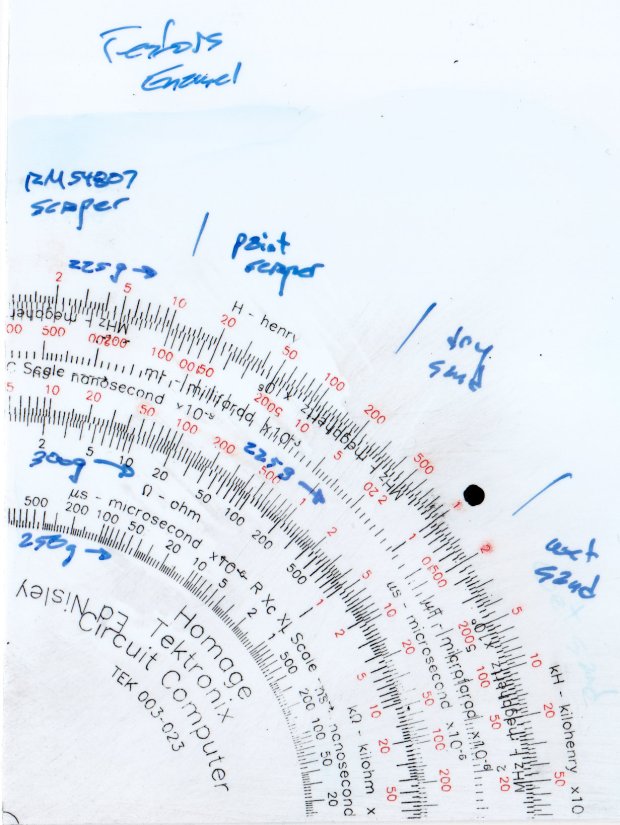
Engraving Testpiece D – Testors Enamel – scrape sand – overview Sanding tends to remove too much plastic, particularly when confronted with raised walls & suchlike along the grooves. The darkest scale down the middle was engraved with 300 g downforce and is deep enough to retain all its paint:

Engraving Testpiece D – Testors Enamel – sanded – 250 300 g – detail As expected, paint scrapers produce better results:

Engraving Testpiece D – Testors Enamel – scrape – 250 300 g – detail There’s not much visible difference between the 250 g and 300 g scales.
All the scraped lines are over 0.1 mm wide, with the heavier downforce producing maybe 0.12 mm.
The double-coated lines are flush with the (scraped) surface and visibly matte. The single-coated regions have the usual glossy enamel finish remaining deep in the lines & numbers, with a thin matte outline flush with the surrounding surface. It’s basically impossible to photograph those features, at least for me.
The colors are crisp & vivid: enamel paint is the way to go!
The next testpiece should run downforce variations from 300 through 500 g and speeds from 1000 to 2400 mm/min. Scraping off the raised plastic before painting should deliver a better ahem painting experience without much surface damage; the trick will be clearing all the debris from the engraved lines.
-
Subscribe
Subscribed
Have a WordPress.com account? Log in now.

