-
Glass Tiles: USB Charger Current Waveforms
Looking at what comes out of various USB chargers, with the Tek current probe monitoring the juice:
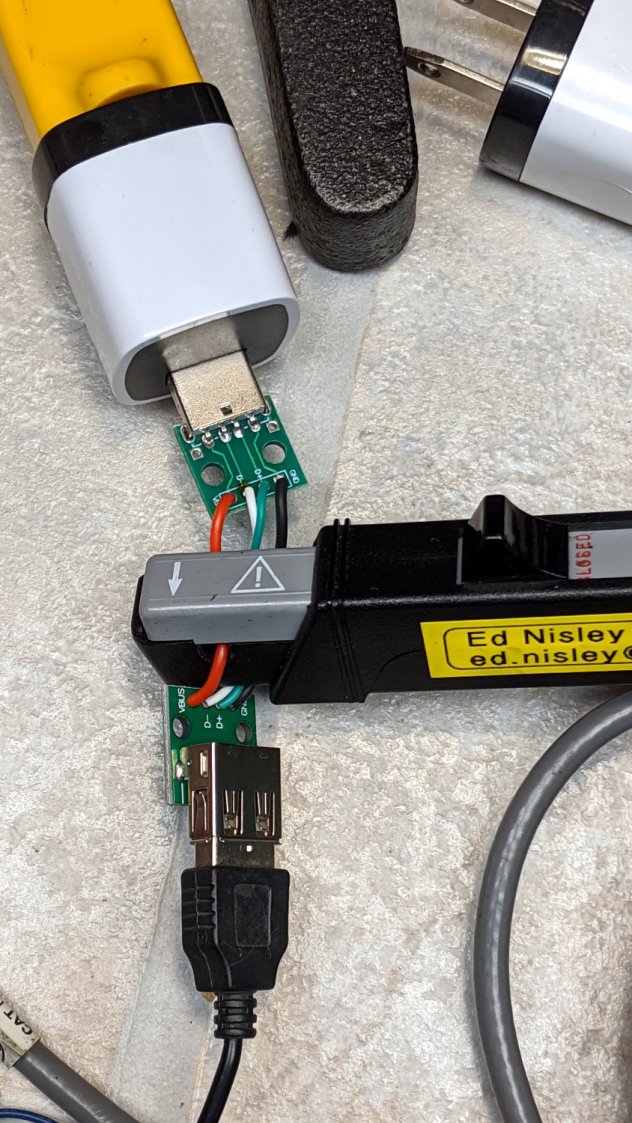
USB Current-Probe Extender – in action First, a known-good bench supply set to 5.0 V:
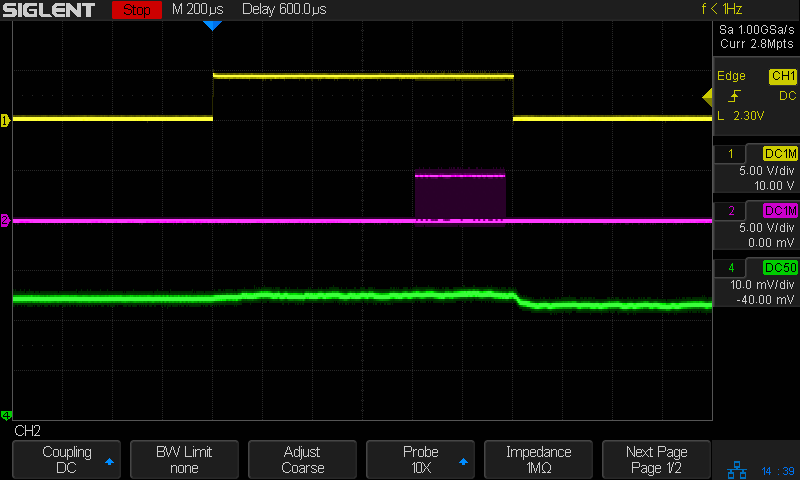
Tiles 2×2 – bench supply – 50 mA-div The yellow trace is the Glass Tile
Heartbeatoutput, which goes high during the active part of the loop. The purple trace shows the serial data going to the SK6812 RGBW LEDs. The green trace is the USB current at 50 mA/div, with the Glass Tile LED array + Arduino drawing somewhere between 50 and 100 mA; most of that goes to the LEDs.The current steps downward by about 10 mA just after the data stream ends, because that’s where the LEDs latch their new PWM values. The code is changing a single LED from one color to another, so the current will increase or decrease by the difference of the two currents.
A charger from my Google Pixel 3a phone (actually made by Flextronics and, uniquely, UL listed), with Google’s ever-so-trendy and completely unreadable medium gray lettering on a light gray plastic body:

Google Pixel charger – dataplate The current waveform looks only slightly choppy:
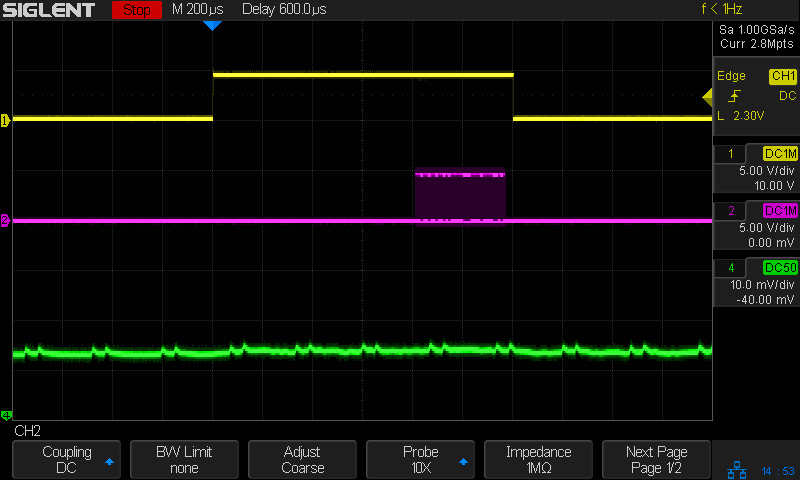
Tiles 2×2 – Google Flextronics charger – 50 mA-div An AmazonBasics six-port USB charger
fromtested by Intertek: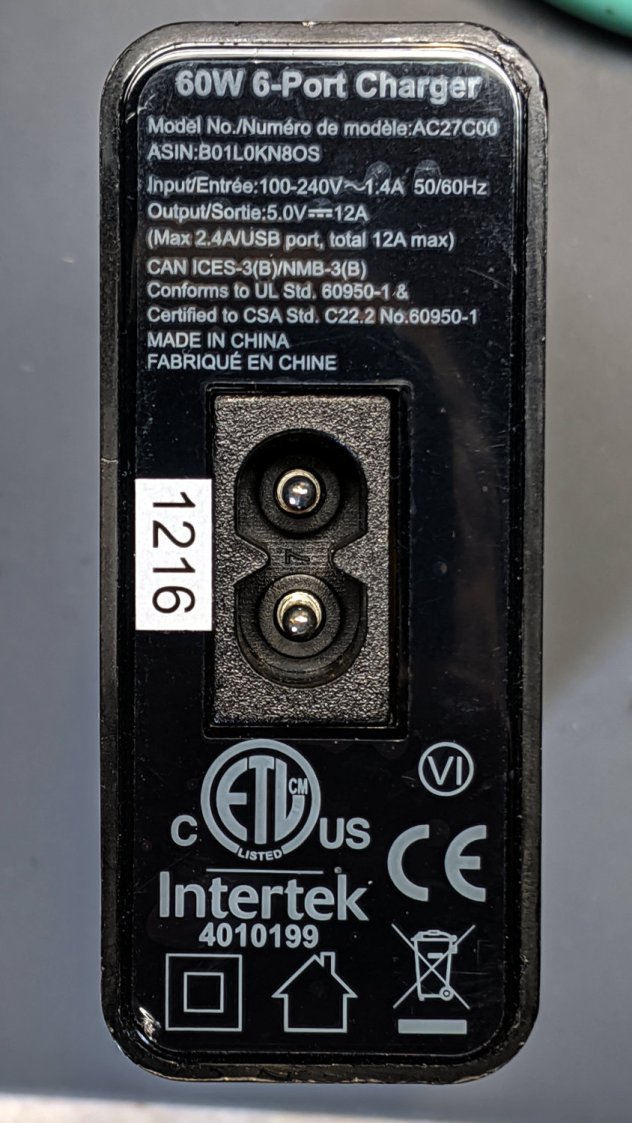
AmazonBasics charger – dataplate The waveform:

Tiles 2×2 – Amazon Basics Intertek Basics charger – 50 mA-div A blackweb (their lack of capitalization) charger, also
madetested by Intertek:
blackweb charger – dataplate The current:
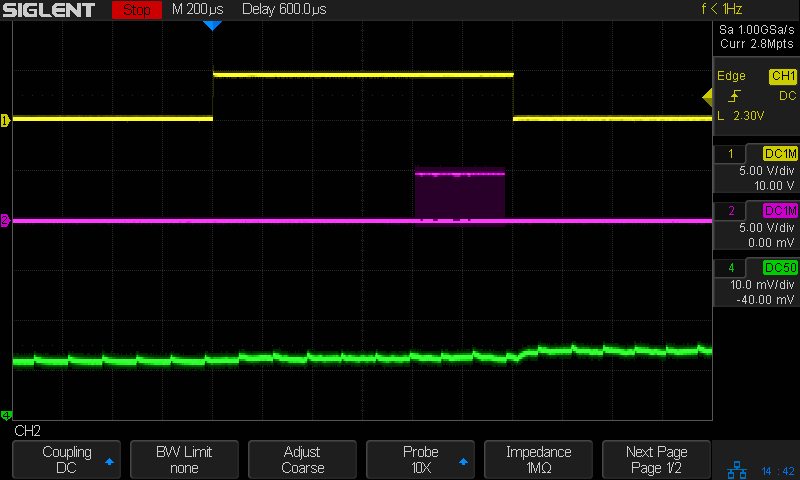
Tiles 2×2 – blackweb charger – 50 mA-div Finally, one from a lot of dirt-cheap chargers from eBay:

Anonymous white charger – dataplate Which has the most interesting current waveform of all:
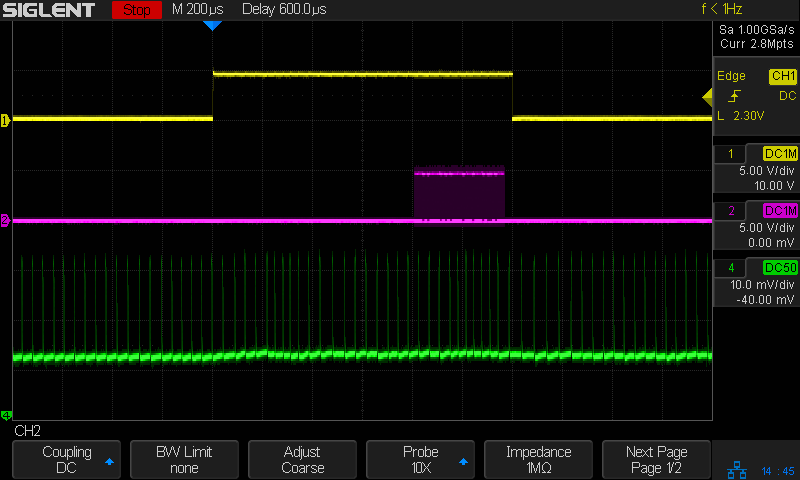
Tiles 2×2 – anon white charger – 50 mA-div A closer look:

Tiles 2×2 – anon white charger – pulse detail – 50 mA-div From the 75 mA baseline, the charger is ramming 175 mA pulses at 24 kHz into the filter cap on the Arduino Nano PCB! The green trace has a few seconds of (digital) persistence, so you’re seeing a lot of frequency jitter; the pulses most likely come from a voltage comparator controlling the charger’s PWM cycle.
It’s about what one should expect for $1.28 apiece, right?
They’re down to $1.19 today: who knows what the waveform might be?
Update: Having gotten a clue from a comment posted instantly after I fat-fingered the schedule for this post, I now know Intertek is a testing agency, not a manufacturer.
-
Subscribe
Subscribed
Have a WordPress.com account? Log in now.

