-
Removing Sentry FireSafe Door Trim
After turning the key and dialing the correct combination, the unlocking handle on the basement safe refused to move. Applying the dictum “If brute force isn’t working, you’re not using enough of it”, we eventually persuaded the handle downward and the door swung open. Before applying the dictum “If it doesn’t move and should, use WD-40 [*]”, I had to remove the trim cover from the interior side of the door to gain access to the lockwork.
Start by pressing the two latches inside the small circular holes in the hinge side of the trim cover:

Sentry FireSafe Door – first latches Pull the trim over the slightly chamfered bolts, taking advantage of the fact the bottom pulls out more easily than the top, then pry it upward off the latch in the middle of the top:
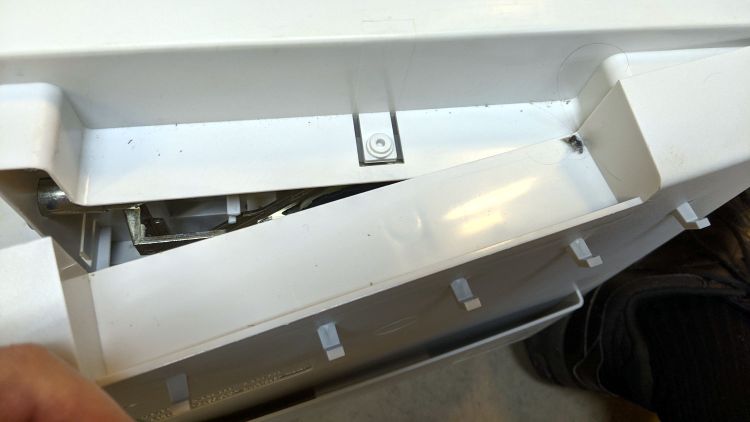
Sentry FireSafe Door – top latch The latches along the other side yield when you bend the trim sufficiently far from the door while applying the Designated Prydriver near the faint mold markings visible around the edge:
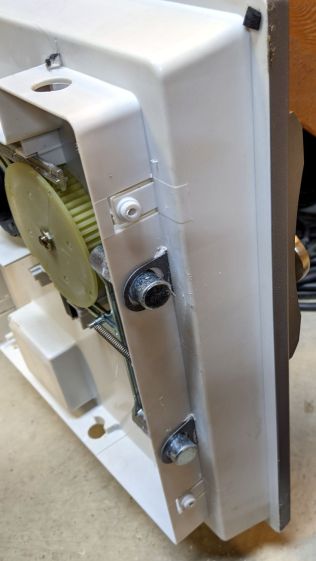
Sentry FireSafe Door – last latches With the trim removed, you can see fancier safes in this line have two additional bolts engaging the top and bottom of the door frame. The rectangular block on the bottom of the hinge side might be for the batteries required by the spendy electronic lock version.
The problem turned out to be a lack of lubrication in the door-closed interlock that prevents you from relocking the bolts and wrecking the mechanism when you try to close the door with the bolts extended:

Sentry FireSafe Door – bolt interlock A dab of silicone lube on all those sliding interfaces restored the interlock’s good humor.
The bolts had always rubbed just a bit on the trim cover, so I ovalized the offending side of the holes with an Xacto knife.
Slamming the trim firmly back on the door reset the latches, cycling the lockwork resynchronized the interlock, and the safe once again works just like it should.
[*] WD-40 is not the appropriate lube for the lockwork inside a safe, but the dictum aims you in the right direction.
-
Subscribe
Subscribed
Have a WordPress.com account? Log in now.

