-
Gridfininty Tape Dispenser
A Gridfinity Tape Dispenser holds a roll of book repair tape:
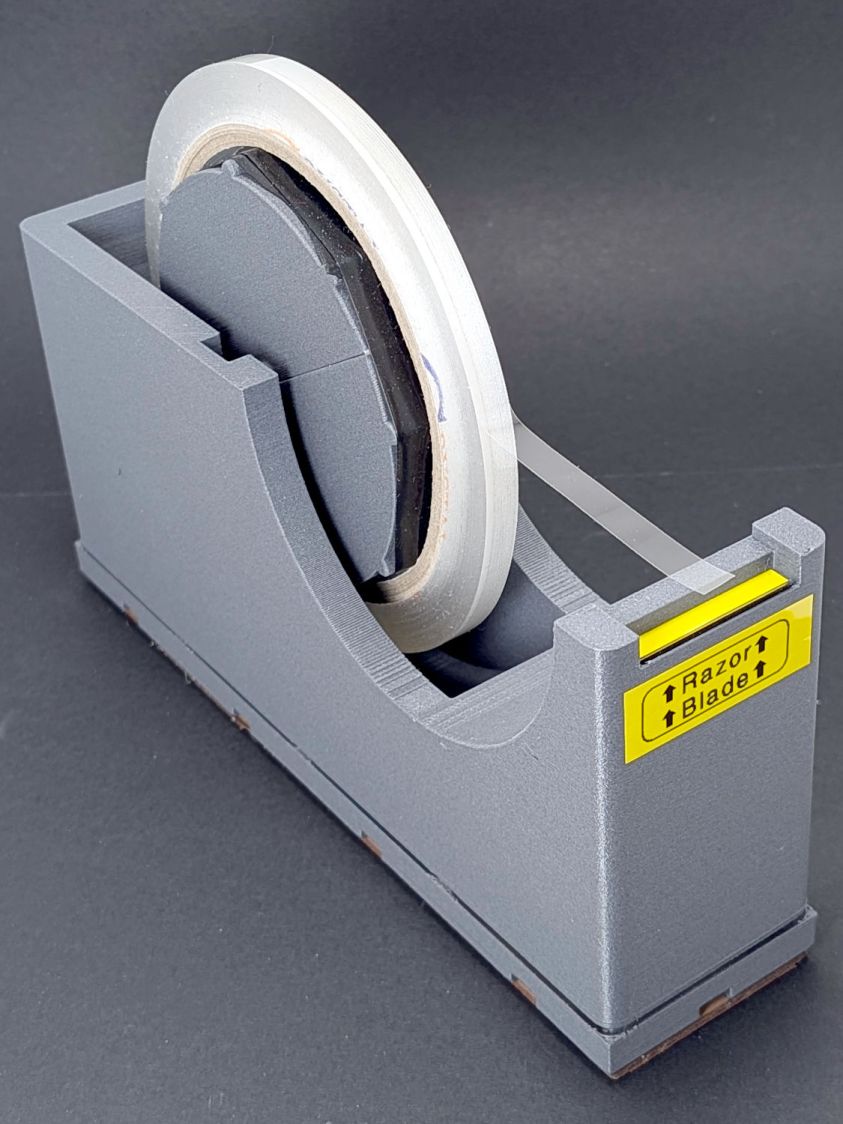
Gridfinity Tape Dispenser – overview The perspective makes the dispenser look chonkier than it really is.
A wrap of black silicone tape around the spool embiggens it for a snug fit inside the tape core. A casual inspection of other tapes suggest enlarging the spool by a few percent would help, but it’s Good Enough™ as-is.
The two end thumbscrews fasten the 4×1 Gridfinity baseplate to the dispenser; both from Gridfinity Refined:
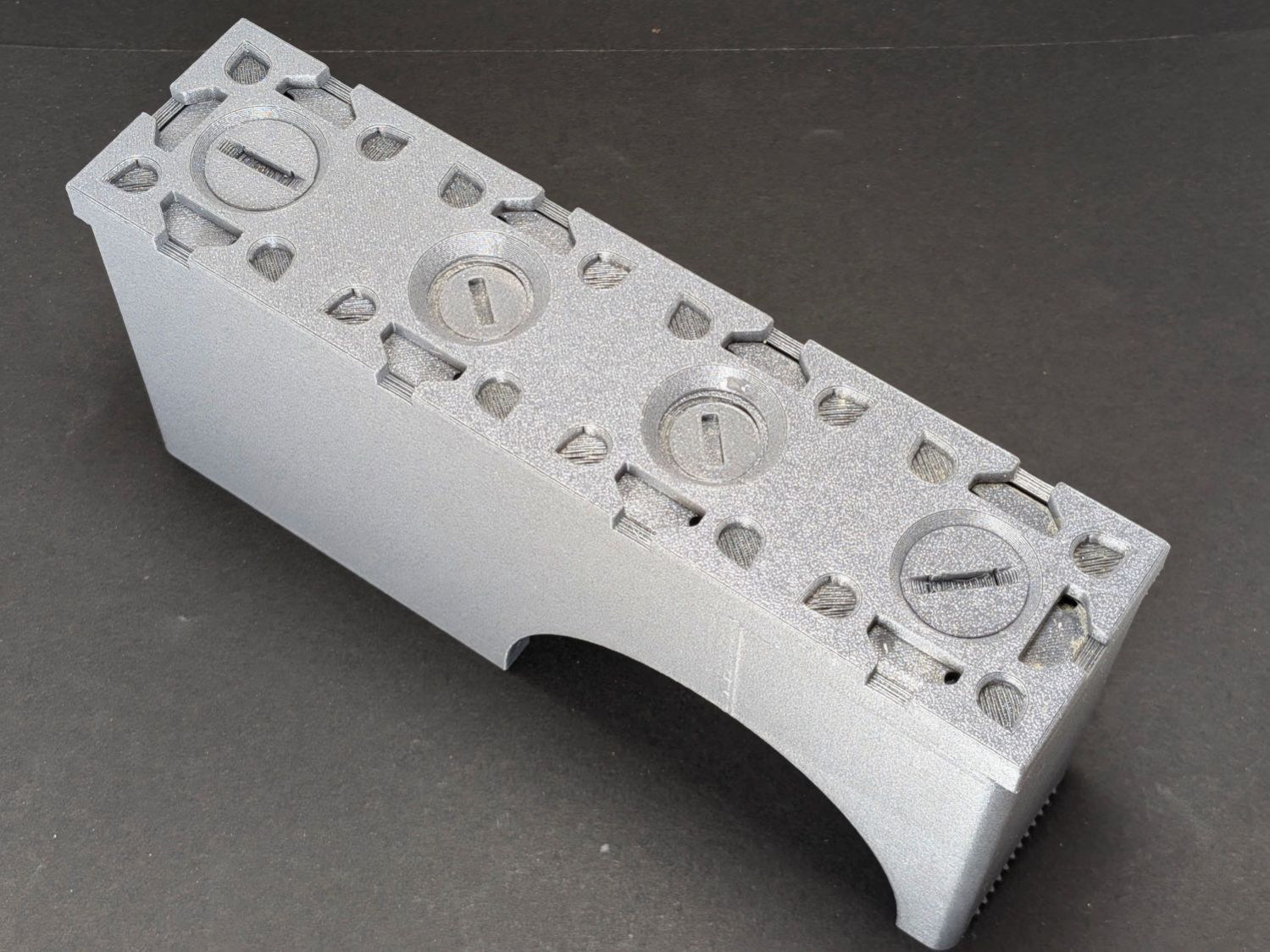
Gridfinity Tape Dispenser – baseplate If I had my wits about me, I’d have used a nicely contrasting color for the baseplate, but it is what it is.
Although they’re called “thumbscrews”, the slot is sized for a US quarter (or cart coin).
An OpenSCAD one-liner produces an SVG model of the baseplate:
projection(cut=true) import("Grid 4x1.stl");Import SVG into LightBurn, delete the magnet pockets, and Fire The Laser on some EVA foam:
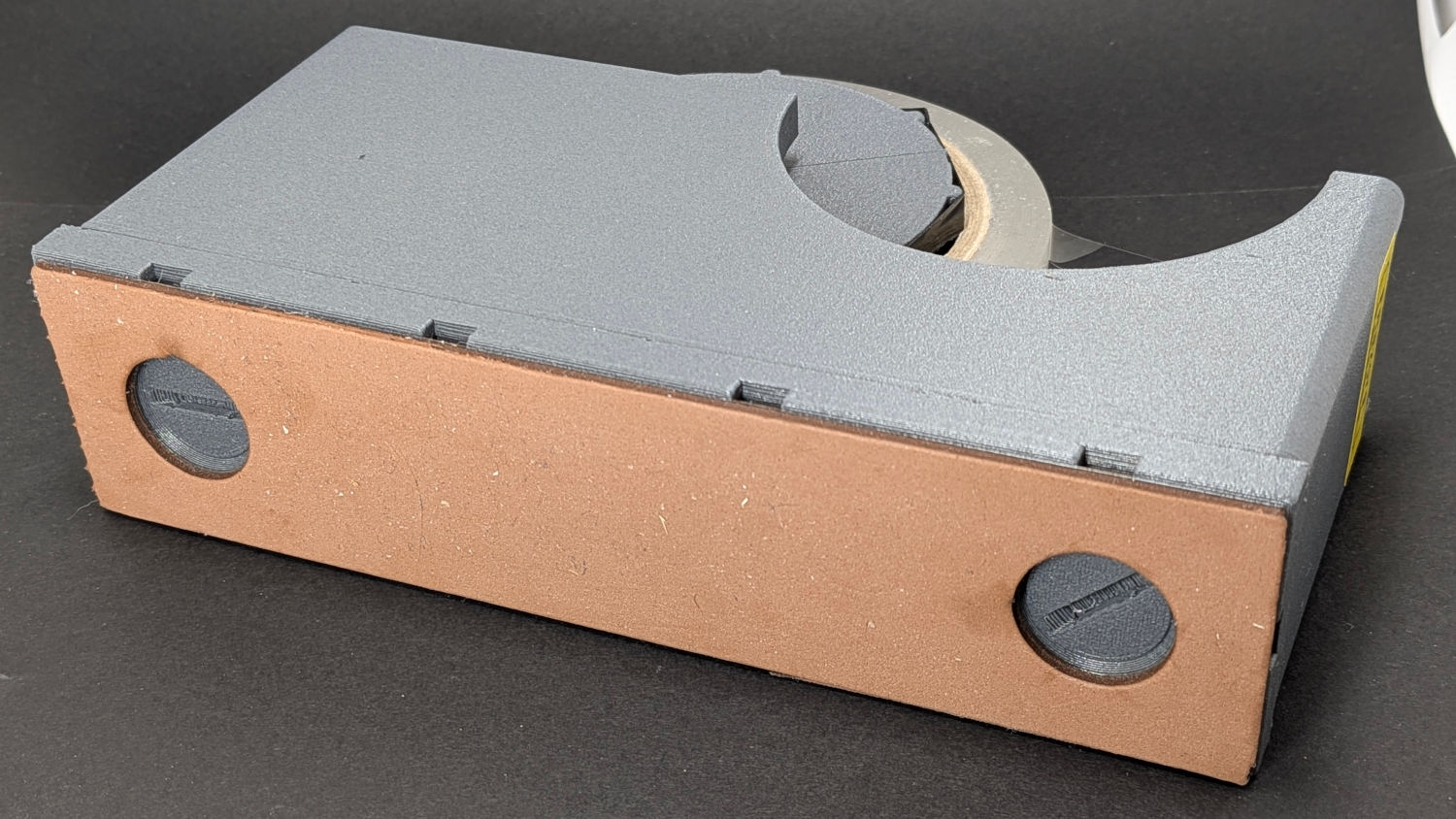
Gridfinity Tape Dispenser – foam base A layer of 3M 300LSE tape holds the foam in place, because neither side sticks well to the goo on a craft adhesive sheet due to their low surface energy. I stuck an oversize rectangle to the foam with the thin adhesive side before cutting, which required a second pass at higher speed.
The thumbscrews also close off the holes in the dispenser bottom through which I poured 275 g = 10 oz of sand for better traction. Steel shot is reputed to be Even Better, although most of the BBs are in the long-arm weight.
The dispenser model includes a printed serrated blade which works as poorly as the author suggested. A length snapped from an ancient Strombecker 4-I (“four eye”) blade in the Box o’ Big X-Acto Blades fits perfectly, works wonderfully well, and is sufficiently inconspicuous to warrant the warning label. An X-Acto #26 Whittling Blade would probably snap down equally well.
-
Subscribe
Subscribed
Have a WordPress.com account? Log in now.

