-
Tek CC Milled Cursor: MVP
What a difference 100 µm can make:
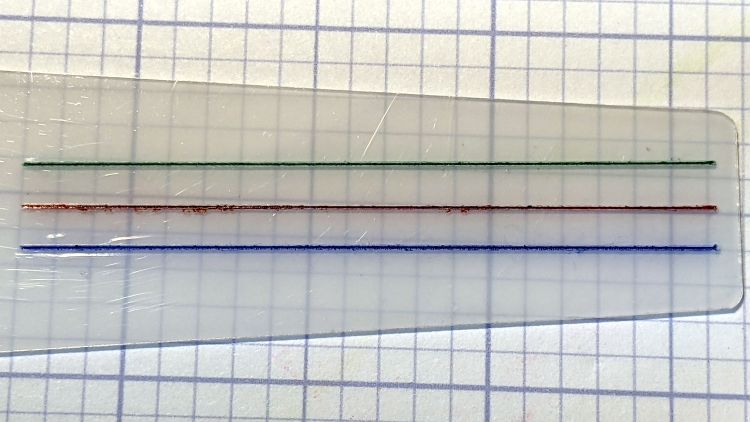
Hairline V tool tests – 0.3 mm 10 kRPM 24 ipm All three hairlines have 0.3 mm depth of cut, with the spindle running at 10 kRPM and the cut proceeding at 24 inch/min = 600 mm/min. All three cuts went through a strip of water + detergent along their length, which seems to work perfectly.
The cuts start on the left side:
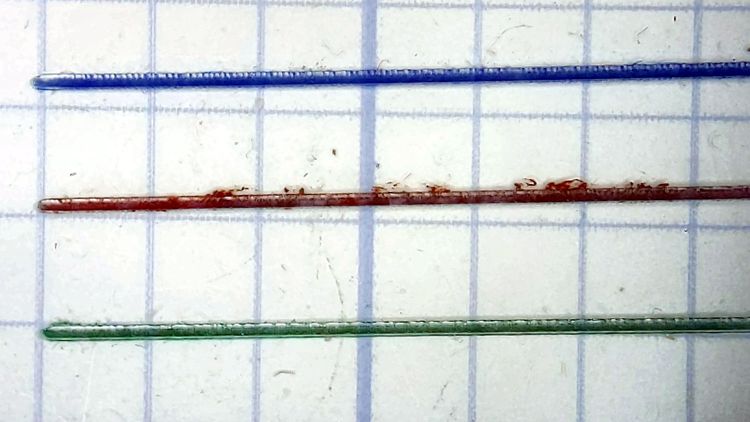
Hairline V tool tests – 0.3 mm 10 kRPM 24 ipm – start I cut the red hairline through the PET cursor’s protective film to confirm doing it that way is a Bad Idea™; the gnarly appearance is sufficient proof.
The cuts end on the right:
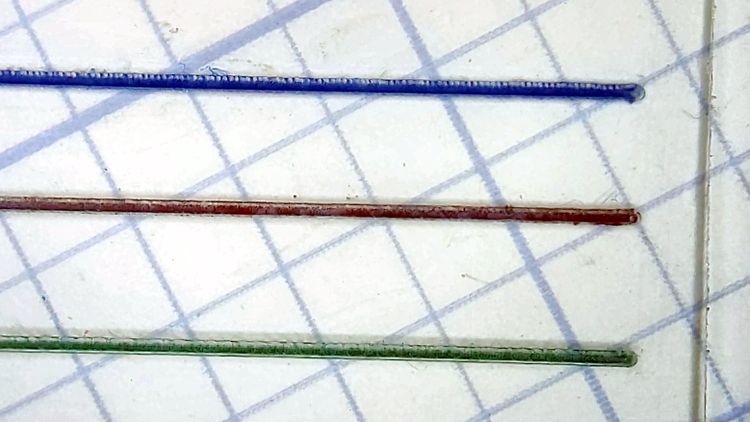
Hairline V tool tests – 0.3 mm 10 kRPM 24 ipm – end Eyeballometrically, the cuts are the same depth on both ends, with a slight texture difference at the start as the X axis ramps up to full speed.
They’d be a bit stout on an old-school engraved slide rule, but look just fine laid against a laser-printed Homage Tek Circuit Computer:
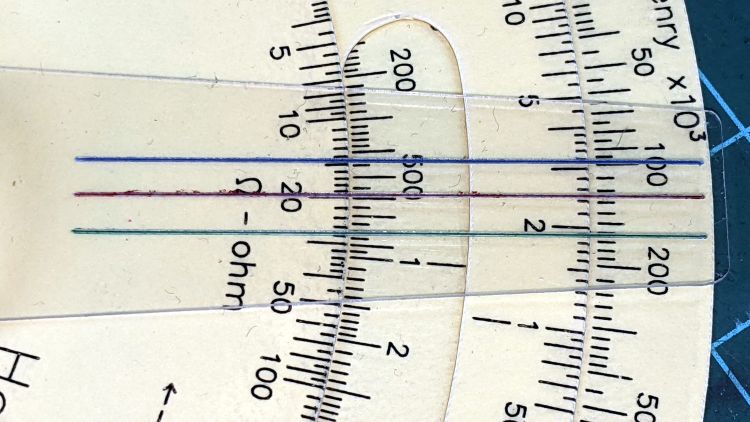
Hairline V tool tests – 0.3 mm 10 kRPM 24 ipm – Tek CC Flushed with success, here’s a fresh-cut red hairline in action:
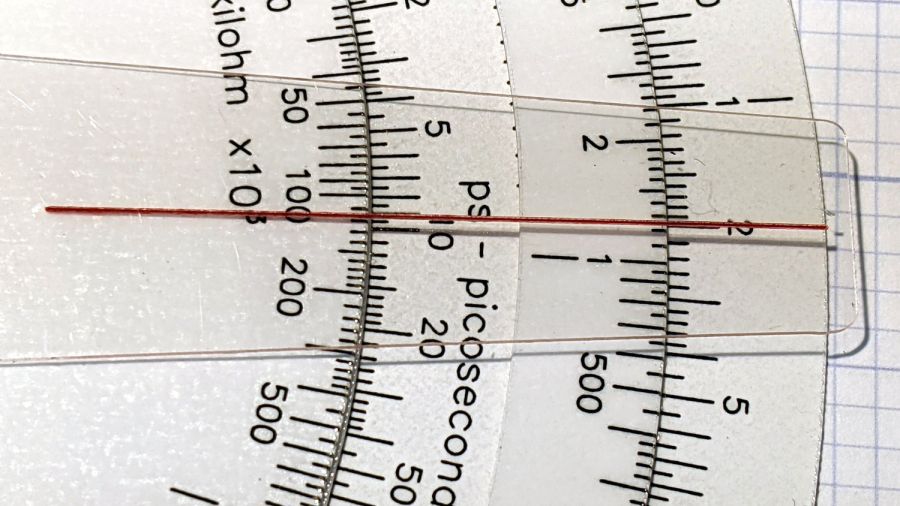
Tek CC cursor hairline – V tool red fill The end of the cursor sticks out 1 mm over the rim of the bottom deck, because I wanted to find out whether that would make it easier to move. It turns out the good folks at Tek knew what they were doing; a too-long cursor buckles too easily.
The trick will be touching off the V tool accurately enough on the cursor surface to get the correct depth of cut. The classic machinist’s technique involves a pack of rolling papers, which might be coming back into fashion here in NY.
-
Subscribe
Subscribed
Have a WordPress.com account? Log in now.

