-
Tektronix AM503: Balance Pot Bushing
One of the Tekronix AM503 current probe amplifiers arrived without the panel bushing for the Balance trim pot. Back in the day, you could presumably order part number 350-0301-02 and have it delivered (most likely) by your local Tek representative:

Balance pot panel bushing – Tek part listing Those days are over.
A few minutes produced a doodle with pretty-close measurements:
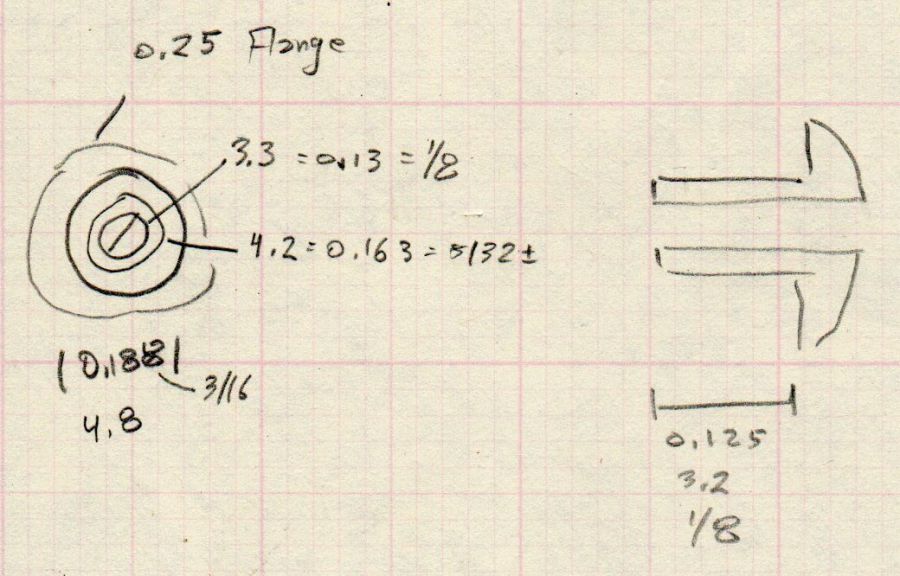
Balance pot panel bushing – dimension doodle The as-built bushing turned out just a smidge too long, so make yours a scant eighth of an inch. Maybe the Tek dimension is the overall length?
An SLA resin printer might crank out such a thing, but it’s well below the looks-good / fits-well resolution limit of an ordinary fused-filament printer.
Applying the mini-lathe to a 1/4 inch white acrylic rod produced a reasonable facsimile:

Tek AM503 Balance pot bushing – front The side view:

Tek AM503 Balance pot bushing – side Acrylic is definitely the wrong material for the job, but it came readily to hand while pondering the Shelf o’ Rods. Acetal would be better, as you could easily trim off the aforementioned excess length with a knife.
All’s well that ends well:

Tek AM503 Balance pot bushing – installed A dab of white acrylic adhesive around the raw opening holds the bushing in place and it looks good enough to me.
The motivation for this boils down to having the bushing center the pot twiddler required to set the balance, which I must do every time I fire up the amps, even after waiting for the half-hour required to stabilize them at their operating temperature.
-
Subscribe
Subscribed
Already have a WordPress.com account? Log in now.
 The Smell of Molten Projects in the Morning