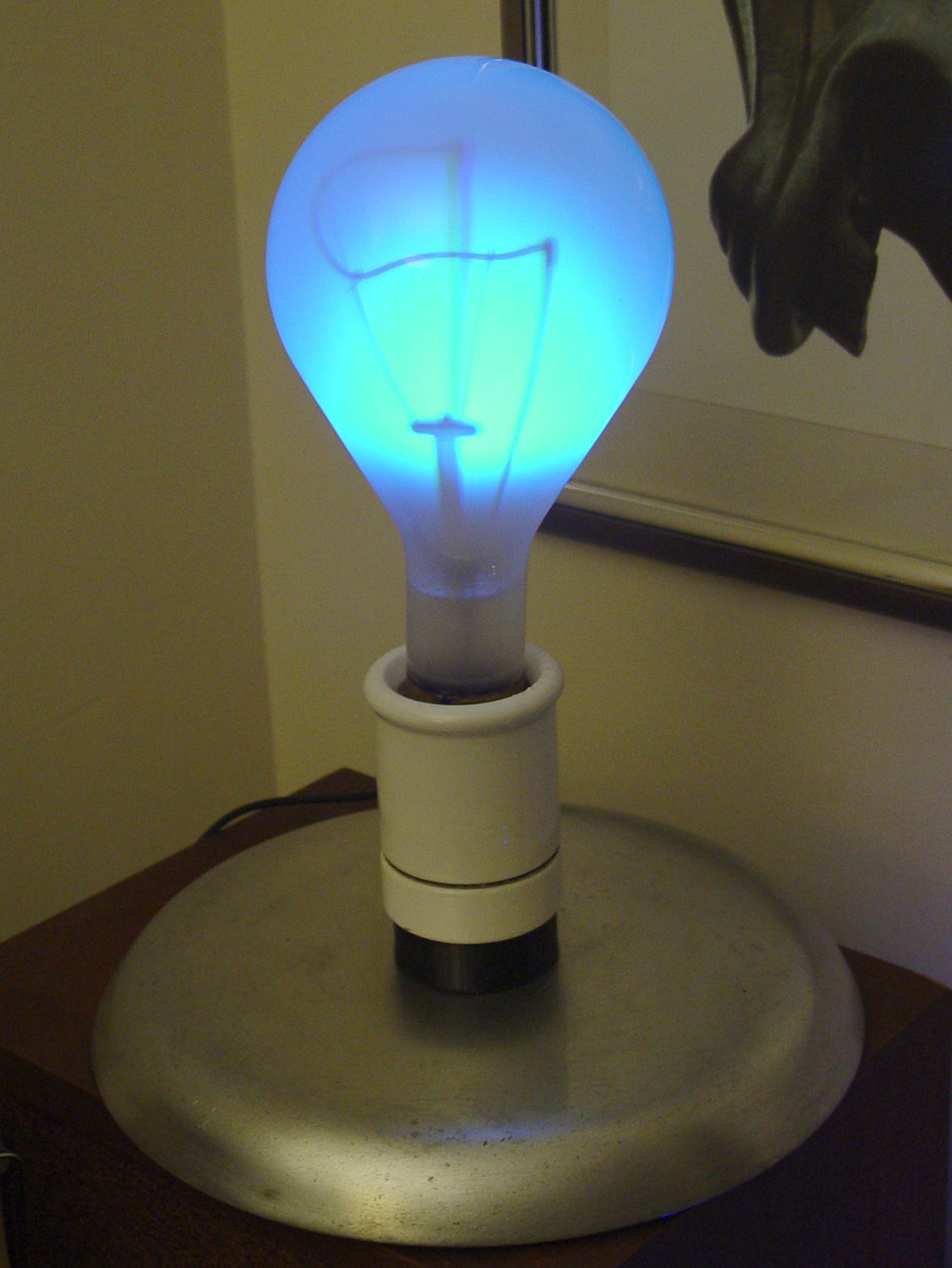
This obviously wasn’t ready for prime time, but it demonstrated feasibility with a socket on a base assembled for something else:

I recently salvaged a heavy aluminum lid that looked like a perfect complement for that bulb:
The light comes from a rectangular knockoff Neopixel in a sidelight mount:
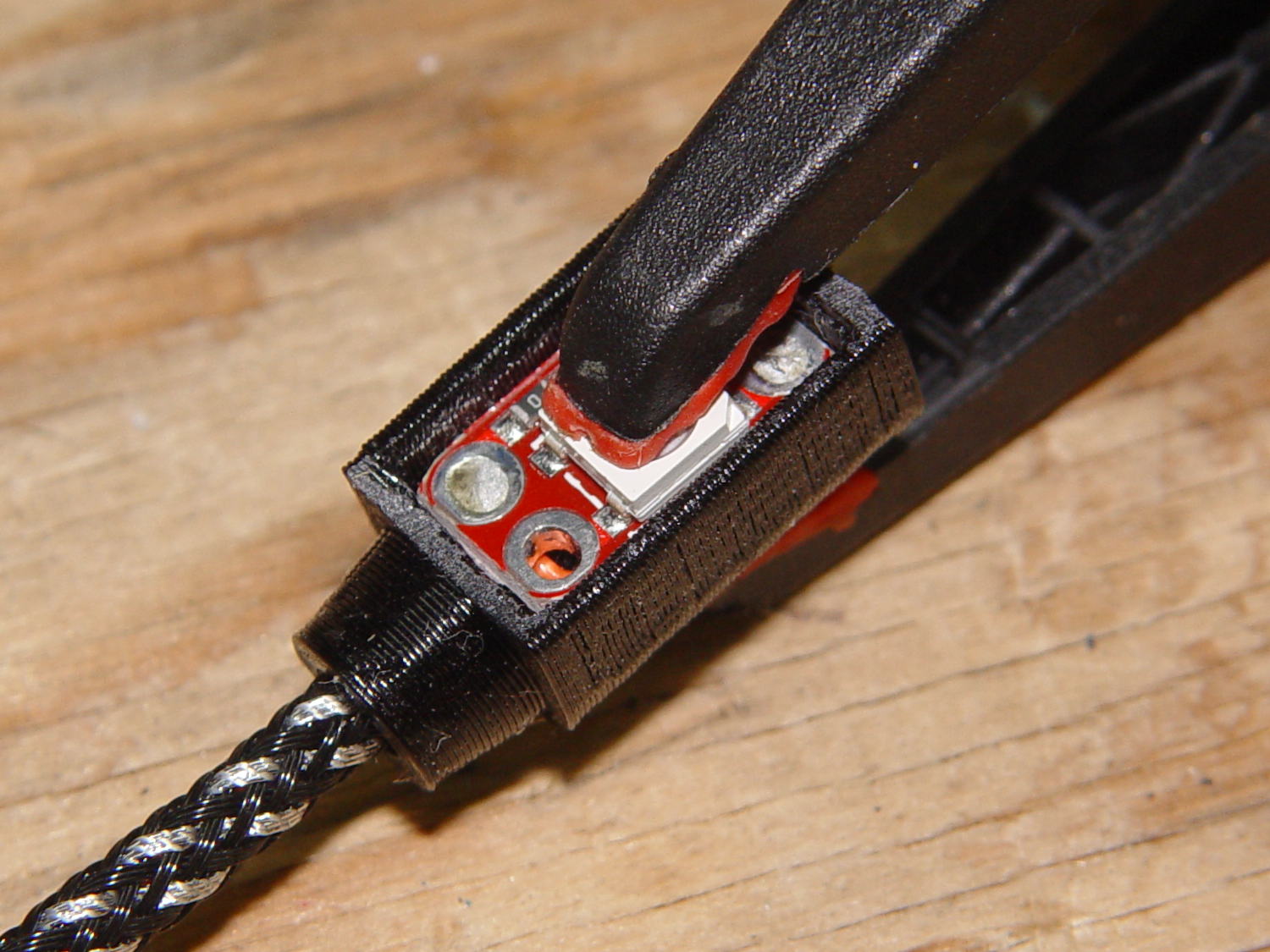
That’s epoxied to the rear of the bulb, below the equator, where it casts the best-looking shadow of the filament and support structures on the inside of the bulb. Actually, it’s taped in place for a week’s worth of burn-in to see if it survives.
The Arduino Nano fits inside a small base below the ceramic Mogul socket:
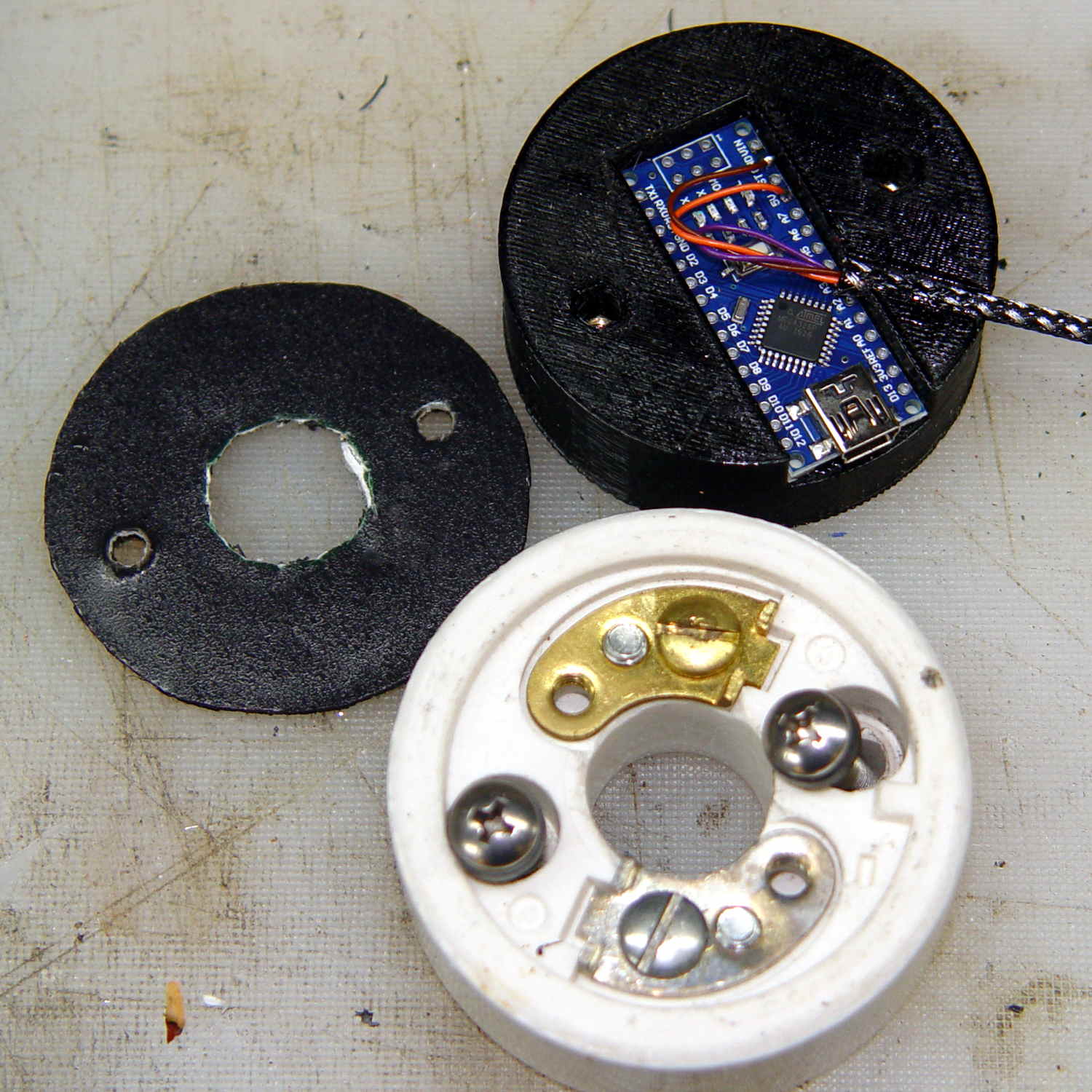
The braid exits through a hexagonal trench recessed into the top surface, with a dollop of epoxy holding it in place:
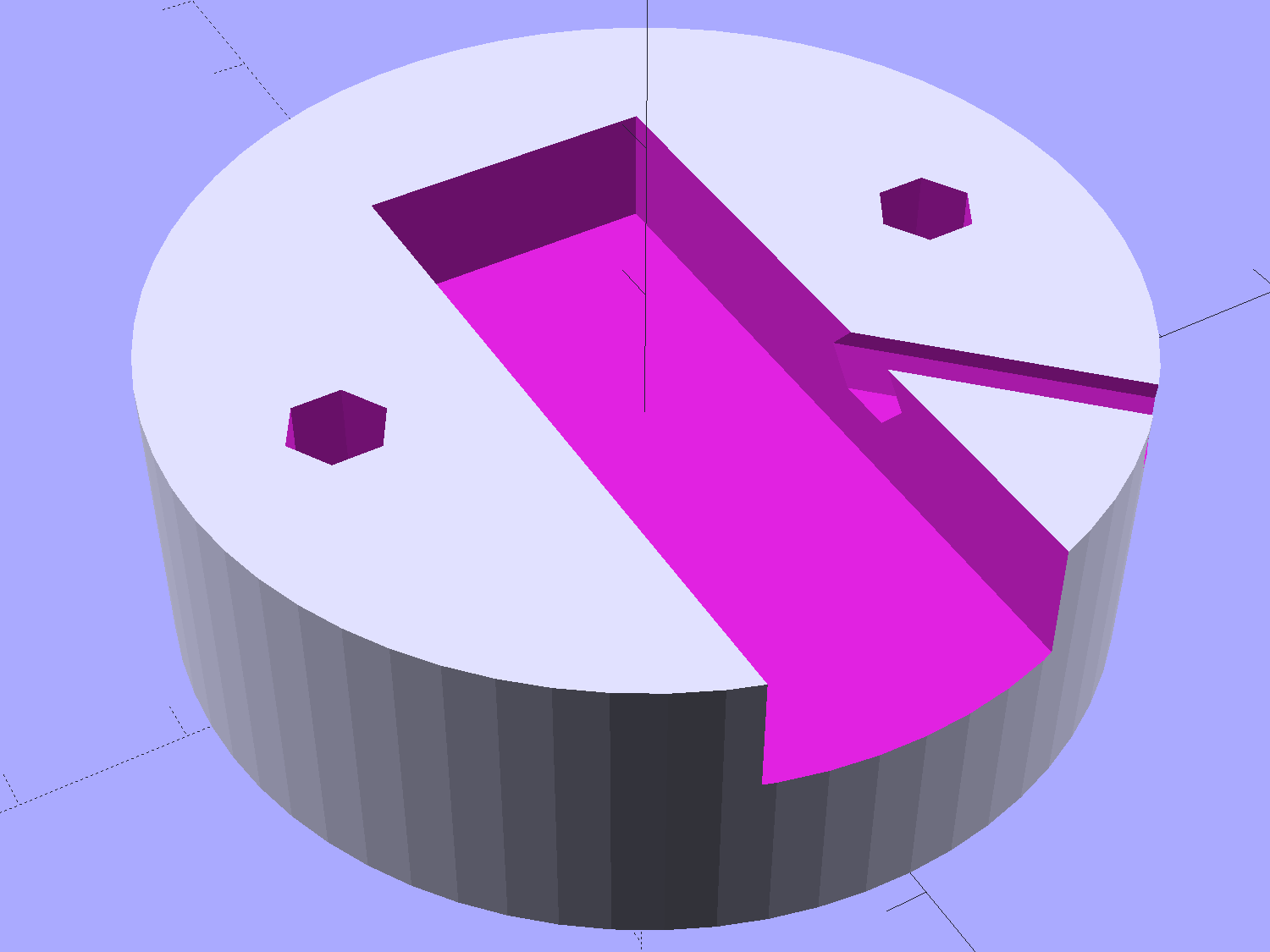
The underside has holes for three 10-32 brass inserts:
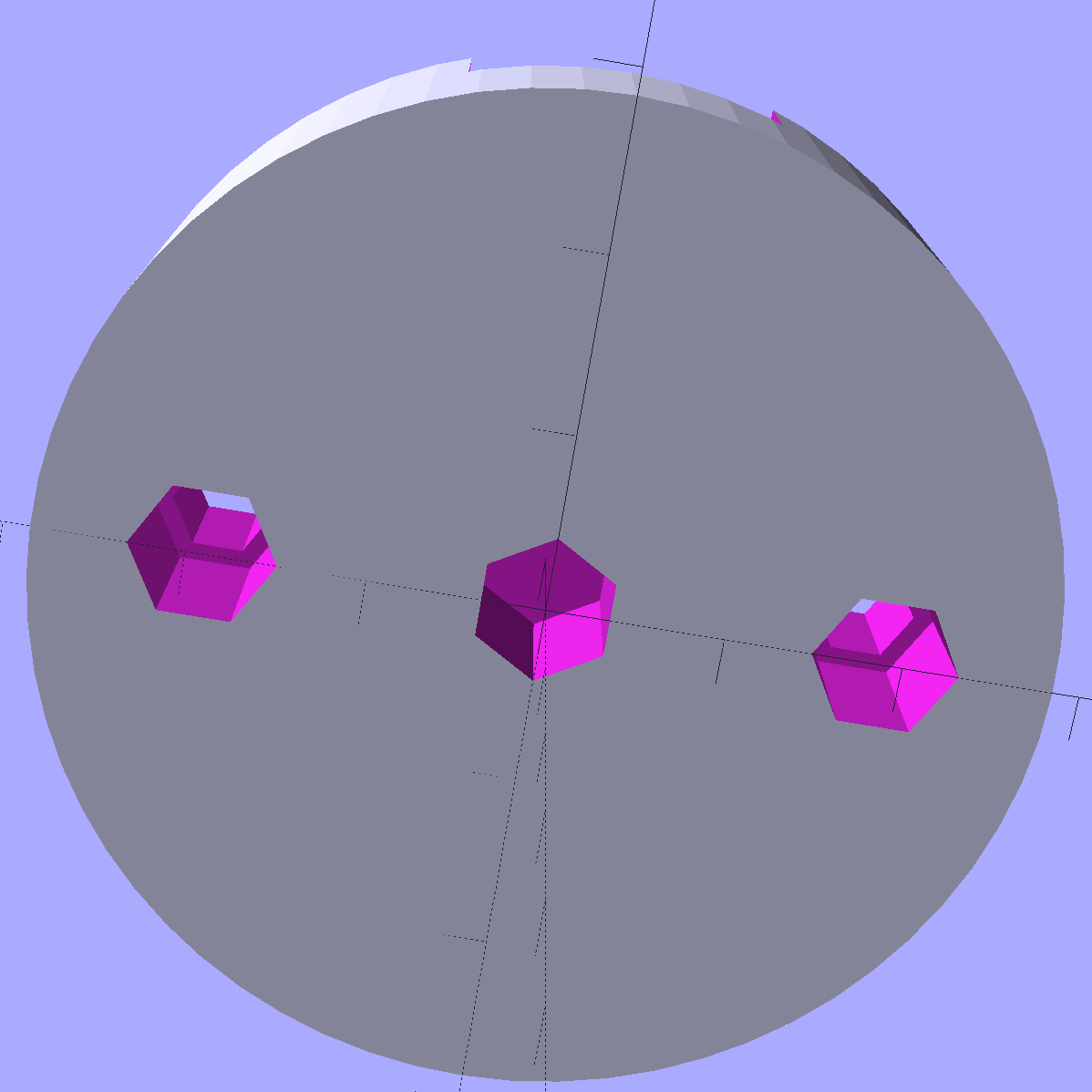
The center insert is the only thing holding the entire assembly to that aluminum base; I’m not convinced that’s enough, but it’ll suffice for now.
The “computer” certainly gets lost under the ceramic:
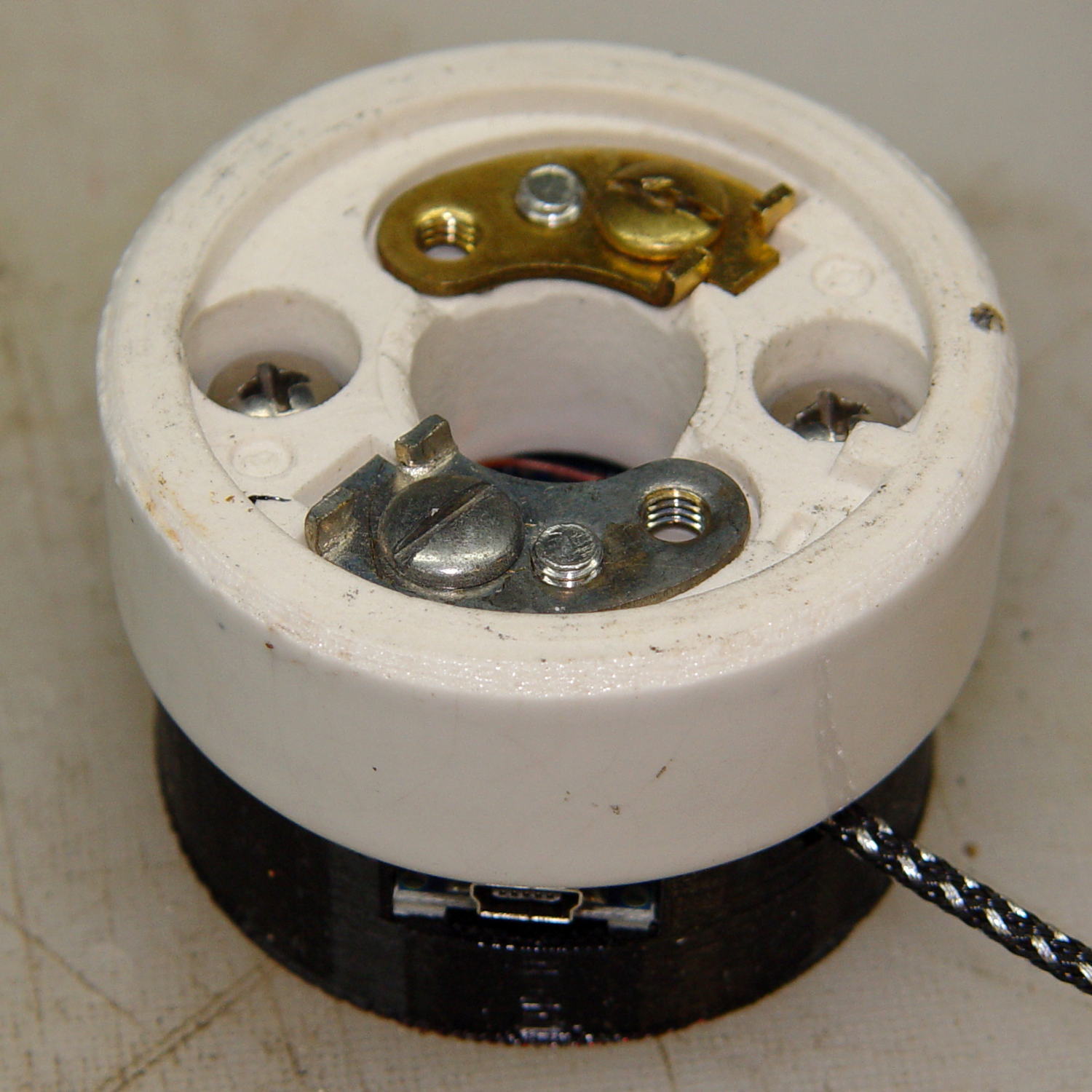
The base is slightly smaller than the ceramic to match the flat part of the lower surface; if it came all the way to the OD, you’d see an unsightly notch.
The two screw heads buried down in the recesses thread into the outer brass inserts in the printed base. The ceramic Mogul socket mounts atop that connection block, with another pair of screws making both electrical and mechanical connections to the metal plates-with-screws that used to terminate the incoming power wires.
It’s running the same Morse code firmware as before, with the Morse output turned off, because who needs a giant blinking bulb?
The OpenSCAD source code of the base as a GitHub Gist:
| //———————- | |
| // Base for Mogul ceramic socket | |
| module MogulBase() { | |
| Insert = [5.0,7.0,10.5]; // 10-32 brass insert, used for socket and chassis mounting | |
| PCB = | |
| [45,18,7.5] // Arduino Nano | |
| ; | |
| BaseOD = 57.0; | |
| BaseOAH = Insert[LENGTH] + 3*ThreadThick + PCB[2]; | |
| ScrewOC = 1.5 * inch; | |
| difference() { | |
| cylinder(d=BaseOD,h=BaseOAH,$fn=16*4); // overall shape | |
| translate([0,0,-Protrusion]) // central mounting insert | |
| PolyCyl(Insert[OD],Insert[LENGTH] + Protrusion,6); | |
| for (a=[90,-90]) // socket studs | |
| rotate(a) | |
| translate([ScrewOC/2,0,-Protrusion]) { | |
| PolyCyl(Insert[OD],Insert[LENGTH] + Protrusion,6); | |
| PolyCyl(Insert[ID],2*BaseOAH,6); | |
| } | |
| translate([(BaseOD – PCB[0])/2,0,BaseOAH – PCB[2]/2 + Protrusion/2]) | |
| cube(PCB + [0,0,Protrusion],center=true); // Arduino PCB | |
| rotate(45) | |
| translate([0,0,BaseOAH – Ferrule[ID]/2 + Protrusion/2]) | |
| rotate([0,90,0]) rotate(180/6) | |
| PolyCyl(Ferrule[ID],BaseOD,6); | |
| } | |
| } |
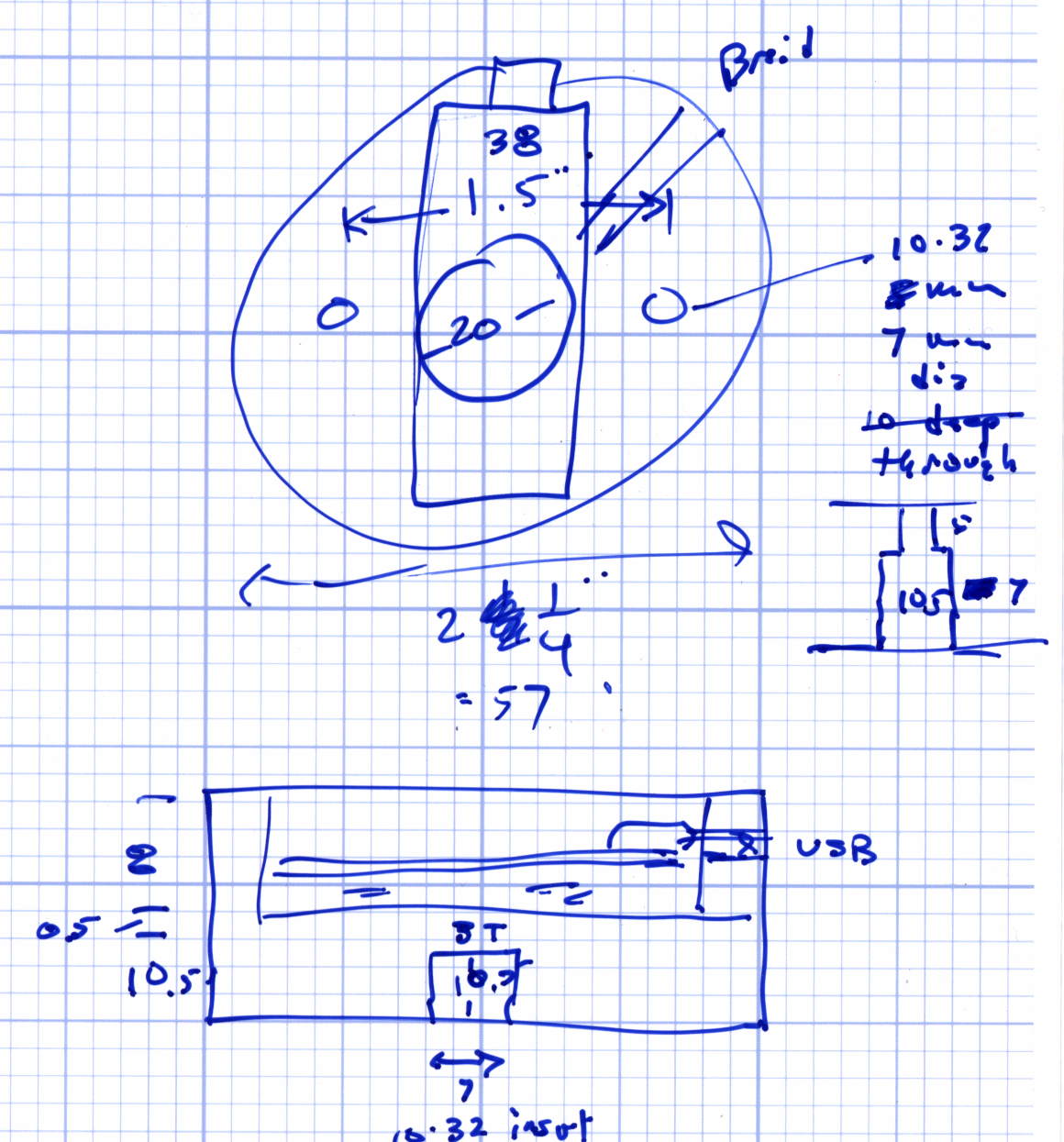
The original doodles with some dimensions:
 The Smell of Molten Projects in the Morning