Some results from the MOSFET tester project!
The 120 m 50 V BUZ71A that served as the crash test dummy while I got the thing working:

A detail of the interesting area near the origin:
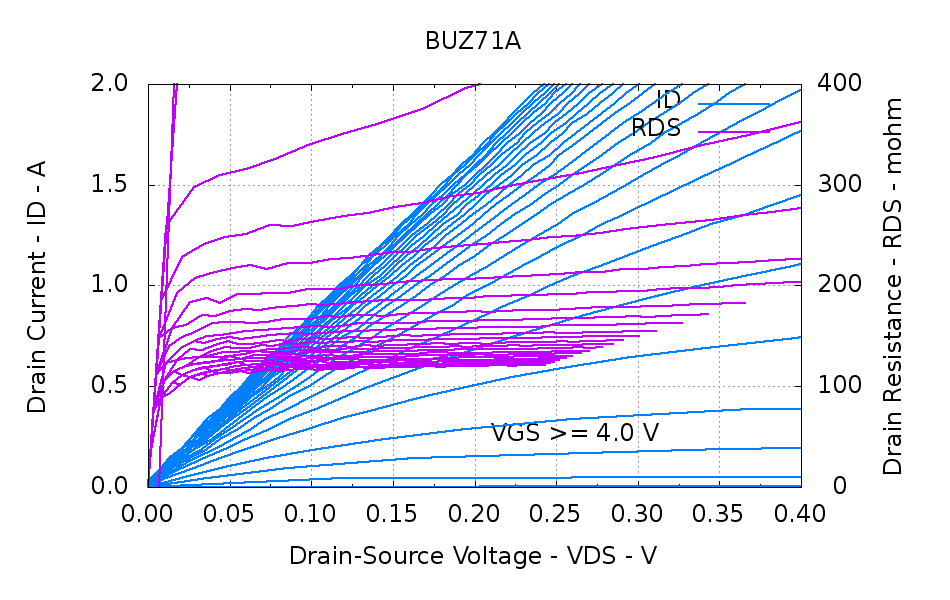
The datasheet drain resistance values are the maximum values, so they’ll generally be higher than what I measure.
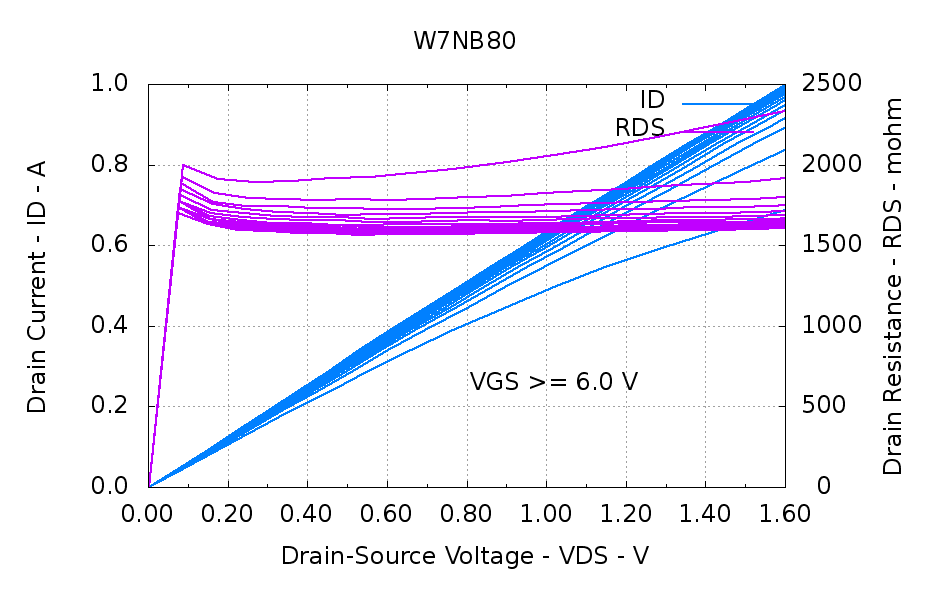
A plastic-encapsulated W7NB80 with a 1.9 (!) drain resistance, due to its 800 V (!) rating:
Hold the gate voltage constant at 10.0 V and step the temperature from 0 °C to 50 °C:

I haven’t figured out how to get the actual temperatures from the Gnuplot input dataset to the graph without knowing them in advance. The “index” is simply the 0-origin block number, which conveniently (and coincidentally) lines up with the 0 °C to 50 °C temperature range.
An overview of a 400 m 200 V IRF630:
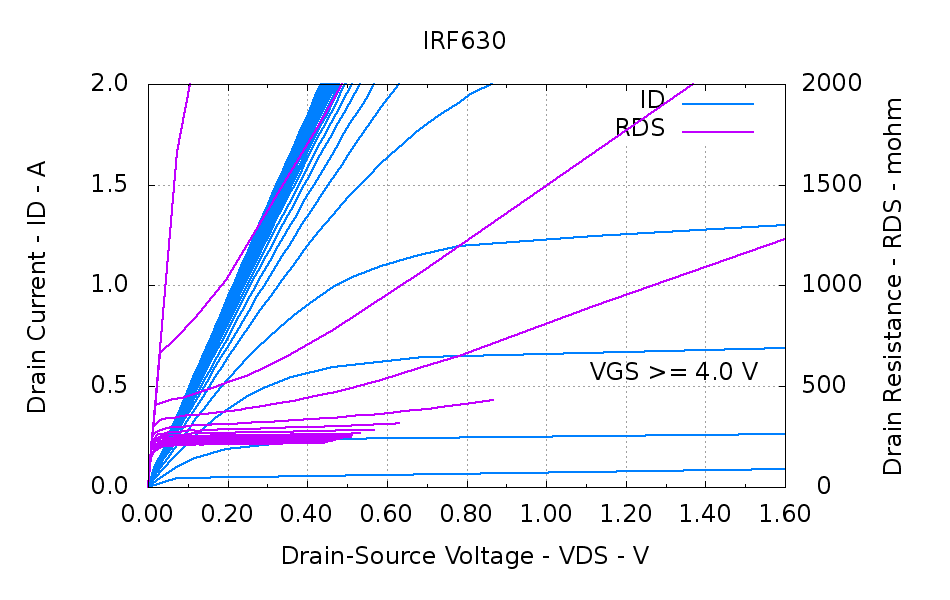
The juicy part:
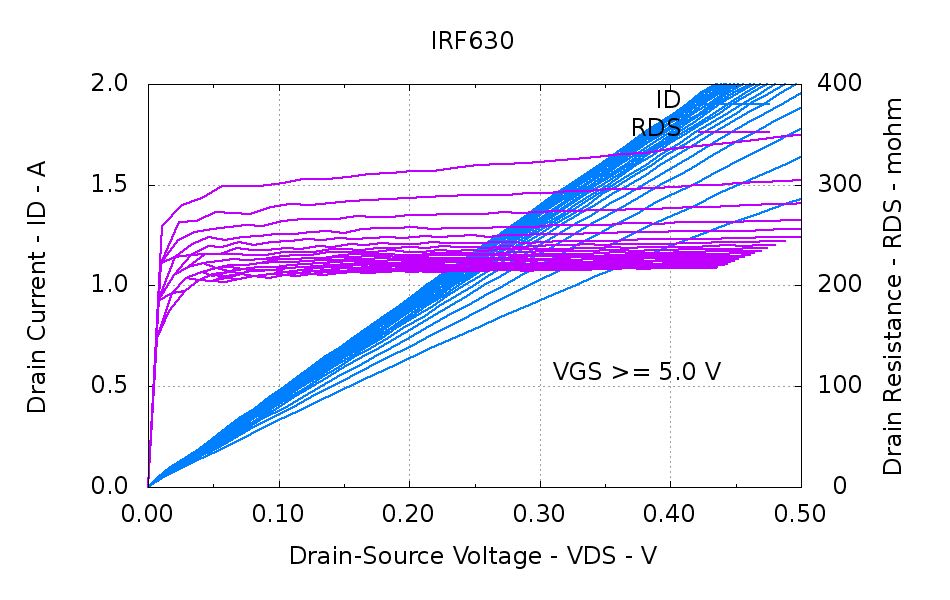
And the variations with temperature:
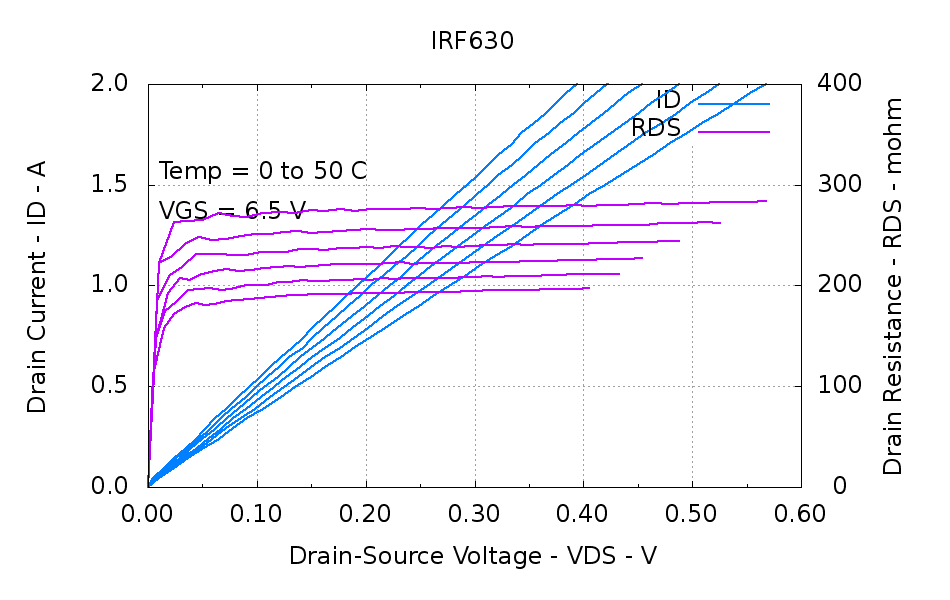
A 1.5 200 V IRF610, another high-resistance transistor:
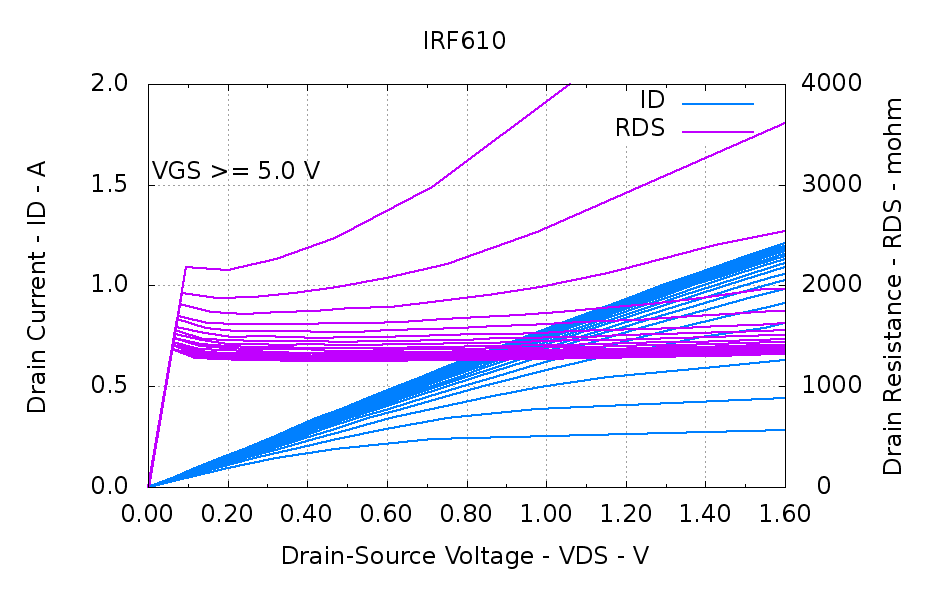
The temperature variations:
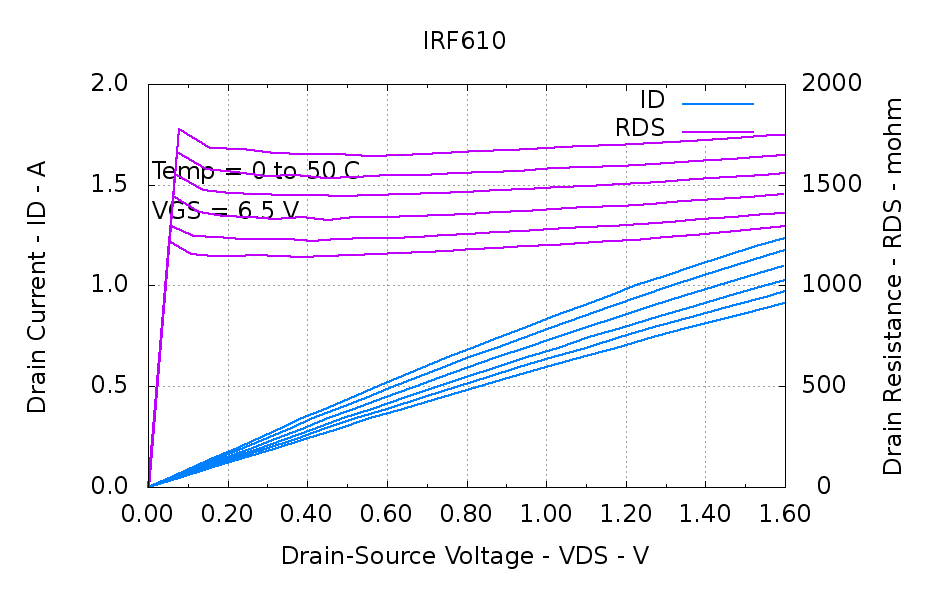
The winning entry for high resistance, though, is the 500 Ω (!!!) BSS127 that emerged from a paper on current sensing using mirror FETs for temperature compensation. It has a 600 V rating, but I have no idea why such a high drain resistance makes any sense in a SOT-23 package. They’re obsolescent and I won’t buy any just to have ’em around.
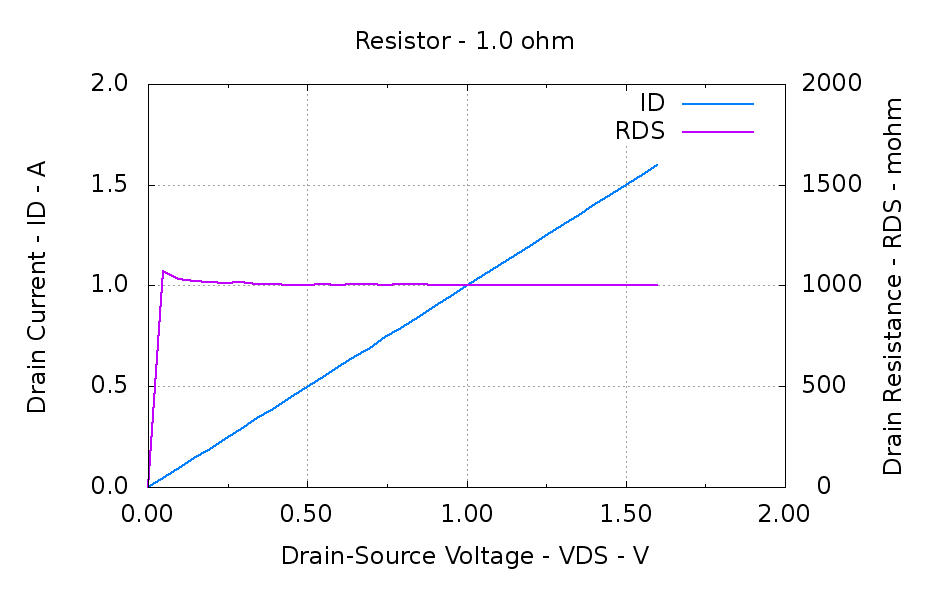
Just for completeness, a 1 1% resistor:
And a 100 m 1% resistor:
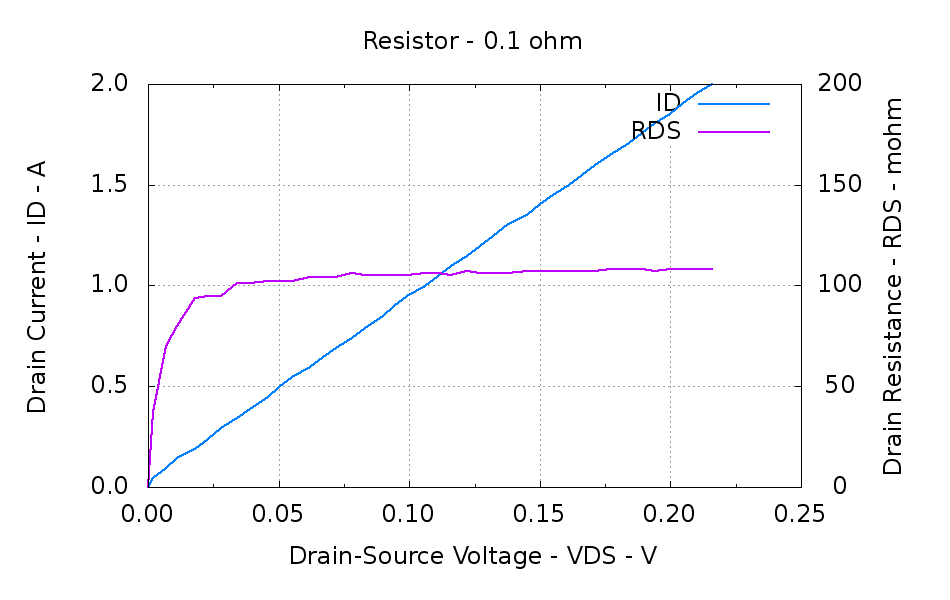
It turns out that the wire leads I soldered on contributed 6 m to the total, so the tester actually reports the truth! I checked that by passing 1.000 A through the resistor, which put 100 mV at the base of the resistor pins, then measuring 106 mV at the end of the wire leads. One can quibble about voltmeter accuracy, but it’s pretty close and much better than the ohmmeter accuracy at that resistance.
The firmware forces 0.0 for drain current identically equal to 0.0 (it’s a floating point number cast from a 10-bit unsigned integer) to avoid numeric explosions. The next few points away from the origin show the effect of small errors on small measurements; the voltage resolution is 15 mV and the current resolution is 2.5 mA; you can actually see the steps near the origin.
All in all, a fun project…
Need the datasheets? Ask your favorite search engine for, say, IRF610 datasheet. That should do the trick.
 The Smell of Molten Projects in the Morning